
10 Best Data Science Certification, Course & Tutorial [2018 UPDATED]
Posted on September 7th, 2018
Our team of global experts have done extensive research to come up with this list of 10 Best Data Science Certifications, Degree, Course, Tutorial and Training available Online for 2018. These include free and paid learning resources and are relevant for beginners, intermediate learners as well as experts.
Contents
- 1. Data Science Course A-Z™: Real-Life Data Science (Udemy)
- 2. Python for Data Science and Machine Learning Course
- 3. Machine Learning Certification by Stanford University (Coursera)
- 4. Microsoft Professional Program in Data Science (edX)
- 6. Tableau 10 A-Z: Hands-On Tableau Training For Data Science!
- 7. Applied Data Science with Python Certification (University of Michigan)
- 8. Data Science Certification from John Hopkins University (Coursera)
- 9. Master of Computer Science in Data Science Degree Online (Illinois)
- 10. Data Science, Deep Learning, & Machine Learning with Python
- 11. Data Science: Deep Learning Tutorial in Python
- 12. Data Science Tutorial with R
1. Data Science Course A-Z™: Real-Life Data Science (Udemy)
Kirill Eremenko is a Data Science management consultant who helps businesses drive strategy, revamp customer experience and revolutionize existing operational processes. He has created 36 online courses so far and has taught over 400,000 students! At an average rating of 4.5 from 96,000 students you can be rest assured that he is one of the best tutors in the business. In this course he will teach you Data Science step by step through real Analytics examples including training you on Data Mining, Modeling, Tableau Visualization and more. Specifically you will learn about cleaning and preparing your data, performing basic visualization, modelling your data using tools such as SQL, SSIS, Tableau and Gretl. This is one of the Best Data Science tutorial you will find online and you will receive a certificate on completion.
[responsive_video type=’youtube’ hide_related=’1′ hide_logo=’0′ hide_controls=’0′ hide_title=’0′ hide_fullscreen=’0′ autoplay=’0′]https://www.youtube.com/watch?v=-hFBAC0D5tw[/responsive_video]
Rating : 4.5 out of 5
Review : It has been a great learning curve. I understood most things Kirill taught ( the question is do I remember them? hahaha!) Jokes apart, I honestly think he did a very good job at explaning all concepts particularly the tough mathematical/statistical contents. Well done! Kirill. I will be rewatching some of the videos again to refresh my memory. Overall it’s great value for money! Thanks Kirill for sharing your knowledge.
2. Python for Data Science and Machine Learning Course
This comprehensive course by Jose Portilla, a BS and MS in Engineering from Santa Clara University will help you understand how to use Python to analyze data, create beautiful visualizations and use powerful machine learning algorithms. Learn all about NumPy, Seaborn , Matplotlib, Pandas, Scikit-Learn, Machine Learning, Plotly, Tensorflow and much more in this 21.5 hour long tutorial which has already been attended by over 100,000 students globally. With high ratings and wonderful recommendations, this is a must attend program if you are looking to master the subject.
[responsive_video type=’youtube’ hide_related=’1′ hide_logo=’0′ hide_controls=’0′ hide_title=’0′ hide_fullscreen=’0′ autoplay=’0′]https://www.youtube.com/watch?v=bwtXJKg7OTY[/responsive_video]
Rating : 4.6 out of 5
Review : The best instructor i have ever seen and the Question and Answer forum has an immediate response. i love his teachings. Thank you sir. But i would like to suggest in MNIST lecture. i watched thrice, but i couldnt understand those 3 lectures, please update those lectures. but at the end, contriblearn made me satisfied. i was very confused about tensorflow. but in the end, i completely understood. hope you continue your lecture series. i want to learn more courses from you. – Chennakeshav Rao K
3. Machine Learning Certification by Stanford University (Coursera)
Andrew Ng, former head of Google Brain and Baidu AI Group has created this course along with other professors from Stanford University. It is one of the most sought after courses and certifications around machine learning available online. You will learn about Supervised learning, Unsupervised learning among other key areas and the course includes multiple case studies and applications to help you learn how to apply algorithms to build smart robots. This is one of the best data science certification you can opt for.
Rating : 4.9 out of 5
Review : This course is arguably the best place to start for anyone who wants to learn machine learning. I’ve tried other approaches before, like diving head first into neural networks without a clue about other simpler algorithms like linear and logistic regression and just got confused despite having no trouble with the mathematics. This course however made everything crystal clear. And I have yet to see an instructor as good as Andrew Ng. His enthusiasm was a great motivator.
4. Microsoft Professional Program in Data Science (edX)
This professional program by Microsoft consists of 9 courses in addition to a project and will take about 16 – 32 hours per course. It is a 10 course program and you can also choose individual courses if you want. You will learn about using Microsoft Excel to explore data, using Transact-SQL to query a relational database, creating data models using Excel or Power BI, applying statistical methods to data and using R or Python to explore and transform data Follow a data science methodology. The program is broken into 4 major units which further consist 10 courses. It is all followed by a project to help you apply all that you learn through the duration of this course.
Rating : 4.5 out of 5
5. Machine Learning Course A-Z™: Hands-On Python & R In Data Science
Kirill Eremenko and Hadelin de Ponteves along with their Super DataScience Team are masters when it comes to data science and they have together come up with this brilliant course to help you create Machine Learning Algorithms in Python and R. You don’t need any prior experience before signing up for this course and high school level mathematics understanding will be enough. It is a 40.5 hour long offering that will give you all knowledge required to excel in this field and has already been attended by more than 200,000 students worldwide.
[responsive_video type=’youtube’ hide_related=’1′ hide_logo=’0′ hide_controls=’0′ hide_title=’0′ hide_fullscreen=’0′ autoplay=’0′]https://www.youtube.com/watch?v=p317nw5Fj3o[/responsive_video]
Rating : 4.5 out of 5
Review : Kirill and Hadelin really took time to design the course such a way that understand the Concept very easily, even though if you don’t have any previous knowledge. On Top of it , specially having perfectly designed templates for various algorithms will make you feel very comfortable . Throughout the course if you follow the video , you are sure to get the concept of machine learning. And at the end of the course I’m quite confident to face any challenge in Machine learning world . – Prantik Bala
6. Tableau 10 A-Z: Hands-On Tableau Training For Data Science!
Kirill Eremenko, the Data Scientist & Forex Systems Expert has another wonderful course lined up and this time it is about Tableau 10. He will teach you data visualization through Tableau 10 and teach you all about customer purchase behavior and sales trends. He will empower you to prepare and present data easily.
[responsive_video type=’youtube’ hide_related=’1′ hide_logo=’0′ hide_controls=’0′ hide_title=’0′ hide_fullscreen=’0′ autoplay=’0′]https://www.youtube.com/watch?v=q03vxIt2BkM[/responsive_video]
Rating : 4.7 out of 5
Review : All of Kirill’s courses are awesome, and this one is no exception. I already knew how to use Python and R for data science, but this course got me very excited in Tableau! I would love to use Tableau for most data science visualizations from now on – possibly excepting machine learning visualizations, since Tableau cannot train machine learning models AFAIK (although it can forecast).
7. Applied Data Science with Python Certification (University of Michigan)
This is a 5 course program from the University of Michigan which will help you learn data science through the python programming language. You will need to have basic knowledge of Python and will be taught about popular python toolkits such as pandas, matplotlib, nltk and networkx among others to make sense of data. In particular, the 5 courses will cover Applied Plotting, Charting & Data Representation in Python, Applied Machine Learning in Python, Applied Text Mining in Python and Applied Social Network Analysis in Python. You will be taught by Christopher Brooks, Kevyn Collins-Thompson, Daniel Romero and V. G. Vinod Vydiswaran.
[responsive_video type=’youtube’ hide_related=’1′ hide_logo=’0′ hide_controls=’0′ hide_title=’0′ hide_fullscreen=’0′ autoplay=’0′]https://www.youtube.com/watch?v=lFpcZKBUiSY[/responsive_video]
Rating : 4.5 out of 5
Review : Great class! Right amount of challenging for someone with some Python (or scripting) background to cover some useful Pandas scenarios. Only critique is the coding challenges would be better if error logs were provided.
8. Data Science Certification from John Hopkins University (Coursera)
This certification course from John Hopkins will help you launch your Data Science career. It consists of a nine course introduction to data science, developed and taught by leading professors including Roger D. Peng, PhD Associate Professor, Biostatistics; Brian Caffo, PhD and Jeff Leek, PhD Associate Professor, Biostatistics. In this program, you will learn about R Programming, Getting and Cleaning Data, Exploratory Data Analysis, Reproducible Research and Statistical Inference among host of other areas. The training will be followed by a Capstone Project, where you will build a data product using real-world data. Our team of experts feels that this is one of the best Data Scientist certification you will find on the web.
Rating : 4.5 out of 5
Review : The Professor’s are just amazing in their knowledge. The slow bits of information and the way testing is done is so methodical and so well planned. If anybody says they are bored then I am sure they are bluffing, as I found out how enjoyable online learning can me. I am 40, working and a father of 2 children, time is scarce and this online way of learning with financial aid, I could not ask for anything more. Coursera is helping people like me find a hope of learning at their own pace, place and with their financial aid program helping poor people from developing countries like India see the light at the end of the tunnel.
9. Master of Computer Science in Data Science Degree Online (Illinois)
This Master of Computer Science in Data Science (MCS-DS) is an Online Degree from Illinois. You will be taught to build expertise data visualization, machine learning, data mining and cloud computing. It is offered in collaboration with the University’s Statistics Department and top-ranked iSchool. Multitude of entrepreneurs, educators, and technical geniuses have graduated from this school. This is one of the few Data Science Degree Courses available online.
[responsive_video type=’youtube’ hide_related=’1′ hide_logo=’0′ hide_controls=’0′ hide_title=’0′ hide_fullscreen=’0′ autoplay=’0′]https://www.youtube.com/watch?v=pJoYt7Yh4z0[/responsive_video]
Rating : 4.5 out of 5
10. Data Science, Deep Learning, & Machine Learning with Python
Frank Kane is an expert at all things data science and with this tutorial, he will teach you all about neural network, artificial intelligence and machine learning techniques. This comprehensive data science tutorial with over 80 lectures includes loads of Python code examples. Frank, with his previous experience at Amazon and IMDb will teach you all about what matters. Specifically, you will learn to make predictions using linear regression, polynomial regression, and multivariate regression; understand complex multi-level models; build a spam classifier and learn much more in 12 hours of on demand online lectures.
[responsive_video type=’youtube’ hide_related=’1′ hide_logo=’0′ hide_controls=’0′ hide_title=’0′ hide_fullscreen=’0′ autoplay=’0′]https://www.youtube.com/watch?v=PWExUJ_di2M[/responsive_video]
Rating : 4.5 out of 5
Review : Excellent explanations. Easy to follow. GREAT examples! This is a phenomenal class and Frank is an extraordinary instructor! I recommend this class / tutorial to all very interested!
11. Data Science: Deep Learning Tutorial in Python
This program will serve as a guide for writing a neural network in Python and Numpy using Google’s TensorFlow. The trainer will teach you about how deep learning really works and how a neural network is built from basic building blocks. He will help you demystify various terms related to neural networks like “activation”, “backpropagation” and “feedforward”. There is a live project which is a part of the course to help you implement what you learn in real time.
[responsive_video type=’vimeo’]https://vimeo.com/162437052[/responsive_video]
Rating : 4.6 out of 5
Review – Very nice course, it is well organized and explained. The exercises and examples are interesting and practical, maybe a bit too easy if an expert. The pace is good and everything covered thoroughly. Extra help lecture provided for troubleshooting.
12. Data Science Tutorial with R
With a BS and MS from Santa Clara University, Jose Marcial Portilla also comes with years of experience as a professional trainer for Data Science and programming. His client base over the years includes General Electric, Cigna, The New York Times, Credit Suisse among many others. In this data science tutorial, he will teach you how to use the R programming language for data science. Few of the topics that will be covered include programming with R, advanced R Features, using R to handle Excel Files, web scraping with R, connecting R to SQL, using ggplot2 for data visualizations and many other areas.
Rating : 4.6 out of 5
Review : Great course, amazing teacher. Although I have a background in software development and databases, I had never used R before or employed statistical methods. After taking this course, including the recommended reading and the exercises, I feel confident in being able to use R and the machine learning methods covered in the course.
Bonus Courses
13. Deep Learning Certification by deeplearning.ai
Learn how to build neural networks and lead successful machine learning projects in this 5 course specialization from deeplearning.ai . You will be taught about Python, Tensor Flow, RNNs, LSTM, Adam, Convolutional Networks and Xavier initialization among other aspects. The program is taught by Andrew Ng, Co-founder, Coursera & Adjunct Professor, Stanford University; Younes Bensouda Mourri, Mathematical & Computational Sciences, Stanford University and Kian Katanforoosh, Adjunct Lecturer at Stanford University, deeplearning.ai, Ecole Centrale Paris. This is one of the most sought after programs on Deep Learning available online.
[responsive_video type=’youtube’ hide_related=’1′ hide_logo=’0′ hide_controls=’0′ hide_title=’0′ hide_fullscreen=’0′ autoplay=’0′]https://www.youtube.com/watch?v=VLQHpvuwsV0[/responsive_video]
Rating : 4.9 out of 5
Review : Very useful course. Gives great insight on the hyper parameter tuning, regularisation and optimisation. One request I have is to provide a docker image which we can use to run the exercises locally. Sometimes I found it hard to build the environment where I can run the coursework. Some of the installations are clashing and it is not clear what versions of libraries are used in the coursework environment. It sometimes requires unnecessary effort.
14. Advanced Machine Learning Certification by Higher School of Economics
A total of 21 professors and researchers have come together to create this course; and this is undoubtedly one of the most comprehensive courses on data science and machine learning. This is an intermediate level course only relevant if you have basic knowledge around the subject. The course includes CERN scientists who will share their experiences of solving real-world problems using data science. This is a 7 course curriculum, and it will take you deep into the world of machine learning.
Rating : 4.8 out of 5
Review : Great course. Teaches you a lot of techniques and hands-on assignments. The course covers extensively on how to achieve a better score in Kaggle with tips and techniques. The real-world data science would be slightly different to this. But nevertheless, the content is refreshing along with the links, supplement materials associated
15. Excel to MySQL: Analytic Techniques for Business Certification from Duke University
Taught by Jana Schaich Borg and Professor Daniel Egger, this course from Duke University will help you formulate data questions, visualize datasets and inform strategic decisions. Learn how to use Excel, Tableau and MySQL to analyze data, build models and communicate your insights. It is all followed by a project where you will apply your skills to work on a real world business process.
Rating : 4.7 out of 5
Review : The course was very well organized. Instead of just teaching tableau the course covered aspects about how to approach a business problem, design ways to approach a problem, structured thinking and then went to solving those problems using tableau. Even after tableau was taught the instructor covered aspects of how to present it to the target audience and make an impact. Great work. Only suggestion will be to be up to date about the content as tableau comes up with upgrades but the course videos don’t include it.
16. Data Structures and Algorithms Certification from UC San Diego
UC San Diego and Higher School of Economics along with Computer Science Center and Yandex come together for this Data Structures and Algorithms Specialization spread across 6 courses. It is taught by a group of extremely proficient professors that include Daniel M Kane, Pavel Pevzner, Michael Levin, Neil Rhodes and Alexander S. Kulikov. There’s a good mix of theory and practice in this course where you will learn algorithmic techniques for solving various computational problems. This is one of the best Algorithms online course with the wealth of programming techniques it teaches you. The program also consists of two major projects : Big Networks and Genome Assembly.
Rating : 4.6 out of 5
Review : Thanks for the course. Content is good and videos are very well done. Only problem is that the assignment problems were gruelling and unfortunately it is hard to get one-to-one contact for help if you get stuck
Content retrieved from: https://digitaldefynd.com/best-data-science-certification-course-tutorial/.
9 Best Machine Learning Certification & Training [2018 UPDATED]
Posted on August 29th, 2018
Our team of global experts has done in depth research to come up with this compilation of Best Machine Learning Certification, Tutorial & Training for 2018. All these resources to learn Machine Learning are available online and are suitable for beginners, intermediate learners as well as experts
Contents
- 1. Machine Learning Certification by Stanford University
- 2. Machine Learning Tutorial A-Z™: Hands-On Python & R In Data Science
- 3. Python for Data Science and Machine Learning Training
- 4. Machine Learning Certification by University of Washington
- 5. Data Science, Deep Learning, & Machine Learning Tutorial with Python
- 6. Advanced Machine Learning Certification by Higher School of Economics
- 7. Data Science Specialization – John Hopkins University
- 8. Data Science and Machine Learning Tutorial with R
- 9. Data Science with Python – University of Michigan
1. Machine Learning Certification by Stanford University
This is one of the most sought after certifications out there because of the sheer fact that it is taught by Andrew Ng, former head of Google Brain and Baidu AI Group. For a certification to receive a rating of 4.9 out of 5 is no mean feat and the fact that it is associated with Stanford University simply adds much more credibility to the program. The topics that will be covered include Supervised learning, Unsupervised learning, best practices in machine learning and the program structure will be based around multiple case studies and applications, to help you learn how to apply algorithms to build smart robots, text understanding, medical informatics, database mining and other areas. This is undoubtedly the Best Machine Learning Certification out there and we give it two thumbs up! This is undoubtedly the best machine learning certification you can opt for.
Rating : 4.9 out of 5
Review : The instruction was helpful. There was enough rigorous derivation for context, but the focus was on the practical use of machine learning techniques. The exercises were excellent. They included simple, principled examples that demonstrated the fundamental concepts, as well as realistic applications that demonstrated their usefulness. There was also solid support from mentors. I would highly recommend this course. It’s my first time using Coursera, and I plan to enroll in another class as soon as I’m done with this one. Thanks.
2. Machine Learning Tutorial A-Z™: Hands-On Python & R In Data Science
Close to 200,000 students have attended this Machine Learning training so far with a high rating of 4.5 out of 5! Trainers Kirill Eremenko and Hadelin de Ponteves along with their Super DataScience Team has put together this brilliant program to help you create Machine Learning Algorithms in Python and R. All you need to attend this training is high school level mathematics understanding or basic level learning of algorithms such as linear regression and logistical reason. It is a 40.5 hour long comprehensive course that will offer you all details and knowledge required to excel in this field. This is one of the best machine learning tutorial in our opinion.
[responsive_video type=’youtube’ hide_related=’1′ hide_logo=’0′ hide_controls=’0′ hide_title=’0′ hide_fullscreen=’0′ autoplay=’0′]https://www.youtube.com/watch?v=p317nw5Fj3o[/responsive_video]
Rating : 4.5 out of 5
Review : Kirill and Hadelin really took time to design the course such a way that understand the Concept very easily, even though if you don’t have any previous knowledge. On Top of it , specially having perfectly designed templates for various algorithms will make you feel very comfortable . Throughout the course if you follow the video , you are sure to get the concept of machine learning. And at the end of the course I’m quite confident to face any challenge in Machine learning world . – Prantik Bala
3. Python for Data Science and Machine Learning Training
Jose Marcial Portilla is an MS and he comes with years of experience as a professional instructor and trainer for Data Science and programming. He has over time provided in person training to employees of organisations such as General Electric, The New York Times, Credit Suisse and many more. Having said all of that, you would know by now that you are in absolute safe hands if you decide to go for this online Bootcamp with him. You will get to learn all about K-Means clustering, Matplotib for Python Plotting, Neural Networks, understand how to use Spark for Big Data Analytics and naturally learn how to implement Machine Learning Algorithms. This training has already been attended by a whooping 90,000+ students and has a high rating of 4.6 out of 5! This course that stretches for 21.5 hours comes highly recommended from our side, and is one of the best machine learning training out there.
[responsive_video type=’youtube’ hide_related=’1′ hide_logo=’0′ hide_controls=’0′ hide_title=’0′ hide_fullscreen=’0′ autoplay=’0′]https://www.youtube.com/watch?v=PrMHtz8ZTfM[/responsive_video]
Rating : 4.6 out of 5
Review : An excellent course – well-structured, thorough, and engaging. This course can serve as a model for technical courses on Udemy. The only significant issue I encountered was some of the TensorFlow content was slightly out of date but that’s unsurprising with such a fast-moving, cutting-edge open source project like TensorFlow, so I didn’t knock the rating because of it. – Jason Scott
4. Machine Learning Certification by University of Washington
This is an intermediate specialization which means that you should have some related experience before signing up for this program. This training is spread over the course of few months to help you get a comprehensive understanding and become proficient at machine learning. Taught by Emily Fox and Carlos Guestrin, who are both Amazon Professors of Machine Learning. Based around practical case studies, you will learn all about Prediction, Classification, Clustering, Information Retrieval and other areas surrounding the topic.
Rating : 4.6 out of 5
Review : Excellent course, really appreciate the your hard work in creating easy to follow course, very good slides and presenting information and explanations step by step…. oh and also love the on-screen chemistry between both of you and engaging style with students. It has been an enjoyable course. Please keep up the good work.
5. Data Science, Deep Learning, & Machine Learning Tutorial with Python
Frank Kane is another champion when it comes to teaching online courses and this training is no different. Having spent 9 years at Amazon and IMDb, Frank actually developed the technology that today gives product and movie recommendations which we see on these portals. He holds 17 patents in the field of machine learning, data mining and distributed computing and since 2012 has been concentrating on his venture ‘Sundog Software’ which brings us this training. In this training, he will teach you how to visualize data distributions, probability mass functions, probability density functions in addition to helping you demystify how to use covariance and correlation metrics, use Bayes’ Theorem to identify false positives and visualize data with matplotlib.
[responsive_video type=’youtube’ hide_related=’1′ hide_logo=’0′ hide_controls=’0′ hide_title=’0′ hide_fullscreen=’0′ autoplay=’0′]https://www.youtube.com/watch?v=PWExUJ_di2M[/responsive_video]
Rating : 4.5 out of 5
Review : Clear an simple explanation. Excellent real world examples that are easy to digest an open up exciting possibilities when thought through further. Well done! Thanks so much, Frank! – Raymond Neo
6. Advanced Machine Learning Certification by Higher School of Economics
Developed and taught by a team of 21 lecturers, professors and researchers; this is your deep dive into the world of machine learning and only meant for ones with basic knowledge about the subject. You will learn all about deep learning, reinforcement learning, natural language understanding, computer vision and Bayesian methods. CERN scientists will share experiences of solving real-world problems to help you understand how all this works in practice and not just theory. At the end of this 7 course curriculum, you will get to apply modern methods in businesses and industries. For all those who are keenly interested in going deep inside a topic, we think this is the best machine learning certification for you.
Rating : 4.8 out of 5
Review : This course is amazing. Taught by experts in the field with a proven track record of outstanding performance in Kaggle competitions. They teach how to fine tune ML models to achieve better performance. My choice for best course on Coursera!
7. Data Science Specialization – John Hopkins University
This specialization program from John Hopkins will help you put your first step into the world of data science and machine learning. In 9 sessions, the trainers will help you learn all aspects of data science, followed by a capstone project to try out all that you learn in the course. The tutors of this program include Roger D. Peng, Brian Caffo and Jeff Leek and together they will teach you about R Programming, Exploratory Data Analysis, Statistical Inference in addition to many other aspects and areas of data science.
Rating : 4.5 out of 5
Review : I felt this course covered an adequate distribution of introductory material in the right amount of time. In particular, the swirl() library is incredibly helpful and well-designed.
8. Data Science and Machine Learning Tutorial with R
This is for all those who want to learn how to use the R programming language for data science and machine learning. Jose, an expert in the domain helps you learn how to Program in R, use R for data analytics, data science and how to make use of R for machine learning algorithms. Basic math skills are all you need in order to get going with this training, and in this 17.5 hour course, Jose will inspire you enough to help you go from being a nobody to a well informed somebody in the domain of machine learning!
Rating : 4.6 out of 5
Review : Great course, amazing teacher. Although I have a background in software development and databases, I had never used R before or employed statistical methods. After taking this course, including the recommended reading and the exercises, I feel confident in being able to use R and the machine learning methods covered in the course. – Peter Mancoll
9. Data Science with Python – University of Michigan
This specialization from the University of Michigan will help you master data science using python. The course includes training on tool kits such as matplotlib, nltk and networkx including others. You will be taught about Applied Plotting, Applied Machine Learning, Applied Text Mining and Applied Social Network Analysis. The trainer for the program are Christopher Brooks, Kevyn Collins-Thompson and Daniel Romeroand V. G. Vinod Vydiswaran. A sought after course, it is available on coursera and can be accessed online. The duration spans across a few weeks and it culminates in a capstone project to practice all that you learn.
Rating : 4.5 out of 5
Review : Very helpful to understand what it takes to make a scientific and sensible visual. Recommended for someone who is interested in learning data visualization and does not have a background.
There is a high chance you reached this blog post because of Google’s own Machine Learning algorithm controlled by Rank Brain. You don’t see it, but it’s all around. Machine Learning, Deep Learning and AI are taking over the technology ecosystem one step at a time and there is no way you can stay behind when it comes to upgrading your skills in the domain. To help you save time, we have shortlisted best training and certifications on the topic. Hope this is helpful for you.
So those folks were our choice of the Best Machine Learning Training and Certifications which you can attend online. These are based on most recent standings and are updated for 2018. We recommend you to check out Blockchain Courses , Best Python Certification , Artificial Intelligence Courses and Best Data Science Tutorial as well. We wish you all the best and hope you learn, get empowered and grow in your career 🙂 Cheers, Team Digital Defynd.
Content retrieved from: https://digitaldefynd.com/7-best-machine-learning-training-certifications/.
Difference between Machine Learning, Data Science, AI, Deep Learning, and Statistics
Posted on August 6th, 2018

- Posted by Vincent Granville on January 2, 2017 at 8:30pm
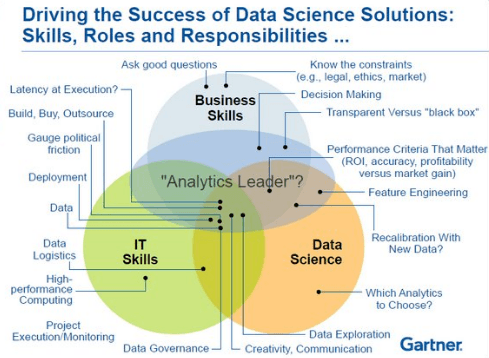
In this article, I clarify the various roles of the data scientist, and how data science compares and overlaps with related fields such as machine learning, deep learning, AI, statistics, IoT, operations research, and applied mathematics. As data science is a broad discipline, I start by describing the different types of data scientists that one may encounter in any business setting: you might even discover that you are a data scientist yourself, without knowing it. As in any scientific discipline, data scientists may borrow techniques from related disciplines, though we have developed our own arsenal, especially techniques and algorithms to handle very large unstructured data sets in automated ways, even without human interactions, to perform transactions in real-time or to make predictions.
1. Different Types of Data Scientists
Recently (August 2016) Ajit Jaokar discussed Type A (Analytics) versus Type B (Builder) data scientist:
- The Type A Data Scientist can code well enough to work with data but is not necessarily an expert. The Type A data scientist may be an expert in experimental design, forecasting, modelling, statistical inference, or other things typically taught in statistics departments. Generally speaking though, the work product of a data scientist is not “p-values and confidence intervals” as academic statistics sometimes seems to suggest (and as it sometimes is for traditional statisticians working in the pharmaceutical industry, for example). At Google, Type A Data Scientists are known variously as Statistician, Quantitative Analyst, Decision Support Engineering Analyst, or Data Scientist, and probably a few more.
- Type B Data Scientist: The B is for Building. Type B Data Scientists share some statistical background with Type A, but they are also very strong coders and may be trained software engineers. The Type B Data Scientist is mainly interested in using data “in production.” They build models which interact with users, often serving recommendations (products, people you may know, ads, movies, search results).
I also wrote about the ABCD’s of business processes optimization where D stands for data science, C for computer science, B for business science, and A for analytics science. Data science may or may not involve coding or mathematical practice, as you can read in my article on low-level versus high-level data science. In a startup, data scientists generally wear several hats, such as executive, data miner, data engineer or architect, researcher, statistician, modeler (as in predictive modeling) or developer.
While the data scientist is generally portrayed as a coder experienced in R, Python, SQL, Hadoop and statistics, this is just the tip of the iceberg, made popular by data camps focusing on teaching some elements of data science. But just like a lab technician can call herself a physicist, the real physicist is much more than that, and her domains of expertise are varied: astronomy, mathematical physics, nuclear physics (which is borderline chemistry), mechanics, electrical engineering, signal processing (also a sub-field of data science) and many more. The same can be said about data scientists: fields are as varied as bioinformatics, information technology, simulations and quality control, computational finance, epidemiology, industrial engineering, and even number theory.
In my case, over the last 10 years, I specialized in machine-to-machine and device-to-device communications, developing systems to automatically process large data sets, to perform automated transactions: for instance, purchasing Internet traffic or automatically generating content. It implies developing algorithms that work with unstructured data, and it is at the intersection of AI (artificial intelligence,) IoT (Internet of things,) and data science. This is referred to as deep data science. It is relatively math-free, and it involves relatively little coding (mostly API’s), but it is quite data-intensive (including building data systems) and based on brand new statistical technology designed specifically for this context.
Prior to that, I worked on credit card fraud detection in real time. Earlier in my career (circa 1990) I worked on image remote sensing technology, among other things to identify patterns (or shapes or features, for instance lakes) in satellite images and to perform image segmentation: at that time my research was labeled as computational statistics, but the people doing the exact same thing in the computer science department next door in my home university, called their research artificial intelligence. Today, it would be called data science or artificial intelligence, the sub-domains being signal processing, computer vision or IoT.
Also, data scientists can be found anywhere in the lifecycle of data science projects, at the data gathering stage, or the data exploratory stage, all the way up to statistical modeling and maintaining existing systems.
2. Machine Learning versus Deep Learning
Before digging deeper into the link between data science and machine learning, let’s briefly discuss machine learning and deep learning. Machine learning is a set of algorithms that train on a data set to make predictions or take actions in order to optimize some systems. For instance, supervised classification algorithms are used to classify potential clients into good or bad prospects, for loan purposes, based on historical data. The techniques involved, for a given task (e.g. supervised clustering), are varied: naive Bayes, SVM, neural nets, ensembles, association rules, decision trees, logistic regression, or a combination of many. For a detailed list of algorithms, click here. For a list of machine learning problems, click here.
All of this is a subset of data science. When these algorithms are automated, as in automated piloting or driver-less cars, it is called AI, and more specifically, deep learning. Click here for another article comparing machine learning with deep learning. If the data collected comes from sensors and if it is transmitted via the Internet, then it is machine learning or data science or deep learning applied to IoT.
Some people have a different definition for deep learning. They consider deep learning as neural networks (a machine learning technique) with a deeper layer. The question was asked on Quora recently, and below is a more detailed explanation (source: Quora)
- AI (Artificial intelligence) is a subfield of computer science, that was created in the 1960s, and it was (is) concerned with solving tasks that are easy for humans, but hard for computers. In particular, a so-called Strong AI would be a system that can do anything a human can (perhaps without purely physical things). This is fairly generic, and includes all kinds of tasks, such as planning, moving around in the world, recognizing objects and sounds, speaking, translating, performing social or business transactions, creative work (making art or poetry), etc.
- NLP (Natural language processing) is simply the part of AI that has to do with language (usually written).
- Machine learning is concerned with one aspect of this: given some AI problem that can be described in discrete terms (e.g. out of a particular set of actions, which one is the right one), and given a lot of information about the world, figure out what is the “correct” action, without having the programmer program it in. Typically some outside process is needed to judge whether the action was correct or not. In mathematical terms, it’s a function: you feed in some input, and you want it to to produce the right output, so the whole problem is simply to build a model of this mathematical function in some automatic way. To draw a distinction with AI, if I can write a very clever program that has human-like behavior, it can be AI, but unless its parameters are automatically learned from data, it’s not machine learning.
- Deep learning is one kind of machine learning that’s very popular now. It involves a particular kind of mathematical model that can be thought of as a composition of simple blocks (function composition) of a certain type, and where some of these blocks can be adjusted to better predict the final outcome.
What is the difference between machine learning and statistics?
This article tries to answer the question. The author writes that statistics is machine learning with confidence intervals for the quantities being predicted or estimated. I tend to disagree, as I have built engineer-friendly confidence intervals that don’t require any mathematical or statistical knowledge.
3. Data Science versus Machine Learning
Machine learning and statistics are part of data science. The word learning in machine learning means that the algorithms depend on some data, used as a training set, to fine-tune some model or algorithm parameters. This encompasses many techniques such as regression, naive Bayes or supervised clustering. But not all techniques fit in this category. For instance, unsupervised clustering – a statistical and data science technique – aims at detecting clusters and cluster structures without any a-priori knowledge or training set to help the classification algorithm. A human being is needed to label the clusters found. Some techniques are hybrid, such as semi-supervised classification. Some pattern detection or density estimation techniques fit in this category.
Data science is much more than machine learning though. Data, in data science, may or may not come from a machine or mechanical process (survey data could be manually collected, clinical trials involve a specific type of small data) and it might have nothing to do with learning as I have just discussed. But the main difference is the fact that data science covers the whole spectrum of data processing, not just the algorithmic or statistical aspects. In particular, data science also covers
- data integration
- distributed architecture
- automating machine learning
- data visualization
- dashboards and BI
- data engineering
- deployment in production mode
- automated, data-driven decisions
Of course, in many organisations, data scientists focus on only one part of this process.
Content retrieved from: https://www.datasciencecentral.com/profiles/blogs/difference-between-machine-learning-data-science-ai-deep-learning.