




How to Add Structured Data to Your Website
Posted on August 21st, 2018

Neil Patel
You might not know this about me, but I’m not a very technical person (gasp!).
I don’t know how to code, and I’m not a technical SEO wizard.
However, I recognize the importance of getting technical when you have to.
Adding structured data, also known as schema markup, to your site is one of the more technical things I do. It can give you a significant SEO boost and increase your rankings.
Now I’ll admit, there can be a little bit of a learning curve here.
You don’t need to know how to code at all. (But if you do have previous coding experience, that will make it easier for you to learn schema markup.)
You just need to take some time to familiarize yourself with how it works.
You don’t even need to learn any complicated or technical terms if you don’t want to (though I suggest it). You can automate the process so you don’t have to do any hard work.
But you definitely should understand what structured data is and why it’s so important.
While this is a more technical aspect of SEO, it’s definitely worth learning. You’ll gain a new skill set that will help your site improve its rankings.
I know “schema markup” and “structured data” sound complicated. It does look complicated at first, but anyone can do it.
So let’s dive in and talk about structured data.
Learn how I used on-page SEO, such as structured data, to increase my search traffic by over 300%.
What is structured data?
Structured data, also called schema markup, is a type of code that makes it easier for search engines to crawl, organize, and display your content.
Structured data communicates to search engines what your data means. Without schema markup, search engines can only tell what your data says, and they have to work harder to determine why it’s there.
Confused yet? Here’s an example.
Let’s say you want to provide contact information for your company. You could just pop the information onto your website footer, and that would work well for any human visitors.
But search engines will have to work a little to figure out what that raw data means.
However, if you use schema markup, you can tell search engines that your contact information is your contact information (instead of just some random data).
You would do that by using this markup:

I know that might look confusing, but stick with me! I’ll be breaking this down in extreme detail over the course of this article.
Basically, you’re helping search engines analyze your content more easily.
This is super important. If it’s easy for search engines to crawl your website, you’ll get an SEO advantage.
I can hear some of you saying, “But Neil, aren’t you supposed to write for human visitors and not machines?”
You might be surprised to hear that schema markup was designed to help users.
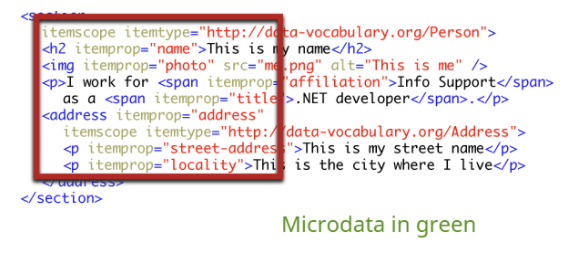
Think of schema markup as a super-detailed business card that displays your information clearly.
It looks complex…
Source: Quick Sprout
…but it’s ultimately meant to help people like you and me.
Another reason schema markup is totally necessary is because it makes the job of the search engine even easier.
So you’re not “writing for machines.” You’re including extra detail and not changing your content in any way.
You can find the official home to everything schema at schema.org:

We’ll be using this site later on, so I’d recommend bookmarking it.
You’ll probably be glad to hear that you don’t need to learn everything about schema markup to use it on your site. In fact, you can (and should) start using structured data within the hour.
There are some fundamentals you should learn first, but after that, it’s pretty smooth sailing.
What you need to know (and what you don’t)
When I tell my clients about schema markup, they get scared.
I understand their fear. After all, there are thousands of schema terms.
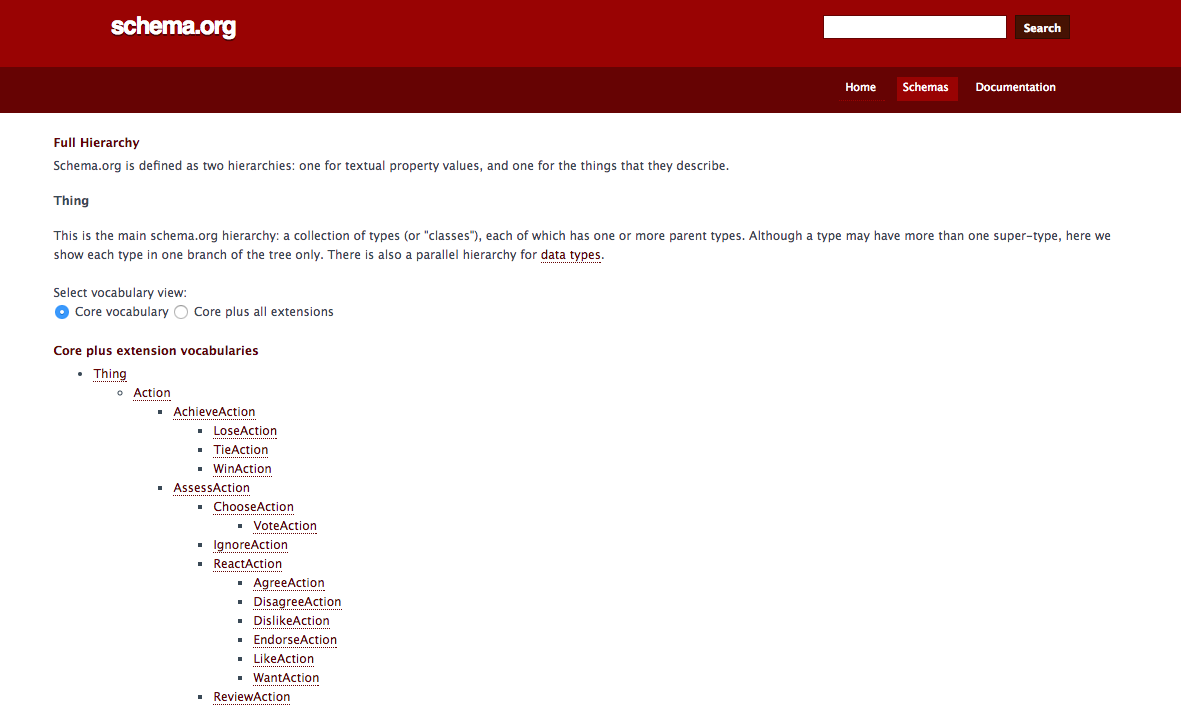
It’s impossible to memorize all of that, and it seems too complex to even start using.
Here’s the good news: You don’t have to memorize anything, and you can start using structured data today.
Here’s what you need to know:
1) The type of structured data to use.
There are three main types of structured data. Here’s a table courtesy of Google:
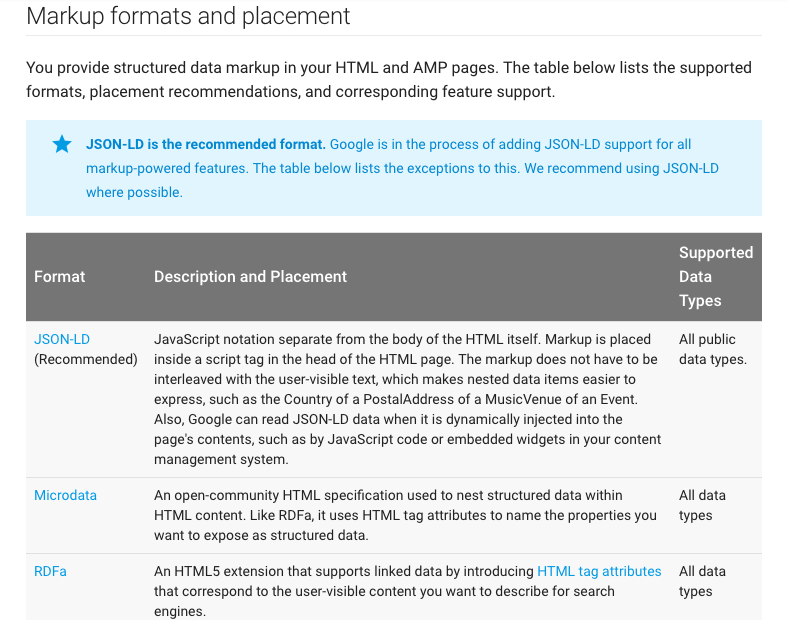
Since JSON-LD is the recommended type, that’s what we’ll be using.
I’m sharing this because I want to make you aware that microdata and RDFa are not the same as JSON-LD.
So if you research structured data, make sure you’re reading about JSON-LD and not one of the other two types of structured data.
2) The most common schema terms.
You could probably get away with not knowing these, but if you take a little time to learn these fundamental terms, you’ll get better faster.
i) itemscope: This is one of the most common schema terms. It essentially organizes your content by topic.
More specifically, it tells search engines that all of the content marked with an itemscope tag is about the same topic. Think of it as categorizing your content into different sections.
Here’s an example from Schema.org. Let’s say your HTML looks like this:

You can make one tiny change to let search engines know that all of this info is about the same topic. Simply include “itemscope” at the end of your opening <div> tag, like this:

Now search engines will group all of the data between the <div> tags into one group.
ii) itemtype: The itemtype term further categorizes your content. The itemscope term told search engines that your content was about an item, and the itemtype term will tell search engines what kind of item your content is about.
In this example, the itemtype markup would look like this:

This will tell search engines that all of the content between the <div> tags is about one movie.
iii) itemprop: This term lets you define certain properties that your items have.
Basically, the itemprop term is communicating additional information about the item.
There are countless types of itemprops you can assign. For our example, here are some possible itemprop types:

By using all of these terms, you’re going into extreme detail, which is a good thing. That means search engines can more easily and more accurately organize your content.
3) Google’s structured data guidelines.
If you’re doing SEO for Google––and let’s be honest, who isn’t?––you need to play by their rules.
Structured data is no exception. They have quality guidelines for using schema markup:
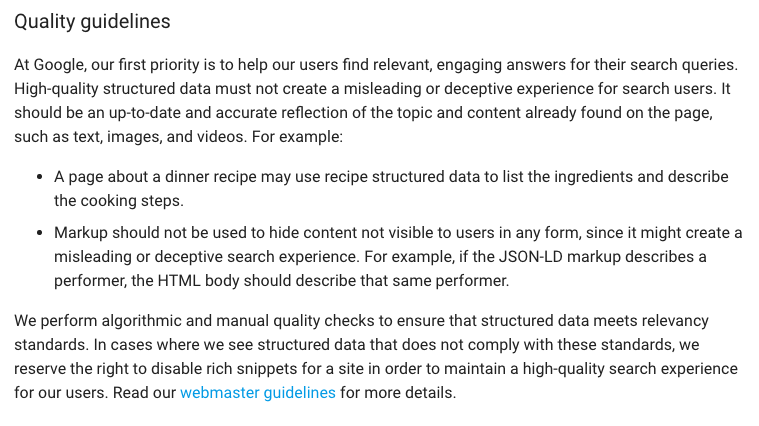
It’s important to keep these in mind when using schema markup. This is not a time for black hat or gray hat SEO.
Remember, the whole point of using structured data is to help search engines display your content better for people.
Help out the search engines, and they’ll help you out in return, which will increase your visibility.
Adding structured data to your site
Now let’s go through the process of actually adding schema markup to your site.
Unfortunately, this can be a somewhat lengthy process. It all depends on the system you use to manage your site and the level of control you want over the process.
I’ll cover two of the best ways to implement schema: Google’s Structured Data Markup Helper and WordPress plugins.
1) Using WordPress plugins
If you’re one of the millions of people who use WordPress for a website, then utilizing schema markup will be extremely easy for you.
There are several dedicated plugins that you can use. In my opinion, the best is Schema App Structured Data.

This plugin will generate schema markup for your whole site, and you can even go in and manually edit the markup yourself. (Or you can find the plugin by searching in Plugins > Add New.)
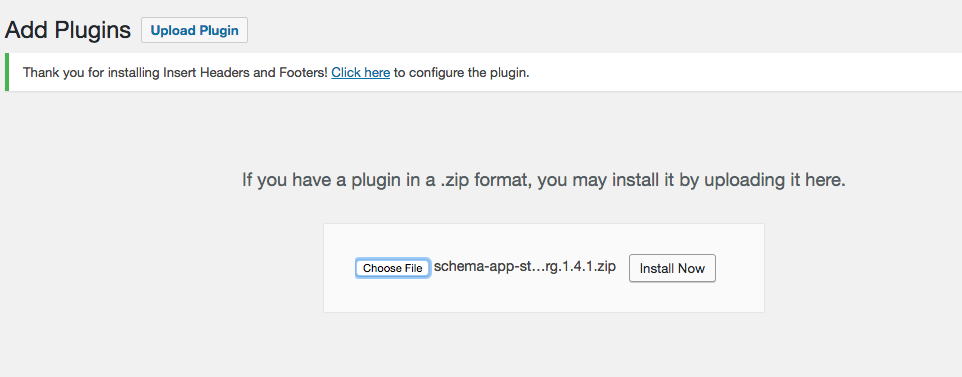
Once you download the plugin, you can upload it by going to Plugins > Add New. Then click “Choose file” and select the zip file for the plugin you downloaded.
Click “Install Now.”
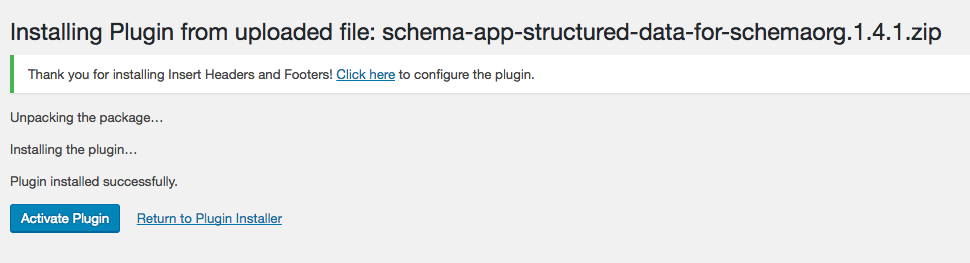
Finally, click “Activate Plugin.”
Now when you edit a post or page of any kind, you’ll see a box below the editing pane that says “Schema App Structured Data:”
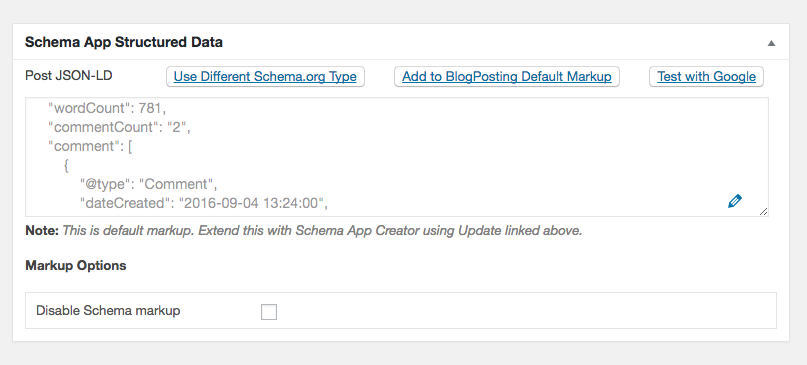
Usually, the plugin will add the best types of schema markup.
But this is where knowing the basics of structured data will come in handy. You can review the markup and make any changes that seem out of place.
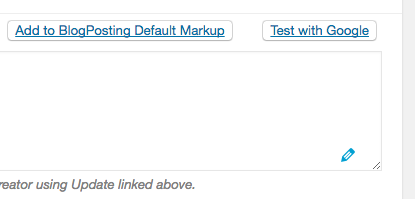
If you want to edit the markup, click on the pencil icon on the lower right.
(Also, notice how the top left of the box specifies JSON-LD. That’s exactly what you want.)
That’s the plugin in a nutshell. It’s really simple to use, so if you use WordPress, I recommend using this.
2) Using Google’s Structured Data Markup Helper
I know many of you don’t use WordPress, so here’s another method of adding structured data that’s actually pretty simple.
This method will work for any site, no matter where you host it or what kind of site it is.
Google provides the Structured Data Markup Helper to help webmasters add schema markup to their sites without any hassle.
It’s straightforward to use. First, go to the Structured Data Markup Helper page:
Make sure the website tab is checked:

(Yep, you can also mark up emails with this tool.)
Next, copy and paste the URL of the page you want to mark up. Paste it in the URL box at the bottom of the page:

If you just have HTML, choose the HTML tag and paste your code in the box:

Next, choose one of the ten categories that Google provides. This selection can feel a little bit limiting, but you’ll find that most often your content will fall under one of these ten categories.
Since I’m using a blog post for this example, I’ll choose “article.”

When you’ve done all of that, click “Start Tagging.”

On the next page, you’ll see two panes. The pane on the left is your content (your page or HTML code), and the pane on the right is the schema markup tool.

To mark something up, highlight it in the left pane.
For example, to mark up the title of the article, highlight it by left clicking and dragging over the text you want to highlight. You’ll see a box pop up that will give you options for different markup tags:
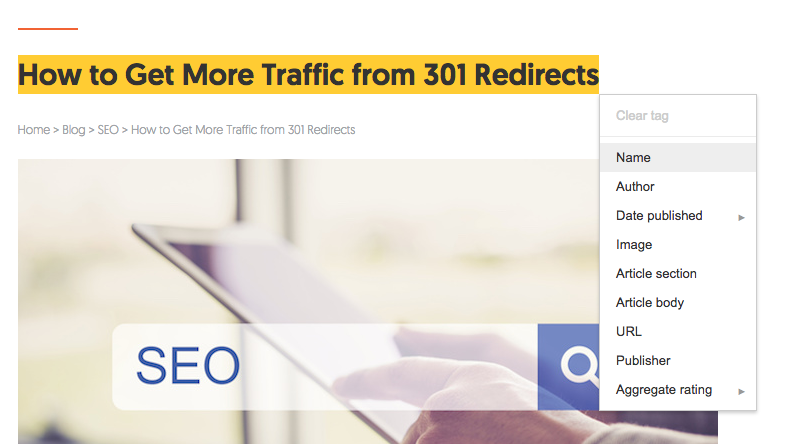
Since this is the name of the article, choose the “Name” markup tag.
You’ll see the change reflected in the right-hand pane under “My Data Items.”
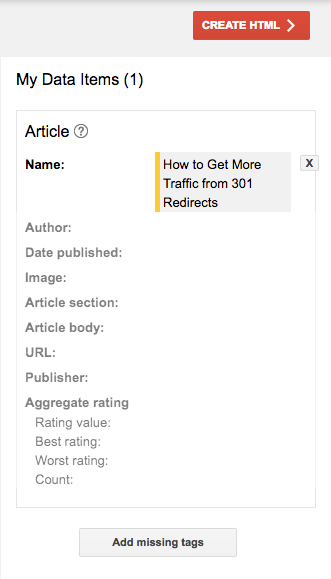
If you want to mark up an image, click on the image and choose “Image” from the box that pops up.

Those are the basics of the Structured Data Markup Helper. The process is the same no matter what type of content you want to mark up.
In the “My Data Items” pane, Google lists all of the main elements that you’ll want to mark up:
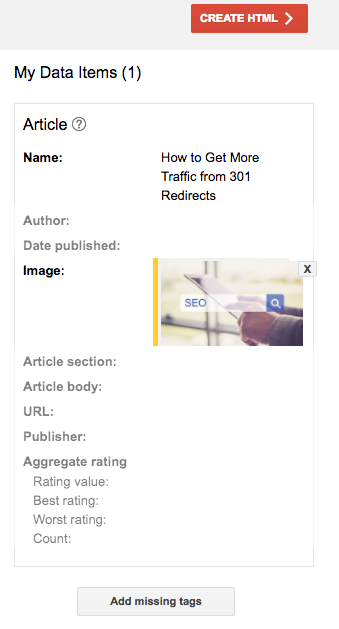
You don’t have to mark up all of these elements, but I’d recommend it.
That way, you can make sure you’re creating the most thorough markup that you can. This will give you the biggest advantage.
Once you’re done marking up everything on your page, click “Create HTML” in the upper right-hand corner.
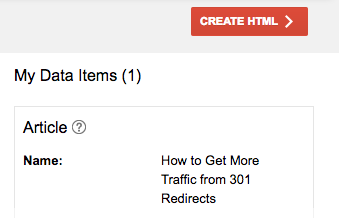
Here comes an important step. In the second box from the left, click it to open and select “JSON-LD” instead of microdata.

Make sure you do this since JSON-LD is Google’s preferred type of structured data.
Copy and paste the code that gets generated. (I recommend leaving this page open in case you need to copy it again.)
Everything’s been pretty easy so far, but at this stage, it can get a little tricky.
That’s because you have to add the markup to your website, which is often the hardest part of this process.
Basically, this schema markup (written in HTML) needs to go in your source code.
If your site has only static page files, it’s super easy to put the markup on your site. Click the “Download” button in the top right corner.

Next, go into the source code for this specific page. Delete the current code and paste this new code in its place.
But if your site has non-static pages, it gets more difficult. And unfortunately, this is the case for most content management systems (CMS).
When it comes to implementing structured data, WordPress is one of the trickier CMSs to use because it splits up your content. You have access to the body copy and code in your page editor, but the header for each page is contained in its own file.
Some schema markup needs to go in the header. That means you’ll have to go your theme file and manually insert the code.
You can potentially mess up your website if you do this the wrong way. Even if you have site backups, it’s still a huge pain if your site breaks. For that reason, I recommend hiring a developer if you have to go this route.
If you’re worried about this, you can just put the schema in the code for the body copy.
One more option…
There is a third option that you can go for, but I don’t recommend it unless you have coding or developing experience.
The third option is to add the schema markup manually.
This ties into what I said about potentially messing up your website. You can do some damage if you’re not careful.
But this option does have its fair share of advantages.
For one, these tools I’ve shared are somewhat limited. You can go much more in depth if you input schema markup manually.
And you can also ensure everything is exactly the way you want it.
So if you’re confident and have coding experience, this might be an option to consider.
Conclusion
If you were afraid of the term “structured data” at the beginning of this article, I hope I’ve been able to put you at ease.
It’s a lot simpler than it seems at first, and it’s a best practice that you need to start doing today.
Believe me, I’m often tempted to ignore technical SEO. Sometimes it can take a while to implement, and other times I just don’t feel like it.
But I still do it because I know it will help my site in the long term.
If you want your site to be around for a while, it’s well worth your time to learn the basics of structured data and mark up your website.
I’ve said this before and I’ll say it again: All SEO is a long-term strategy.
You have to be willing to put in the work now so you can get the rewards later.
Does that mean you’ll have to wait years for your SEO to take effect? Not at all. But there’s no overnight success with SEO.
That applies to structured data as well. If you take the time now to implement it on your site, you’ll see real results in the long term.
Are you going to use schema markup this year?
Content retrieved from: https://neilpatel.com/blog/structured-data/.
The 15 Top Affiliate Plugins for Carefree, Hands-off Marketing
Posted on August 20th, 2018
By Amy Copadis
Ever try to fix something without the right tools? I have.
The other day, the screw on my glasses started to come loose. In fear of losing the screw completely and without access to the right tool to fix it, I used my fingernail to try to put the screw back into place. And guess what: It worked!
For a while.
Two weeks later, I still haven’t found the right tool to fix my glasses, and every so often throughout the day, I find myself trying once again to put the screw back into place with my fingernail.
This is hardly what we would call a smooth fix to a simple problem. I’ve wasted way too much time with this “quick fix.” That’s time I could have saved by simply finding and using the correct tool on day one.
When it comes to affiliate marketing, smoothing out your process is one essential route to earning more revenue. If you’re trying to get by with “hacks” and “quick fixes,” you could end up wasting much more of your time than is truly necessary.
So, how do we fix this problem? How can you smooth out your marketing process and take advantage of the time you have to work?
You need to have the right tools.
Today, we’re going to discuss how WordPress plugins can make the lives of affiliate marketers much easier. Then, we’ll check out 15 different affiliate plugins for WordPress to help you save time and earn bigger affiliate payouts.
Why Use Affiliate Plugins?
Since WordPress.org is open source, almost anyone can create plugins to be used on WordPress websites. This means that many different minds are working on the tools that you need to succeed.
If you can dream it, there’s probably a plugin for it.
For example, one incredible thing that an affiliate plugin can do is localize your affiliate links. Let’s say you’ve written an article about camping gear and you include an affiliate link to Amazon.com for a recommended tent or camp stove. Now, suppose a reader comes along from the UK. When he clicks on your link, he’ll be directed to the wrong Amazon store (the American one) and likely won’t be able to have that product shipped to him (or the shipping will be ridiculously expensive). He could decide to not buy it, or even jump ship and search for the product on Amazon.co.uk. Either way, you’re losing a sale.
With a plugin that localizes links, your readers will be automatically directed to the correct Amazon store depending on where they are in the world. This will result in better sales for you!
Another ability that an affiliate plugin can give you is link cloaking. This is the practice of turning a long, cumbersome affiliate link (merchant.com/productID=919191_affiliateID=919191) into something that’s short, concise and pretty to look at (yourwebsite.com/go/affiliateproduct).
This practice has plenty of benefits for affiliate marketers, including safeguarding your affiliate commissions, increased click rates, increased email delivery rates and more.
However, it’s important for affiliates in the Amazon Associates program to keep in mind that this practice goes directly against the terms for Amazon Associates, meaning you’ll be susceptible to account closure if you cloak your Amazon affiliate links.
Other affiliate plugins will give you the ability to build content faster, create attractive coupons, see detailed metrics on your affiliate links, add your affiliate ID to links automatically and more.
Sounds good, right? Now it’s time to dive into the top affiliate plugins for WordPress that will instantly make your life easier.
The 15 Top Affiliate Plugins for Carefree, Hands-off Marketing

1. Content Egg
Get Free Plugin | Get Pro Plugin
This tool boasts itself to be an all-in-one plugin for affiliate marketing, providing some incredible features for those looking to step up their affiliate game.
Content Egg offers some great automation that will make your marketing process even smoother. For example, you can set this plugin to add your affiliate ID into your links automatically once you place them on a page.
Content Egg will also give you automatic updates on the prices of the products you recommend, as well as alert you when there’s a drop in the price. If you’re looking to stay even more hands-off, the Autoblog feature gives you the tools necessary to create comprehensive content quickly and easily.
Along with these features, this plugin will also localize Amazon affiliate links, add offers to existing posts, create price comparison charts and more! It works with over 20 affiliate networks and with any WordPress theme.
There’s a free version of the plugin with limited features, and the full version is available starting at $48.

2. ThirstyAffiliates
If you’re looking for an all-around affiliate plugin that meets all of your linking needs, ThirstyAffiliates is a great option.
This plugin allows you to manage your affiliate links completely, to cloak or redirect affiliate links, to create DoFollow or NoFollow links and to add affiliate links without even leaving the WordPress editing screen!
ThirstyAffiliates also has some handy tools like the affiliate link picker, which allows you to search for affiliate links and quickly add them into posts and pages.
This plugin also gives you the option to include some interesting add-ons. The Google Click Tracking add-on places the Google Analytics Click Event code into all of your affiliate links automatically, allowing you to see more detailed metrics on your links. You can install the Geolocation add-on, which localizes your affiliate links, or the Scheduled Links add-on, which allows you to change the destination URL according to a schedule (great for sale events).
Best of all, the basic version of the plugin is free. The add-ons aren’t free, but it may well be worth the cost to streamline your affiliate tasks with them.

3. EasyAzon
This linking tool was created specifically for Amazon Associates.
It allows you to maximize your earnings from Amazon by giving you complete control over your affiliate links. It allows affiliates without coding knowledge to customize their links easily and without fuss, and it automatically localizes your Amazon links no matter where your users are coming from (once you’ve entered some key information).
EasyAzon also has unique features for Amazon Associates, including the product popup. This means that whenever a user hovers over one of your Amazon affiliate links, they’ll see a small popup with details on the product itself. You can enable this feature site-wide with a single click.
Affiliates can also prompt users to add products directly to their shopping cart on Amazon, getting readers right to the last part of the marketing funnel!
When you purchase EasyAzon, you’ll also get the Ultimate Amazon Guide, an affiliate marketing course that’s updated yearly to bring you the most relevant advice for success as an Amazon Associate.
This plugin is available from $47.

4. Easy Affiliate Links
As the name implies, this affiliate plugin is an easy-to-use solution for link cloaking.
It allows users to easily track and modify the affiliate links on their website, all from one simple dashboard. You can create short links for your affiliate links, with complete customization for the URL slug.
Easy Affiliate Links allows you to assign categories to your affiliate links, import and export links to or from XML, keep track of monthly and lifetime clicks, and even access your links whether you’re using the visual or HTML editor in WordPress.
This affiliate plugin is still being developed, which means new features are continuously being released. Upcoming features include link localization and A/B testing for the text connected to your link.
All this can be yours for the very low price of free! If you love having data to work with, you can pay for their Statistics add-on.

5. Rel NoFollow Checkbox
This simple yet powerful plugin is an extremely useful tool for affiliate marketers.
Attaching a NoFollow tag to outbound links from your site prevents search engine bots from following that link. This means that you aren’t giving away credit that could boost the ranking of other websites.
There are multiple reasons why you would want to use NoFollow tags in your affiliate links, and this plugin makes it very easy.
You know that link popup that WordPress has when you add an outbound link to your post or page? Right below the checkbox that allows you to open the link in a new tab, Rel NoFollow Checkbox adds another checkbox, allowing you to easily add the NoFollow tag to any outbound link.
This is yet another great affiliate plugin available for free!

6. Floating Banner Ad Rotator
Have you ever wanted to A/B test the banners that you put on your website? This affiliate plugin allows you to do just that with a very simple mechanism.
You can add as many different banners as you want, although it’s recommended that you use no more than five, in order to really test these well. Once you’ve uploaded the different banners, this plugin will automatically alternate them each time a user visits your page.
In the dashboard, you can see clear statistics for each of the banners, easily comparing how each one performed in A/B testing. You’ll be able to compare metrics such as views, clicks and click-throughs.
Since it’s another open-source plugin, you can download this handy tool for free.
[video_page_section type=”youtube” position=”default” image=”http://track-n-test.com/wp-content/uploads/2018/08/youtube-banner1.jpg” btn=”light” heading=”” subheading=”” cta=”” video_width=”1080″ hide_related=”true” hide_logo=”false” hide_controls=”false” hide_title=”false” hide_fullscreen=”false”]https://www.youtube.com/watch?v=A5jKAzqyWwA[/video_page_section]
7. Advanced Ads
With over 40,000 active downloads and almost 300 5-star ratings, this affiliate plugin is clearly a winner.
It’s packed to the brim with all the features you could possibly need to create, manage and test the ads that appear on your website.
Using the standards of WordPress, Advanced Ads has made creating and testing adds just as easy as creating and editing posts on your website. With their intuitive features, you can easily insert code from any affiliate network or ad network. You can completely customize where and when ads are displayed based on certain conditions (such as post type or age, author, category, etc.) or based on the user (their location, whether they’re using mobile or desktop, if they’re logged in, etc.).
Beyond that, this plugin makes it easy to A/B test ads on your website by automatically changing the ads that are displayed. In the pro version of this app, you can also test the placement of the ads on your website. The pro version also includes features such as displaying certain ads depending on the day of the week, the browser language, the device size and more. You can also display ads by country, city or continent.
While Advanced Ads is free, Advanced Ads Pro starts at $35.

8. AdRotate
Another highly successful affiliate plugin, AdRotate has over 50,000 active installs. This plugin allows users to place ads almost anywhere on their site and test which placements seem to work best. AdRotate also allows you to group ads together, so you can see metrics not just on individual ads, but also on groups of ads.
You can also control schedules and restrictions, see daily, monthly and yearly stats, track click-through ratios, show multiple ads together in a grid and so much more!
This affiliate plugin also has a pro version which allows you to see a live preview when creating advertisements, optimize for mobile adverts, geotarget more specifically to certain countries, cities, or states and see more detailed statistics.
The price for AdRotate Pro starts at $35.

9. TablePress
This free plugin allows you to easily create tables in WordPress. It requires no HTML knowledge and allows you to create product comparison tables in a way that’s organized and clean. You have full control of the style and colors within the table, allowing it to match your own website design.
Of course, the information will have to be input manually, which is the only real downside of this plugin. However, you also have the option to import tables from Excel files, CSV, HTML and other formats.

10. WP Product Review
Creating product review posts can be a pain, but this plugin makes the process even smoother.
You can create clean and attractive review tables, complete with a section for pros and cons, affiliate buttons, user reviews and more. You can completely customize everything inside the review table, including colors, border and width. You can even customize the rating icons, choosing from stars, hearts or any of the 10 other options!
WP Product Review also allows you to easily create comparison tables. Once you’ve created review tables, this plugin will automatically use those to create a comparison table. It’s that simple! You can also import product information from Amazon, making your job even faster.
Pricing for WP Product Review starts at $75.

11. WP Coupons
Made by affiliate marketers for affiliate marketers, WP Coupons boasts itself as the #1 coupon plugin for WordPress.
Their easy-to-use dashboard enables users with limited coding experience to still get the most out of this tool. It’s easy to create attractive coupons to place within your website using the built-in templates and styles that are provided.
Another great advantage of this affiliate plugin is that all coupons are mobile-friendly with very lightweight code and are compatible with all themes and plugins on WordPress.
Pricing for WP Coupons starts at $34.95.

12. Affiliate Coupons
This free affiliate plugin is another fantastic option for placing affiliate coupons on your site. You can input vendors and predefine the affiliate links that go with them, making the coupon linking process much smoother. Also, you can display coupons directly inside posts using shortcodes. You can customize exactly how the coupons are presented, as there are multiple options to filter and sort them.
With a smooth design for coupons on your website, this plugin will have you boosting sales and getting greater revenue in no time!

13. GreedyCoupon
Another free affiliate plugin for placing coupons, GreedyCoupons includes a custom coupon post design, as well as SEO compatibility. You can feature multiple coupons on the same page or even create a slider that rotates different coupons.
It’s true that these last two options don’t have as many features as WP Coupons. However, they’re both available for free and are great for affiliates who want to try using coupons on their website.

14. Pinterest
This plugin is a must-have for affiliate marketers. Pinterest is one of the largest social media sites currently available to use and it’s imperative that you make your content shareable to Pinterest.
The Pinterest Plugin for WordPress allows you to automatically add a “save” button to any media on your page. You can also add widgets that display pins, boards or your Pinterest profile and customize the language that’s displayed.
This free affiliate plugin lets you set up social media sharing to Pinterest quickly and easily, allowing your readers to do promotion for you!

15. Yoast SEO
For affiliate marketers who are concerned about SEO (as we all should be), this plugin is absolutely vital.
With over 40 million downloads, this is the cream of the crop for SEO plugins.
With the help of Yoast SEO, you don’t need to hire an SEO expert (or be one) in order to optimize your site for search engine ranking. Instead, this plugin gives you step-by-step assistance, helping you optimize each page and post for the specific keyword(s) that you want to rank highly for.
You’ll see how many times you’ve used your target keywords, how readable your post is, how your post will appear in Google searches (including metadata optimization help) and a text link counter. Yoast will even take care of the technical SEO stuff, like robots.txt, sitemaps and other complicated subjects. That way, you can relax and focus on the content.
Yoast SEO has a free and a paid version which starts at $69. I recommend using the free version first to see whether you really need the paid version.
Obviously, having the right tool for the job not only saves you time, but will also save you the frustration of a complicated affiliate marketing process.
Once that process is smoothed out using the affiliate plugins we mentioned above, you’ll see your revenue increase at the same rate that your frustration decreases.
With these affiliate plugins, you’ll be able to get more done in less time and boost your affiliate earnings.
Content retrieved from: https://cospot.com/affiliate/affiliate-plugin/.
Most Helpful Plugins for Generating and Printing Your PDF File
Posted on August 19th, 2018
Nowadays, WordPress is evolving almost at the speed of light, with bunches of new widgets, plugins and themes being released each day. While it hardly takes an experienced user a lot of time to browse, try out and evaluate new plugins, a beginner can easily get lost in the labyrinth of new releases. However, with a little extra help, finding a plugin that will work best for you will be easy and problem-free, and we are here to offer you a helping hand.
Creating PDF documents is a relatively new WordPress feature. Nonetheless, there’s already a number of plugins elaborated to add this feature to your website. Therefore, we decided to take a closer look at such plugins as PDF & Print, PDF24 Article to PDF, WP Post to PDF Enhanced and Print Friendly and PDF Button, which are among the leaders in WordPress PDF-related plugins.
At the first sight, there may be little difference between these plugins, as all of them are designed to let you create PDF documents of the posts on your website. While this function is carried out well enough with all plugins, it is the smaller details that can make you choose one plugin over another.
PDF & Print is one of the promising plugins developed by Bestwebsoft that is being recognized more and more widely by a growing number of users. It has currently been downloaded more than 16 thousands times, and rated 4.9 stars out of five. While it has only been around for less than six months, the plugin has witnessed several major updates, each extending its features. This plugin is perfectly compatible with WordPress version 3.8.1 (and so are WP Post to PDF Enhanced and Print Friendly and PDF Button plugins). With this plugin, you will receive two easy-to-use buttons attached to the content of your website. All you have to do to create a PDF file is click the appropriate button, and let the plugin do all the processing. As it is done with the help of an mpdf library, you will not be redirected to another website, and the PDF file you will receive will be almost identical to a regular PDF document. When finished, you can either download the document, or print it out by hitting the second of two buttons.
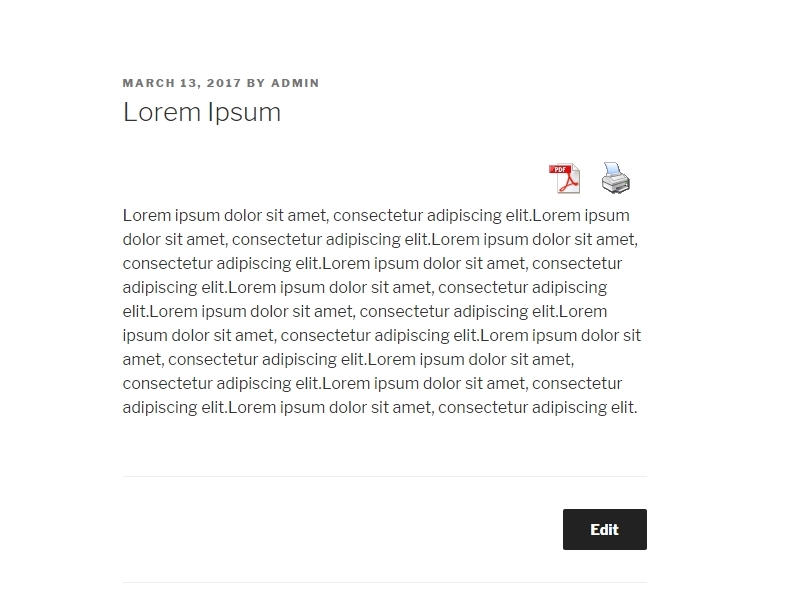
PDF & Print Buttons displaying with your blog post
If you prefer custom post types, you will also find no difficulties in working with PDF & Print plugin, as it supports every type of posts displayed on your website. Apart from that, you are free to create PDF documents for your archive and search pages, as well as develop a personal PDF & Print portfolio. If the default position of PDF & Print buttons does not work for you, you can easily relocate them to the spot that fits your needs (this feature is typical, and can be found in other plugins under review as well). This can be done on the settings page, which includes several user-friendly location options, along with the choice of PDF document templates.
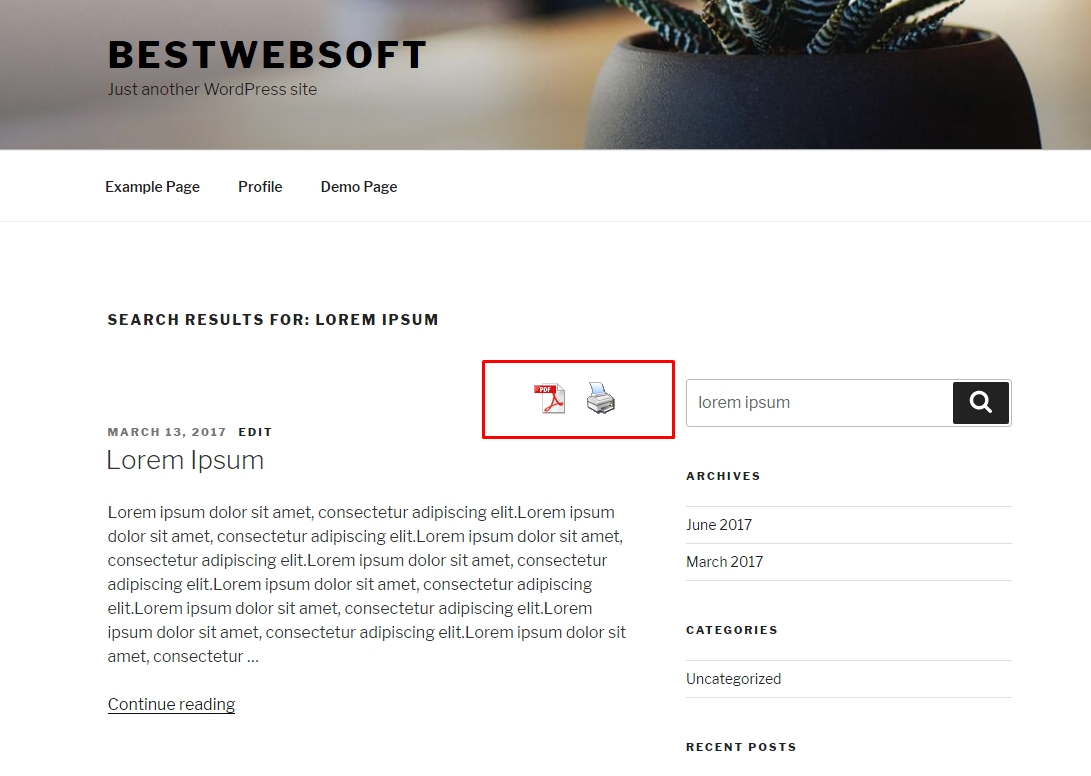
Generating PDF document in search results
Finally, PDF & Print enables the execution of shortcode in PDF and printing output, which is truly a time-saver function.
Download PDF & Print: https://wordpress.org/plugins/pdf-print/.
PDF24 Article to PDF created by pdf24 and StefanZielgler is one of the older plugins, which has already hit 66,5 thousand downloads and underwent a number of large modifications, receiving a user rating of 3.4 out of 5 stars. Unfortunately, this plugin will not function properly with WordPress versions 3.6.2+. This plugin is similar in its functions to the previous one, yet it does not have a built-in print option. Neither is it graphically realized in the form of a button. Instead, it features several links to creating the PDF file, located in different places on the page, which makes it really hard to miss one when looking for a way to generate a PDF document. Like in PDF & Print, you are also free to adjust the location of the links and boxes on the page. However, you might want to keep in mind that with this plugin, the location determines whether you will create a PDF file for all articles, or just one. Although seemingly simple, if you are in a hurry to create a PDF document, having multiple links can be quite confusing.
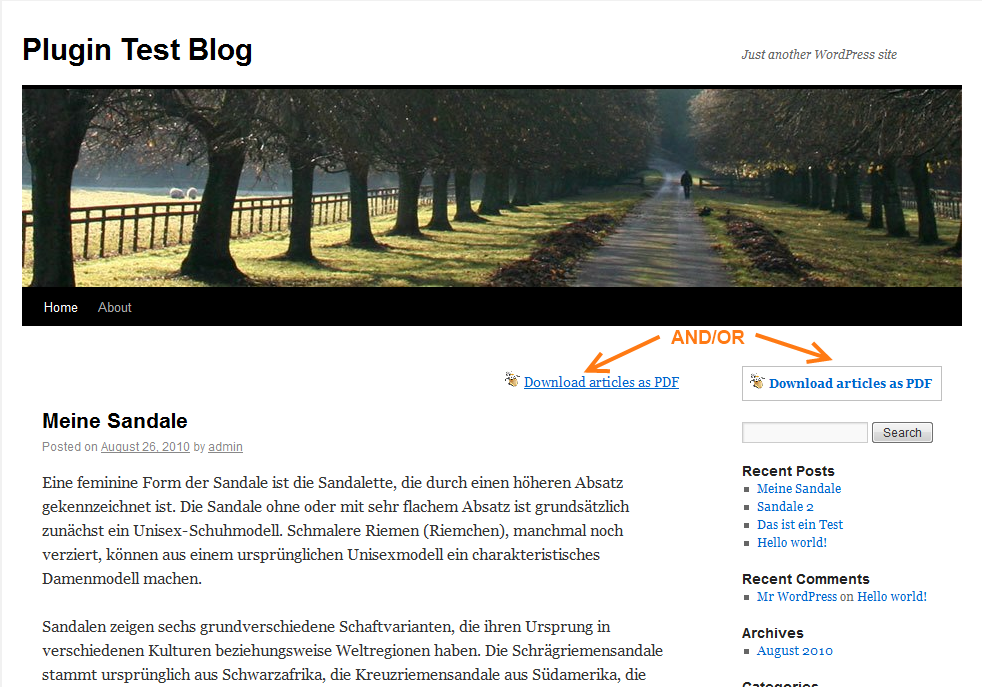
PDF24 Article to PDF links display with your blog post
While PDF24 Article to PDF plugin does not let you print the articles immediately, it offers you two ways of receiving the PDF file. Thus, you can have it delivered to you via e-mail, or download it directly. However, some users find it irritating that the plugin “forces” to give away e-mail address.
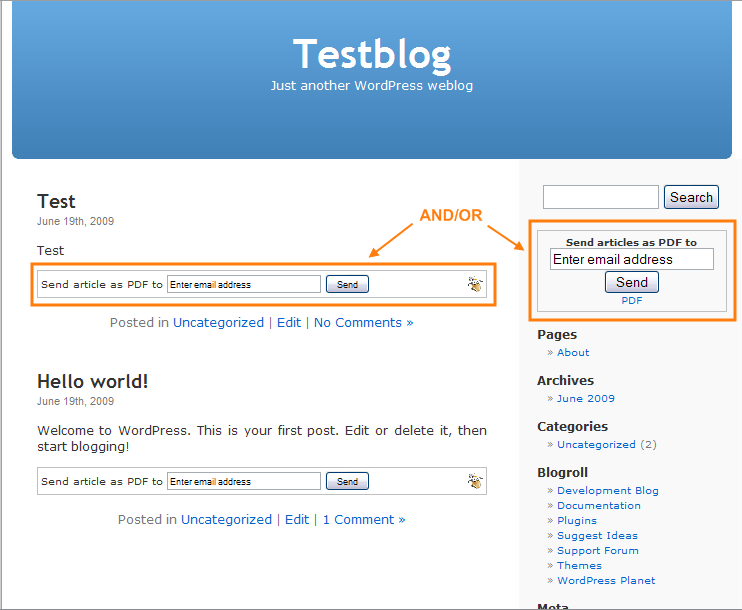
PDF24 Article to PDF option to receive created PDF file via e-mail
Apart from that, the plugin also supports custom fields, which can be listed as an advantage.
Download PDF24 Article to PDF: https://wordpress.org/plugins/pdf24-post-to-pdf/.
This plugin is developed on the base of an earlier version of WP Post to PDF plugin by Lewis Rostenthal and qstudio. While it is not as popular among the users as other plugins, with slightly over 6000 downloads, the responses and high rating (4.9 stars), nonetheless, suggest that this plugin has high chances becoming more successful in future. Similar to the previous plugins, WP Post to PDF Enhanced allows rendering posts and pages as PDF files that can either be downloaded or printed. While it introduces a Create PDF button, this plugin does not have a similar one for print option, which sometimes may be inconvenient.
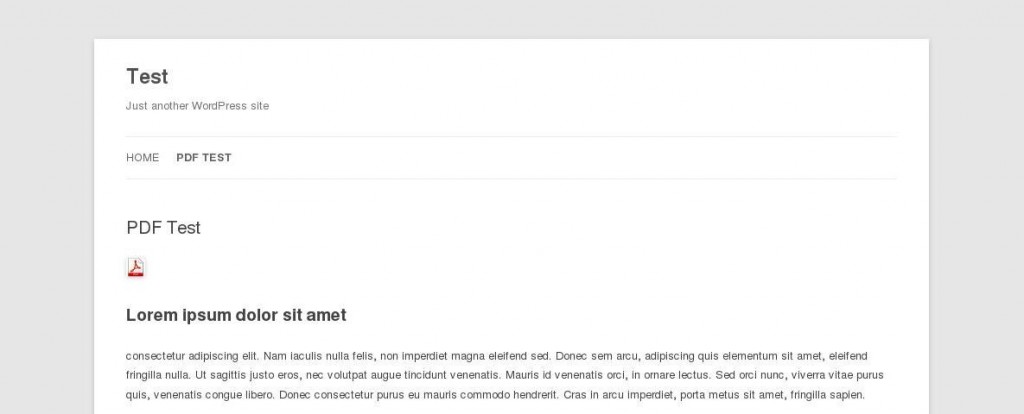
WP Post to PDF Enhanced Create PDF button display with your post
Still, well-developed settings that allow users to specify various aspects is what really makes this plugin stand out. Thus, you are free to choose the post types that will support PDF creation, the types of users who will be able to generate PDF documents (for instance, registered users only), includes and excludes and many more.
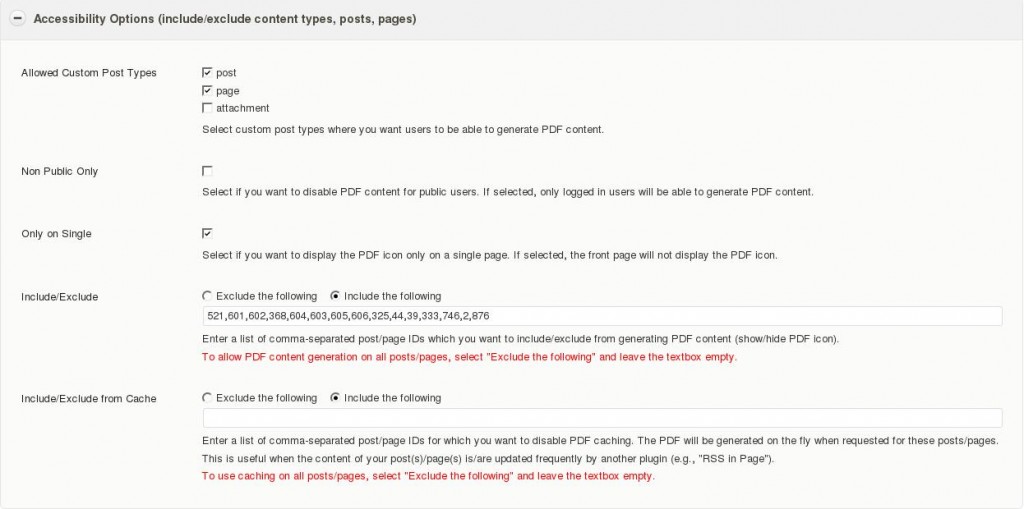
WP Post to PDF Enhanced settings page
Another convenient feature of this plugin is that it allows generating PDF files without leaving the page and utilizing any third party. This way, users are not redirected to suspicious websites. Unfortunately, if you like including HTML to headers, this plugin might not be the best option, as it has been reported by WP Post to PDF Enhanced users. Likewise, watch out for the images inside the content, as they may not be supported by print option.
Download WP Post to PDF Enhanced: https://wordpress.org/plugins/wp-post-to-pdf-enhanced/.
The Print Friendly and PDF Button is a veteran among PDF-related plugins, with almost 500k downloads and a high rating of 4.3 stars. Developed by printfriendly, Joost de Valk and jrf, this plugin is by far the oldest among similar products. With Print Friendly and PDF plugin, you can easily remove separate paragraphs and images from the text in the preview mode, which is extremely convenient and time-saving, and is not featured in any of the abovementioned plugins.

Print Friendly and PDF Button preview mode, in which you can remove text blocks and images
While other plugins often open new tabs or windows, Print Friendly and PDF Button opens a Lightbox, allowing you to stay on the page (however, the similar principle is also used in the PDF & Print plugin). However, in case this plugin is used in the corporate environment, this feature may conflict with firewalls and proxy. This slows down the work significantly, and reduces the attractiveness of this plugin for business websites. What is also noteworthy is that this plugin is environmentally friendly, optimizing the pages to be printed at minimum price and with no extra paper usage. This technology is completely alien to other plugins, while being a huge bonus for Print Friendly and PDF Button.

Print Friendly and PDF Button official website main page
What is also quite appealing to users, is the strict privacy policy. You can rest assured that your e-mail or any other personal data will not be distributed by this plugin, unless compelled by the law. However, there is always a fly in the ointment. If you want to get a free version of this plugin, you will have to deal with ads. Although they are claimed to not interfere, and appear only in the e-mail confirmation window, a number of people may find it really annoying. Apart from that, users have been reporting that in reality, ads are also put on the print pages, which is a huge minus. In order to remove these ads, users have to pay a monthly fee, which often does not work, and the ads are still shown. None of the other three plugins get mixed up with advertising, as it affects the overall presentability of the website in the negative manner. So, if you develop your site for business purposes, you might want to watch out for those ads.
Download Print Friendly and PDF Button: https://wordpress.org/plugins/printfriendly/.
The installation process is almost identical for each of these plugins, as it requires downloading the zip file and unpacking it to the target directory, followed by enabling the plugin and configuring it to match your requirements. However, in case of the WP Post to PDF Enhanced plugin, the type of the downloaded file is not specified, as well as it may be unclear for the user whether the archive should be unpacked to the target directory, or just copied. But apart from that, if you are familiar with installing plugins in general, you will hardly have any problems with installing either one of these.
Even if the default features of the plugins are convenient and user-friendly, a lot of users still prefer to customize them to match their own preferences. WP Post to PDF Enhanced, Print Friendly and PDF Button and PDF24 Article to PDF plugins allow you to specify the format and style of the PDF document, as well as the design of the buttons/boxes themselves. WP Post to PDF Enhanced plugin has particularly convenient settings options in this case, which include virtually any aspect of presentation and formatting possible. As for PDF & Print, its customization options are different from other plugins, as it does not support manual customization. Instead, a team of professional developers will eagerly do it for you for a small fee. This way, if any difficulties in customization process appear, you will not be the one to deal with them. This offer is really time- and effort-saving when it comes to productivity and usability.
As WordPress is a CMS used worldwide, plugins that come pre-packed with several languages are more likely to receive customer approval. Unfortunately, with WP Post to PDF Enhanced and PDF24 Article to PDF you are bound to use English only, as no other languages are supported. PDF & Print plugin originally comes in three languages: English, Russian, and Ukrainian. However, if you choose to create your own language pack for this plugin, the developers will eagerly accept it, and add it to the default settings. As for Print Friendly and PDF Button, it already comes packed with more than 20 languages, which makes it particularly popular among non-English-speaking users.
With all four plugins, generating PDf files from your website posts is an easy and trouble-free job, that will not take you more than several minutes. However, if you keep up with all WordPress updates and want to print the created PDF files, PDF24 Article to PDF will be of little help. Similarly, WP Post to PDF Enhanced print options may be a little inconvenient for some users, as no separate button is included. Nonetheless, this plugin is perfect for those, who like to customize the features manually. PDF & Print plugin, while having more fee-based features, demonstrates effective compatibility and cooperation with other plugins, and allows you to create portfolios. This plugin is best suitable for business websites. Finally, tree-huggers will be pleased to work with Print Friendly and PDF Button, as it is the only environmentally-friendly plugin. As you can see, none of these plugins is a perfect solution to all your problems, yet you are free to give them a try and see which one is best for yourself.

Content retrieved from: https://bestwebsoft.com/most-helful-plugins-for-generating-and-printing-your-pdf-file/.
Add a Table of Contents and In-Post Pagination to WordPress
Posted on August 18th, 2018
As a webmaster, some of your goals are likely to be increasing the number of pages a visitor views on your site per visit, as well as increasing the time they spend on your site. Increasing both of these metrics can benefit your site in a number of ways.
As Google can use these metrics to evaluate how useful and relevant your content is to your readers, it can have a positive effect on the ranking of your site in the search engine results pages. This can in turn increase the number of visitors to your site.
By adding a table of contents to the start of your posts, you can easily convey to your readers just what is covered in the post, and if necessary allow them to jump to the most relevant part. This is a great way to decrease the likelihood that the user might bounce back to the search engine results page after landing on your site. By being able to quickly see what is in front of them via the contents, they can immediately determine how useful the content is to them.
Another way to increase the page views per visitor is to divide your content up into smaller chunks. By paginating your posts, or dividing them into pages, you can increase the pages a visitor views during their visit, which again reduces the bounce rate in the eyes of Google and can have a positive effect on how they evaluate the relevance and quality of your site, therefore ranking it more positively in their results pages.
If you sell advertising space on your website, then increasing these metrics can also help you increase the amount you can charge. Low bounce rates and a high number of page views per visitor can all increase the attractiveness of your site to potential sponsors and advertisers, or even if you ever decide to sell your website.
Adding a Table of Contents to WordPress
Adding a table of contents to your longer WordPress posts not only makes it easier for your visitors to navigate a long piece of content, but it also shows them exactly what your will be covering and what they will learn as soon as they hit your page.
Another advantage of adding a linked table of contents that allows users to quickly ump to the part they are most interested in, is that it makes it easy for you and your readers to directly link to a specific part of your posts. Instead of just providing a link to the post, it is possible to link to a specific paragraph using the table of contents anchor links. This can make your content more sharable, increasing visitors to your site.
[video_page_section type=”youtube” position=”default” image=”http://track-n-test.com/wp-content/uploads/2018/08/youtube-banner1.jpg” btn=”light” heading=”” subheading=”” cta=”” video_width=”1080″ hide_related=”true” hide_logo=”false” hide_controls=”false” hide_title=”false” hide_fullscreen=”false”]https://www.youtube.com/watch?v=ZbUoJ_7DLZk[/video_page_section]
The Best Table of Contents Plugin
If you were building your website by hand, writing the underlying HTML, then you would have to create anchor links throughout your document, and then create the list of contents and link each one to those anchor points. This could quickly get time consuming as the number of pages on your site grows.
Thankfully for WordPress users there is a very handy free table of contents plugin that makes adding this feature to your content a very hands off and automated affair. That plugin is the aptly named Table of Contents Plus and while there are other options, this is a good choice with over 48,000 downloads and a very respectable 4.8 out of 5 star rating, not to mention its great features and ease of use.

To install the plugin, just login to your WordPress admin dashboard, click on Plugins > Add New and search for Table of Contents Plus. It should be the first result returned so click on Install Now and then activate the plugin.
Creating a Table of Contents
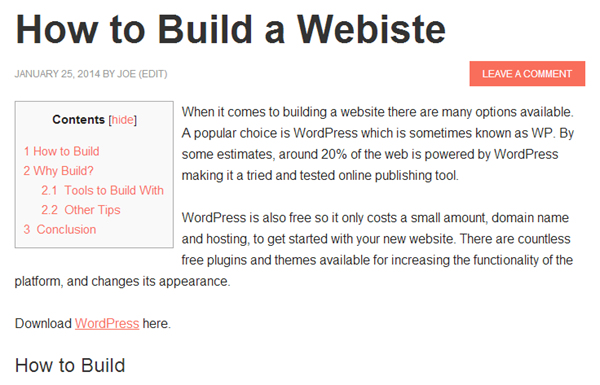
The way the plugin works is to scan your posts and pages, looking for headers. If the plugin detects more than a set number of headings, it will then create a table of contents (TOC) for your post.
The settings page for the plugin can be found under the Settings sidebar menu then clicking on TOC+. From here you can set the number of headings required in a document to show the TOC. You can also set the position of the TOC and choose which content types automatically get a TOC, by default just pages is selected. The plugin can also be configured to show a custom header above each TOC.
Other settings and features of TOC+:
- Add show/hide controls for the TOC
- Use a hierarchical structure based on different heading types (H2, H3, etc.)
- Number list the items
- Smooth scroll rather than jump to the section of the page
- Set the width, font size, and direction of text wrapping
- Choose a colour theme or create your own
- Select which headings to include (H1, H2, etc.)
- Disable for individual pages using a shortcode
- Disable for specific headers or those containing a certain word
- Display the TOC in the sidebar using the widget
For a free plugin, this one is really feature packed and covers every eventuality that might occur when configuring your TOC.
[video_page_section type=”youtube” position=”default” image=”http://track-n-test.com/wp-content/uploads/2018/08/youtube-banner1.jpg” btn=”light” heading=”” subheading=”” cta=”” video_width=”1080″ hide_related=”true” hide_logo=”false” hide_controls=”false” hide_title=”false” hide_fullscreen=”false”]https://www.youtube.com/watch?v=oyDDowvVRvw[/video_page_section]
Add a Sitemap
Another interesting feature of this plugin is the ability to add a sitemap page to your site. This can be done simply by entering a shortcode into a post or page. By default, that page will then contain a big TOC of all the pages on your site.
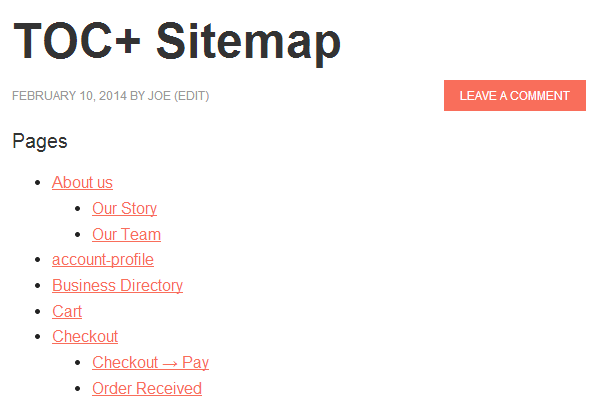
The sitemap shortcode can be customised to also show the following:
- Posts – ordered by title, date, author, number of comments, ID, and more
- Category – lists categories instead of posts or pages
Adding a TOC to your posts and pages with this plugin couldn’t be any easier. If you are writing long posts for your site, this plugin comes highly recommended.
Table of Contents Plus
Adding Pagination to a WordPress Post
WordPress already uses pagination to make it easier for your visitors to navigate their way through your published content. This feature allows you to show a set number of posts on a page, and then display a link to view the next set of posts. This is instead of simply showing a huge list of all your site’s posts.
This same principle can be applied to long form content in WordPress, such as in-depth posts and pages. This can make it easier for your readers to consume your content as they can work their way through the page in a more step by step manner. It also allows you or your readers to link directly to a specific sub-page of the post.
The easiest way to start dividing your posts up into more manageable chunks is to simply add the following into your content at the point you would like to start the next page:
<!––nextpage––>
Please note this must be done when using the Text view of the post editor:
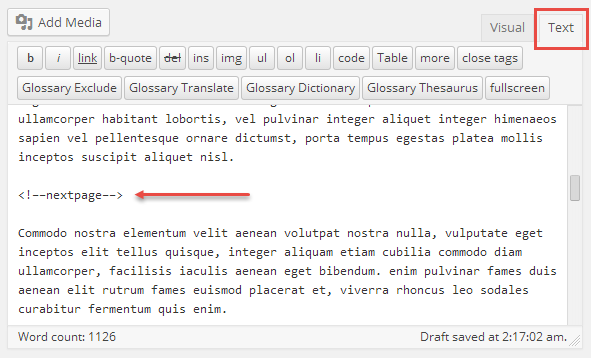
While this does work, some themes might not display the required links to the next page. If this is the case for your theme, either upgrade to a better theme, or edit your single.php file to include <?php wp_link_pages(); ?> (more info here).
As anyone who has tried to add more ‘advanced’ features to their posts, switching from Visual to Text view can cause problems with formatting. Using the manual approach to post pagination also means that you have to consciously remember to add pagination to each post. A better way for you and your site might be to use a post pagination plugin.
The Best In-Post Pagination Plugin for WordPress
Like adding a table of contents to your site, an easier and more feature rich way to enable post pagination can be to use a plugin. When it comes to automatically paginating your posts and splitting them into multiple pages, there aren’t many options. The best one seems to be Automatically Paginate Posts which auto-inserts the required tag into your content.
After installing the plugin, its settings are added to the reading page (Settings > Reading). From here you can choose which post types will be automatically paginated and also set the number of pages each post will be divided into.
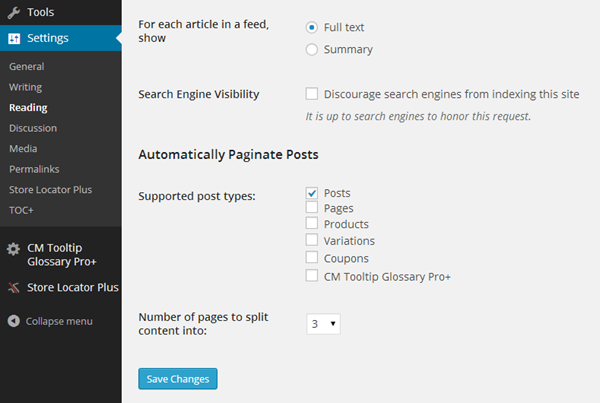
The plugin can be overridden when creating a new post or page by using the metabox that is added to the post editor screen. If enabled, the plugin will add some links to the end of your post which allows the user to move onto the next part.
If you want to use the manual method for adding pagination, by inserting the next page tag, then it will disable auto-pagination for that post. This is handy if you want to ensure that your content is divided in a more meaningful way and doesn’t separate parts of the post that should be on the same page, such as a paragraph and its associated image.
The Atomically Paginate Posts plugin isn’t ideal as it will break up a post no matter how long it is. This can be annoying for the reader if they have to click after every few lines which would happen on a short post. It would be nice if the settings allowed you to divide the posts after a set amount of words, rather than setting the number of pages a post must be divided up into. However, you can disable the plugin at the individual post level which is a good idea for short posts.
Conclusion
Adding a table of contents to your posts and pages and also breaking them up into more manageable chunks with in-post pagination is a great way to make your content more manageable and easy to consume.
Adding in a table of contents makes it very easy for you and your readers to directly link to a relevant part of the page, thanks to the way the table of contents plugin adds anchor links into posts. This can help make your content more sharable as a reader can link straight to the point they are referencing in their own blog posts or social media posts.
In-post pagination is also a great way to increase your page views and reduce bounce rate. This can have a positive effect on your sites SEO rating as it shows to Google that your readers stick around for longer and do more than check out the page they land on before bouncing straight back to the search results.
Have you implemented tables of contents or in-content pagination on your site and did you notice any increase in visitor engagement?
Content retrieved from: https://www.wpsquared.com/add-a-table-of-contents-and-in-post-pagination-to-wordpress/.
How to Add AdSense Auto Ads to Google AMP Pages in WordPress
Posted on August 17th, 2018
For AdSense publishers that use Google AMP by Automattic, after setting up auto ads and adding to your WordPress site, you must have noticed that Google ads don’t appear on the the Accelerated Mobile Pages (AMP) of your site.
This could cost you thousands of dollars in earnings, if a great deal of your visitors use their mobile devices.
After receiving several requests from my readers to publish a tutorial to correct this anomaly, I have decided to do just that. This tutorial will show you how to add AdSense on AMP pages.
Video Tutorial
If you don’t find the video sufficient, or you just want to know more, then continue reading.
You can easily display ads on AMP pages using several plugins. However, many of them come at an extra cost. You don’t have to spend a dime to get this done – It’s not as difficult as you imagine.
To display ads on AMP with this guide, we will be making use of the latest innovative feature called “Auto Ads”.
The auto ads feature allows you to add a simple code to your site, and after adding that code you can easily manage your ads directly from your AdSense dashboard.
Follow this guide: setup auto ads and add to WordPress
If you are very familiar with your AdSense Dashboard, you must have noticed a new feature located within Optimization>>Lab. This feature is called “AMP auto ads (text and display) – A great new way to monetize your AMP pages. Switch on this lab to place text and display ads on any AMP page that you’ve tagged with the AMP Auto ad code”.
First thing you need to do is toggle on this feature and click on get code.
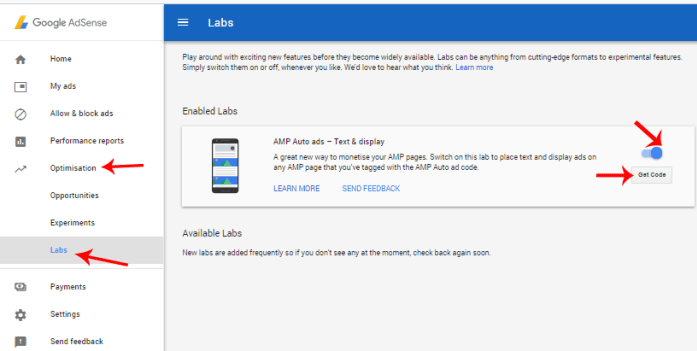
You will be provided with an AMP code you have to add to two places on your website.

AdSense has a guide to add this code to your site. However, you may find this difficult to implement without proper guidance if you are not a tech savvy. This post will help you add those AMP codes to your site even if you are new to coding.
You can add AMP codes by directly customizing your AMP plugin. But the most recommended method is to add your AMP code to your theme functions.
How to add AMP codes to theme functions
Make sure you are logged in to your WordPress dashboard. Hover your mouse cursor on the appearance icon and click on editor.
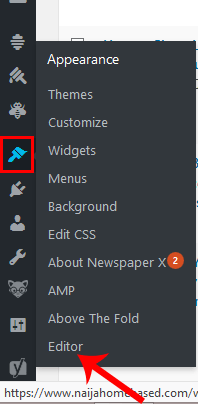
Make sure the theme you want to add your AMP code to is selected and click on Theme functions (functions.php).
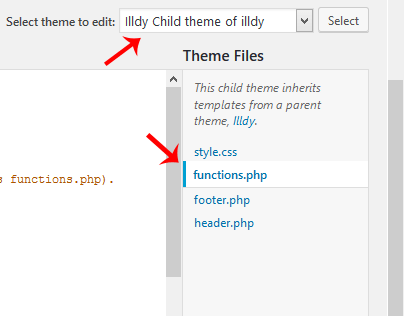
Recommended action: Add AMP code to a child theme and not a parent theme. Remove AMP code previously added to AMP plugin if that didn’t work.
Add the two codes below to your functions.php respectively, ensuring you replace //adsense_header_code and //adsense_footer_code with your AMP header and footers codes respectively.
//Adding Header Code in AMP pages in WordPress add_action(‘amp_post_template_head’,’nhb_amp_my_custom_head’); function nhb_amp_my_custom_head($amp_template) { ?&amp;amp;amp;amp;gt; //adsense_header_code &amp;amp;amp;amp;lt;?php }
//Adding Footer Code in AMP pages in WordPress add_action(‘amp_post_template_footer’,’nhb_amp_my_custom_footer’); function nhb_amp_my_custom_footer($amp_template) { ?&amp;amp;amp;amp;gt; //adsense_footer_code &amp;amp;amp;amp;lt;?php }
The final piece of code within your functions.php should look like the one in the image below.

With this method, Ads will begin to show up within your AMP pages. You can also verify this by visiting yoursite.com/page/amp/
If you intend to configure your AMP plugin directly (not recommended), here’s a guide for you.
How to add AdSense AMP code to AMP plugin
You can configure your plugin directly from your WordPress dashboard. However, it is advisable not to do that. The best way to configure your plugin is to Add the code using your FTP/SFTP client. In my case, I access my remote site using FileZilla. It is one of the best FTP clients out there.
Make sure you are logged in to your FTP client and ensure the location on the remote site points to /public_html/wp-content/plugins/amp/templates.
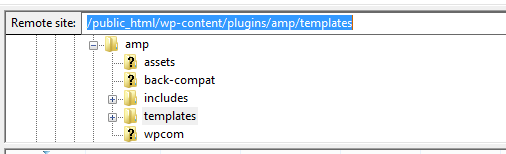
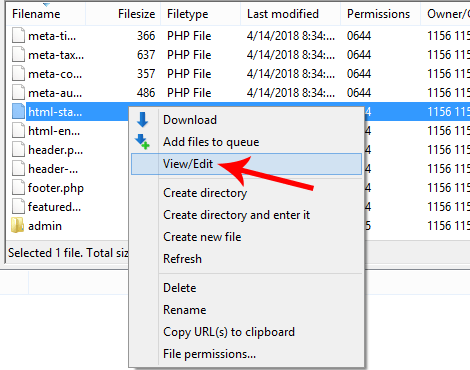
Under your amp>>template, you should see the filename html-start.php. right click on that file and click on edit.
Paste the AdSense header code directly below the <head> tag and the footer code directly below the opening <body tag, as shown in the image below.
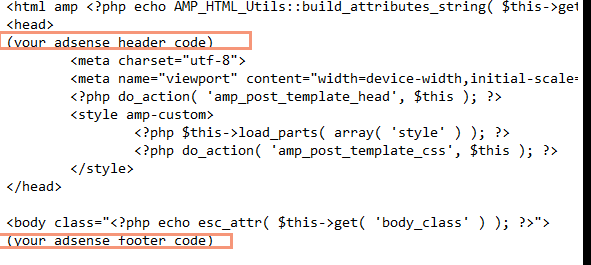
After pasting the code in your editor, save the settings to your server.
Google Ads should start displaying in your AMP pages immediately. You can verify this by visiting any of your site/blogpost/amp in a mobile phone browser (preferably chrome browser). Google ads may not be visible in search results until around 20-30 minutes.
That’s everything about adding auto ads to your AMP pages in WordPress. Feel free to communicate your challenges if you were unable to get this done.
Subscribe to this blog using the subscription box below. Also, follow us on Facebook and Twitter to get access to our exclusive tutorials faster than anyone else.
Content retrieved from: https://www.naijahomebased.com/adsense-amp-code-amp-pages-wordpress/.
How to Increase Pageviews and Reduce Bounce Rate in WordPress
Posted on August 12th, 2018
Before we start
Lets cover some basics regarding terminology and technology. Bounce rate represents the percentage of visitors who enter your site and “bounce” (leave the site) rather than continue viewing other pages within the same site. Page view is a request to load a single page on an internet site. We use Google Analytics to track our data. You are welcome to use another analytics service, or you can simply install google analytics in your WordPress site.
Now that we have taken care of the basic terminology, you are probably wondering why the heck do these numbers matter?
If you are running a site that is primarily monetized by banner ads, then the number of pageviews matter. If you are trying to build a loyal audience, then the number of bounce rate matters. Also the lower your bounce rate, the better ads eCPM (cost per thousand) or CPC (cost per click) you will get. When the same user views the next page, your ad provider most likely has a better ad to serve them thus giving you a higher eCPM or CPC.
We have consulted with a lot of clients helping them increase their pageviews and reduce bounce rates. We have also done a lot of experiments on our own sites like List25. So all the methods that we will share are the ones that we have used in the past and know that they work.
P.S. These techniques will ONLY work if you have Good Content.
[video_page_section type=”youtube” position=”default” image=”http://track-n-test.com/wp-content/uploads/2018/08/youtube-banner1.jpg” btn=”light” heading=”” subheading=”” cta=”” video_width=”1080″ hide_related=”false” hide_logo=”false” hide_controls=”false” hide_title=”false” hide_fullscreen=”false”]https://www.youtube.com/watch?v=lxgE4HgXJ1g[/video_page_section]
Interlink Your Posts
Anytime that you can interlink your other posts within the post content, you are going to see an increase in pageviews. In WordPress 3.1, interlinking got even easier because you can simply search for the post you want to link while adding links. Interlinking techniques work great when you have a site with a lot of articles. If you are just starting out, then you will be a bit limited. So how do you go back and interlink older articles when you have something new? You can manually do it, but it will take some time. There are plugins that lets you automatically link keywords in WordPress (Although that article is showing you how we did this for affiliate links, you can use it for internal linking purposes as well). Not only does interlinking help you increase pageviews and reduce bounce rates, it also helps with SEO as well.
If you want to see an example of interlinking, then just look at the paragraph above.
Show Related Posts After the Post
One of the main reasons why the user leave your blog after reading the post is because you are not showing them what to do next. By showing the user with a list of “related posts” or “other popular posts”, you may get them to go on to visit another post in your site. There are a lot of ways you can add related posts to your blog. You can use a plugin called YARPP that has its advanced algorithm that picks the related post. You can show related posts by category or tags without using a plugin. You can also show related posts by showing other posts by the same author.
Show Excerpts on Front / Archive Pages
Showing excerpts on front/archive pages have two advantages. First, it decreases page load time. Second, it helps increase the pageviews. You should almost never show full posts on your front page or archive page. Imagine having like 25 images in one post, and then have 5 of those on one page. It would be a horrible user experience because of (slow load time and super long page) which would make the user leave your site. We have a tutorial on how to display post excerpts in WordPress themes. Most good theme frameworks like Genesis, Thesis, Headway etc. already have this option built-in.
[video_page_section type=”youtube” position=”default” image=”http://track-n-test.com/wp-content/uploads/2018/08/youtube-banner1.jpg” btn=”light” heading=”” subheading=”” cta=”” video_width=”1080″ hide_related=”false” hide_logo=”false” hide_controls=”false” hide_title=”false” hide_fullscreen=”false”]https://www.youtube.com/watch?v=th_CMRGAmYw[/video_page_section]
Splitting up Long Posts
Are you writing a super long posts? Well, you can split it into multiple pages using the WordPress <!–nextpage–> tag in your post. Simply add it wherever you want, and your post will split into multiple pages. You can see an example of how we split our posts into two pages or even into five pages. You have to be very careful when doing this because if you do not have a sufficient amount of content on each page, then the user might get pissed of. We have seen a lot of big name sites like Forbes, NY Times, Wall Street Journal and others utilize this technique.
Interactive Sidebar
Your sidebar can play a crucial role in increasing pageviews and reducing bounce rate. You can show your popular posts in the sidebar. You can even customize it to show popular posts by week, month, all time. You can also show your most recent posts only on single post pages. We have seen sites that create custom images to navigate to specific posts of theirs. You can integrate other sections of your site in your sidebar for example look at our WordPress Coupons section or the gallery section in the sidebar.
Encourage Random Browsing
On List25 we created a feature called I’m Feeling Curious. When a user clicks on this button, they will be redirected to a random post in WordPress. We put the button in our header bar which was a very hot spot. After seeing good results, we ended up putting it on WPBeginner as well and called it Explore.
[video_page_section type=”youtube” position=”default” image=”http://track-n-test.com/wp-content/uploads/2018/08/youtube-banner1.jpg” btn=”light” heading=”” subheading=”” cta=”” video_width=”1080″ hide_related=”false” hide_logo=”false” hide_controls=”false” hide_title=”false” hide_fullscreen=”false”]https://www.youtube.com/watch?v=0j8RrMJ5oeQ[/video_page_section]
Results
When we started out List25, we faced a lot of criticism. People were saying that sites like these fail to grow because it is hard to keep a loyal audience. We asked around and a lot of people who had done something similar in the past reported that the bounce rate for a siimlar site was soaring in 80% range. Average user would view only one page per visit and leave. We started the site out to get some base data. Our bounce rate was in the 75% range. We slowly started implementing the changes mentioned above. Bounce rate decreased from the average of 76% to 42%. Our pageviews per visit increased to 2.79 / pages per visit. Average time spent on page went to the average of 3 minutes and 40 seconds << This is the average time spent for our 1 million unique visitors! What are you doing to increase pageviews and reduce bounce rate? Share with us.
Content retrieved from: https://www.wpbeginner.com/beginners-guide/how-to-increase-pageviews-and-reduce-bounce-rate-in-wordpress/.