

9 Best Machine Learning Certification & Training [2018 UPDATED]
Posted on August 29th, 2018
Our team of global experts has done in depth research to come up with this compilation of Best Machine Learning Certification, Tutorial & Training for 2018. All these resources to learn Machine Learning are available online and are suitable for beginners, intermediate learners as well as experts
Contents
- 1. Machine Learning Certification by Stanford University
- 2. Machine Learning Tutorial A-Z™: Hands-On Python & R In Data Science
- 3. Python for Data Science and Machine Learning Training
- 4. Machine Learning Certification by University of Washington
- 5. Data Science, Deep Learning, & Machine Learning Tutorial with Python
- 6. Advanced Machine Learning Certification by Higher School of Economics
- 7. Data Science Specialization – John Hopkins University
- 8. Data Science and Machine Learning Tutorial with R
- 9. Data Science with Python – University of Michigan
1. Machine Learning Certification by Stanford University
This is one of the most sought after certifications out there because of the sheer fact that it is taught by Andrew Ng, former head of Google Brain and Baidu AI Group. For a certification to receive a rating of 4.9 out of 5 is no mean feat and the fact that it is associated with Stanford University simply adds much more credibility to the program. The topics that will be covered include Supervised learning, Unsupervised learning, best practices in machine learning and the program structure will be based around multiple case studies and applications, to help you learn how to apply algorithms to build smart robots, text understanding, medical informatics, database mining and other areas. This is undoubtedly the Best Machine Learning Certification out there and we give it two thumbs up! This is undoubtedly the best machine learning certification you can opt for.
Rating : 4.9 out of 5
Review : The instruction was helpful. There was enough rigorous derivation for context, but the focus was on the practical use of machine learning techniques. The exercises were excellent. They included simple, principled examples that demonstrated the fundamental concepts, as well as realistic applications that demonstrated their usefulness. There was also solid support from mentors. I would highly recommend this course. It’s my first time using Coursera, and I plan to enroll in another class as soon as I’m done with this one. Thanks.
2. Machine Learning Tutorial A-Z™: Hands-On Python & R In Data Science
Close to 200,000 students have attended this Machine Learning training so far with a high rating of 4.5 out of 5! Trainers Kirill Eremenko and Hadelin de Ponteves along with their Super DataScience Team has put together this brilliant program to help you create Machine Learning Algorithms in Python and R. All you need to attend this training is high school level mathematics understanding or basic level learning of algorithms such as linear regression and logistical reason. It is a 40.5 hour long comprehensive course that will offer you all details and knowledge required to excel in this field. This is one of the best machine learning tutorial in our opinion.
[responsive_video type=’youtube’ hide_related=’1′ hide_logo=’0′ hide_controls=’0′ hide_title=’0′ hide_fullscreen=’0′ autoplay=’0′]https://www.youtube.com/watch?v=p317nw5Fj3o[/responsive_video]
Rating : 4.5 out of 5
Review : Kirill and Hadelin really took time to design the course such a way that understand the Concept very easily, even though if you don’t have any previous knowledge. On Top of it , specially having perfectly designed templates for various algorithms will make you feel very comfortable . Throughout the course if you follow the video , you are sure to get the concept of machine learning. And at the end of the course I’m quite confident to face any challenge in Machine learning world . – Prantik Bala
3. Python for Data Science and Machine Learning Training
Jose Marcial Portilla is an MS and he comes with years of experience as a professional instructor and trainer for Data Science and programming. He has over time provided in person training to employees of organisations such as General Electric, The New York Times, Credit Suisse and many more. Having said all of that, you would know by now that you are in absolute safe hands if you decide to go for this online Bootcamp with him. You will get to learn all about K-Means clustering, Matplotib for Python Plotting, Neural Networks, understand how to use Spark for Big Data Analytics and naturally learn how to implement Machine Learning Algorithms. This training has already been attended by a whooping 90,000+ students and has a high rating of 4.6 out of 5! This course that stretches for 21.5 hours comes highly recommended from our side, and is one of the best machine learning training out there.
[responsive_video type=’youtube’ hide_related=’1′ hide_logo=’0′ hide_controls=’0′ hide_title=’0′ hide_fullscreen=’0′ autoplay=’0′]https://www.youtube.com/watch?v=PrMHtz8ZTfM[/responsive_video]
Rating : 4.6 out of 5
Review : An excellent course – well-structured, thorough, and engaging. This course can serve as a model for technical courses on Udemy. The only significant issue I encountered was some of the TensorFlow content was slightly out of date but that’s unsurprising with such a fast-moving, cutting-edge open source project like TensorFlow, so I didn’t knock the rating because of it. – Jason Scott
4. Machine Learning Certification by University of Washington
This is an intermediate specialization which means that you should have some related experience before signing up for this program. This training is spread over the course of few months to help you get a comprehensive understanding and become proficient at machine learning. Taught by Emily Fox and Carlos Guestrin, who are both Amazon Professors of Machine Learning. Based around practical case studies, you will learn all about Prediction, Classification, Clustering, Information Retrieval and other areas surrounding the topic.
Rating : 4.6 out of 5
Review : Excellent course, really appreciate the your hard work in creating easy to follow course, very good slides and presenting information and explanations step by step…. oh and also love the on-screen chemistry between both of you and engaging style with students. It has been an enjoyable course. Please keep up the good work.
5. Data Science, Deep Learning, & Machine Learning Tutorial with Python
Frank Kane is another champion when it comes to teaching online courses and this training is no different. Having spent 9 years at Amazon and IMDb, Frank actually developed the technology that today gives product and movie recommendations which we see on these portals. He holds 17 patents in the field of machine learning, data mining and distributed computing and since 2012 has been concentrating on his venture ‘Sundog Software’ which brings us this training. In this training, he will teach you how to visualize data distributions, probability mass functions, probability density functions in addition to helping you demystify how to use covariance and correlation metrics, use Bayes’ Theorem to identify false positives and visualize data with matplotlib.
[responsive_video type=’youtube’ hide_related=’1′ hide_logo=’0′ hide_controls=’0′ hide_title=’0′ hide_fullscreen=’0′ autoplay=’0′]https://www.youtube.com/watch?v=PWExUJ_di2M[/responsive_video]
Rating : 4.5 out of 5
Review : Clear an simple explanation. Excellent real world examples that are easy to digest an open up exciting possibilities when thought through further. Well done! Thanks so much, Frank! – Raymond Neo
6. Advanced Machine Learning Certification by Higher School of Economics
Developed and taught by a team of 21 lecturers, professors and researchers; this is your deep dive into the world of machine learning and only meant for ones with basic knowledge about the subject. You will learn all about deep learning, reinforcement learning, natural language understanding, computer vision and Bayesian methods. CERN scientists will share experiences of solving real-world problems to help you understand how all this works in practice and not just theory. At the end of this 7 course curriculum, you will get to apply modern methods in businesses and industries. For all those who are keenly interested in going deep inside a topic, we think this is the best machine learning certification for you.
Rating : 4.8 out of 5
Review : This course is amazing. Taught by experts in the field with a proven track record of outstanding performance in Kaggle competitions. They teach how to fine tune ML models to achieve better performance. My choice for best course on Coursera!
7. Data Science Specialization – John Hopkins University
This specialization program from John Hopkins will help you put your first step into the world of data science and machine learning. In 9 sessions, the trainers will help you learn all aspects of data science, followed by a capstone project to try out all that you learn in the course. The tutors of this program include Roger D. Peng, Brian Caffo and Jeff Leek and together they will teach you about R Programming, Exploratory Data Analysis, Statistical Inference in addition to many other aspects and areas of data science.
Rating : 4.5 out of 5
Review : I felt this course covered an adequate distribution of introductory material in the right amount of time. In particular, the swirl() library is incredibly helpful and well-designed.
8. Data Science and Machine Learning Tutorial with R
This is for all those who want to learn how to use the R programming language for data science and machine learning. Jose, an expert in the domain helps you learn how to Program in R, use R for data analytics, data science and how to make use of R for machine learning algorithms. Basic math skills are all you need in order to get going with this training, and in this 17.5 hour course, Jose will inspire you enough to help you go from being a nobody to a well informed somebody in the domain of machine learning!
Rating : 4.6 out of 5
Review : Great course, amazing teacher. Although I have a background in software development and databases, I had never used R before or employed statistical methods. After taking this course, including the recommended reading and the exercises, I feel confident in being able to use R and the machine learning methods covered in the course. – Peter Mancoll
9. Data Science with Python – University of Michigan
This specialization from the University of Michigan will help you master data science using python. The course includes training on tool kits such as matplotlib, nltk and networkx including others. You will be taught about Applied Plotting, Applied Machine Learning, Applied Text Mining and Applied Social Network Analysis. The trainer for the program are Christopher Brooks, Kevyn Collins-Thompson and Daniel Romeroand V. G. Vinod Vydiswaran. A sought after course, it is available on coursera and can be accessed online. The duration spans across a few weeks and it culminates in a capstone project to practice all that you learn.
Rating : 4.5 out of 5
Review : Very helpful to understand what it takes to make a scientific and sensible visual. Recommended for someone who is interested in learning data visualization and does not have a background.
There is a high chance you reached this blog post because of Google’s own Machine Learning algorithm controlled by Rank Brain. You don’t see it, but it’s all around. Machine Learning, Deep Learning and AI are taking over the technology ecosystem one step at a time and there is no way you can stay behind when it comes to upgrading your skills in the domain. To help you save time, we have shortlisted best training and certifications on the topic. Hope this is helpful for you.
So those folks were our choice of the Best Machine Learning Training and Certifications which you can attend online. These are based on most recent standings and are updated for 2018. We recommend you to check out Blockchain Courses , Best Python Certification , Artificial Intelligence Courses and Best Data Science Tutorial as well. We wish you all the best and hope you learn, get empowered and grow in your career 🙂 Cheers, Team Digital Defynd.
Content retrieved from: https://digitaldefynd.com/7-best-machine-learning-training-certifications/.
10 Best Probability & Statistics Course, Class & Training Online [2018]
Posted on August 26th, 2018
A global team of 20+ experts have compiled this list of 10 Best Probability & Statistics Courses, Classes, Tutorial, Certification and Training for 2018. It includes both paid and free learning resources available online to help you learn Probability and Statistics. These courses are suitable for beginners, intermediate learners as well as experts.
Contents
- 1. Statistics Certification with R from Duke University
- 2. Methods and Statistics Course Online in Social Sciences Specialization
- 3. Business Statistics Certification from Rice University
- 4. Bayesian Statistics Certification Course Part 1 : From Concept to Data Analysis
- 5. Bayesian Statistics Certification Course Part 2 : Techniques and Models
- 6. Workshop in Probability and Statistics Course Online
- 7. Online Statistics Course for Business Analytics A-Z™
- 8. Data Science Specialization from John Hopkins University
- 9. Statistics for Data Science and Business Analysis
- 10. Statistics Course with R – Beginner Level
1. Statistics Certification with R from Duke University
Demystify data in R, build analysis reports, learn Bayesian statistical inference and modeling in this program by Duke University. You will also learn to communicate statistical results, critique data-based claims, evaluate data based decisions and visualize data with R. Course is created and taught by Mine Çetinkaya-Rundel, Associate Professor of the Practice; David Banks, Professor of the Practice; Colin Rundel, Assistant Professor of the Practice and Merlise A Clyde, Professor. This is an ideal choice if you want to learn Probability and Statistics with R.
The 5 courses in this Specialization are –
a. Introduction to Probability and Data
b. Inferential Statistics
c. Linear Regression and Modeling
d. Bayesian Statistics
e. Statistics with R Capstone Project
Rating : 4.7 out of 5
Review – Great, diverse material presented in a lively fashion. Inspiring and well explained. The supplementary coursebook with exercises gives the opportunity to study the subject deeper. A lot of real-life examples and a convenient way to practice using R. If the Statistics is for you, this will increase your motivation to study it.
2. Methods and Statistics Course Online in Social Sciences Specialization
This program will help you analyze results Using R, learn sloppy science, perform research and data analysis. Created by University of Amsterdam, it is taught by Emiel van Loon, Assistant Professor; Gerben Moerman, Dr. Annemarie Zand Scholten, Assistant Professor and Dr. Matthijs Rooduijn. The course is followed by a Capstone Project, where you will apply the statistical methods theory into practice.
The 5 Courses in this Specialization are –
a. Quantitative Methods
b. Qualitative Research Methods
c. Basic Statistics
d. Inferential Statistics
e. Methods and Statistics in Social Science – Final Research Project
Rating : 4.7 out of 5
Review – This course was excellent in all aspects, including the interesting and extensive material, as well as Dr. Annemarie Zand Scholten’s brilliant lectures that help students digest and enjoy the content.
3. Business Statistics Certification from Rice University
This program is meant for all those who are interested in comprehending business data analysis tools and techniques. Learn about essential spreadsheet functions and understand how to do data modeling. It also includes basic probability concepts, Linear Regression Model among other key areas. You should have access to Microsoft Excel 2010 or later in order to complete this course. It is taught by Sharad Borle, Associate Professor of Management.
The Courses in this Program are –
a. Introduction to Data Analysis Using Excel
b. Basic Data Descriptors, Statistical Distributions, and Application to Business Decisions
c. Business Applications of Hypothesis Testing and Confidence Interval Estimation
d. Linear Regression for Business Statistics
e. Business Statistics and Analysis Capstone Project
[responsive_video type=’youtube’ hide_related=’1′ hide_logo=’0′ hide_controls=’0′ hide_title=’0′ hide_fullscreen=’0′ autoplay=’0′]https://www.youtube.com/watch?v=LsAGlj3JZyI[/responsive_video]
Rating : 4.7 out of 5
Review – Best Course to understand Linear Regression.Thank you team Rice University for simple yet effective course on Linear Regression.Do enroll for this course if you want to understand linear regression thoroughly.
Editor’s Note : You may also be interested in checking out Best Python Course and Best Data Science Course.
4. Bayesian Statistics Certification Course Part 1 : From Concept to Data Analysis
This course introduces the Bayesian approach to statistics, starting with the concept of probability and moving to the analysis of data. It is an intermediate level specialization meant for students with basic knowledge about Statistics and will be taught by Herbert Lee, Professor Applied Mathematics and Statistics.
Specifically you will learn about –
a. Probability and Bayes’ Theorem
b. Statistical Inference
c. Priors and Models for Discrete Data
d. Models for Continuous Data
Rating : 4.5 out of 5
Review – Interesting, challenging, informative, entertaining, Herbie Lee is an excellent presenter of a very well prepared introduction to what seems to be a more rational and coherent approach to extracting, understanding and evaluating quantative information from data
5. Bayesian Statistics Certification Course Part 2 : Techniques and Models
The second course in the series builds on the first part and helps you go deeper in this domain. It includes more general models and computational techniques to fit them. You will be introduces to MCMC methods, programming language R and JAGS. The course is a heady mix of theoretical and practical knowledge and a project follows the curriculum bit to help you apply what you learn.
It is sub divided in the following format –
a. Statistical modeling and Monte Carlo estimation
b. Markov chain Monte Carlo (MCMC)
c. Common statistical models
d. Count data and hierarchical modeling
e. Capstone Project
Rating : 4.8 out of 5
Review – The best course I had in statistics. unlike many other courses the instructor does not ignore the underlying mathematics of the codes.
6. Workshop in Probability and Statistics Course Online
George Ingersoll is the Associate Dean of Executive MBA Programs at the UCLA Anderson School of Management. He has created this workshop, that will teach you probability, sampling, regression and decision analysis. This statistics tutorial is ideal for starters and people with intermediate level understanding.
Specifically you will learn about –
a. Joint and Conditional Probability
b. Bayes’ Rule & Random Variables
c. Probability Distributions
d. The Normal Distribution
e. Joint Random Variables
f. Hypothesis Testing
g. Simple Linear Regression
h. Multiple Regression
Rating : 4.4 out of 5
Review – Now completed the course and think it is excellent. I’ve learned theory and application – best of all I’ve learned what is possible with these techniques. I can be a better businessman and investor using this knowledge. – Edward Strover
7. Online Statistics Course for Business Analytics A-Z™
Kirill Eremenko is an expert trainer on Data Science! He has taught 400,000+ students so far and enjoys an average rating of 4.5 from his students! In this tutorial, he will teach you about the core stats required for a career in data science. He will help you master Statistical Significance, Confidence Intervals and a lot more.
Specifically, you will learn about –
a. Normal Distribution
b. Standard Deviations
c. Sampling Distribution
d. Central Limit Theorem
e. Hypothesis Testing for Means and Proportions
f. Z-Score and Z-Tables
g. t-Score and t-Tables
Rating : 4.4 out of 5
Review – The course material was presented in an easy to understand method with many examples. Covered understanding and basic equations, but not so much math that the student gets lost. The graphics , equations, and some repetition really helped capture the concepts. The homework challenges gives a chance to practice the lesson material. External references and links were good for slightly different viewpoints and explanations . Overall a great job by the team. I’ve already signed up for more of Kirill’s courses. – Frederick Wheeler
8. Data Science Specialization from John Hopkins University
This is a comprehensive course that covers all aspects of data science. The statistics part of this program will help you learn about Statistical inference, the process of drawing conclusions from data. It will cover all the broad theories (frequentists, Bayesian, likelihood) for performing inference. The program is created and taught by Roger D. Peng, PhD Associate Professor, Biostatistics; Brian Caffo, PhD Professor, Biostatistics and Jeff Leek, PhD Associate Professor, Biostatistics.
The 10 courses that comprise this Data Science program are –
a. The Data Scientist’s Toolbox
b. R Programming
c. Getting and Cleaning Data
d. Exploratory Data Analysis
e. Reproducible Research
f. Statistical Inference
g. Regression Models
h. Practical Machine Learning
i. Developing Data Products
j. Data Science Capstone Project
Rating : 4.1 out of 5
Review – I absolutely loved this course and felt like i learned a lot about statistics. This was very informative and the peer graded assignment was a perfect way to conclude the course, by having to perform all of the phases in Data Science that I learned by taking other courses in this series. Thank you for this course! Looking forward to the next set of courses.
9. Statistics for Data Science and Business Analysis
Learn about descriptive & inferential statistics, hypothesis testing, Regression analysis and more in this training tailor made for statistics for business. Also learn how to plot different types of data, calculate the measures of central tendency, asymmetry and variability.
You will specifically learn –
a. Fundamentals of descriptive statistics
b. Measures of central tendency, asymmetry, and variability
c. Estimators and estimates
d. Confidence intervals: advanced topics
e. inferential statistics
f. Hypothesis testing
g. Hypothesis testing
h. Practical example: hypothesis testing
i. The fundamentals of regression
Rating : 4.5 out of 5
Review – The illustration is wonderful. The instructor explains the concept well. These concepts are quite complex but they are well-presented in a way that I can understand. All the exercises are great, they help me understand the concept even better. I wish that for the last section or the Assumption section there will be more exercises. I also wish that there is more explanation on the ANOVA table such as how you guys get those numbers, how to use them efficiently etc. – Huong N Le
10. Statistics Course with R – Beginner Level
The instructor Bogdan Anastasiei is an assistant professor at the University of Iasi, Romania and comes with over 20 years of teaching experience. He will teach you basic statistical analyses using R.
Specifically you will learn –
a. Data Manipulation in R
b. Descriptive Statistics
c. Creating Frequency Tables and Cross Tables
d. Building Charts
e. Checking Assumptions
f. Performing Univariate Analyses
Rating : 4.4 out of 5
Great course! Instructor is experienced and gives clear and concise instructions and explanations. Highly recommend to anyone looking to begin learning statistics with R. – Gabriel Rudansky
So that was our take on best statistics and probability classes and tutorials online. Hope you found the one you were looking for. Do look around on our website to find more data science and related courses. You may be interested in checking out Best R Tutorial, Best Data Science Course, Best Python Tutorial in addition to Blockchain Course. Cheers and all the best! Team Digital Defynd!
Content retrieved from: https://digitaldefynd.com/best-probability-statistics-courses-classes-training-certification/.
List Of Free Online Courses On Artificial Intelligence
Posted on August 15th, 2018
3. Stanford University – Machine Learning
4. Columbia University – Machine Learning
5. Nvidia – Fundamentals of Deep Learning for Computer Vision
6. MIT – Deep Learning for Self Driving Cars
8. Deep Reinforcement Learning (UC Berkeley)
9. Machine Learning Crash Course Google
10. Elements of Artificial Intelligence free online course
11. Intro to Artificial Intelligence by Udacity
Content retrieved from: https://www.marktechpost.com/2018/07/07/free-online-courses-on-artificial-intelligence/.
Deep Learning & Art: Neural Style Transfer – An Implementation with Tensorflow in Python
Posted on August 12th, 2018
Posted by Sandipan Dey on January 2, 2018 at 1:00pm
View Blog
This problem appeared as an assignment in the online coursera course Convolution Neural Networks by Prof Andrew Ng, (deeplearing.ai). The description of the problem is taken straightway from the assignment.
In this assignment, we shall:
- Implement the neural style transfer algorithm
- Generate novel artistic images using our algorithm
Most of the algorithms we’ve studied optimize a cost function to get a set of parameter values. In Neural Style Transfer, we shall optimize a cost function to get pixel values!
Problem Statement
Neural Style Transfer (NST) is one of the most fun techniques in deep learning. As seen below, it merges two images, namely,
- a “content” image (C) and
- a “style” image (S),
to create a “generated” image (G). The generated image G combines the “content” of the image C with the “style” of image S.
In this example, we are going to generate an image of the Louvre museum in Paris (content image C), mixed with a painting by Claude Monet, a leader of the impressionist movement (style image S).
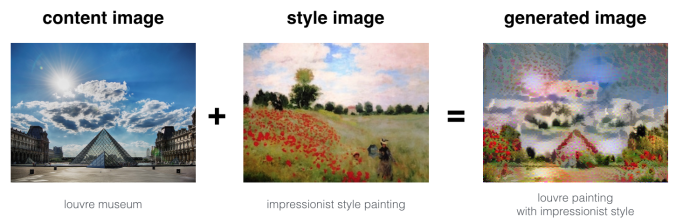
Let’s see how we can do this.
Transfer Learning
Neural Style Transfer (NST) uses a previously trained convolutional network, and builds on top of that. The idea of using a network trained on a different task and applying it to a new task is called transfer learning.
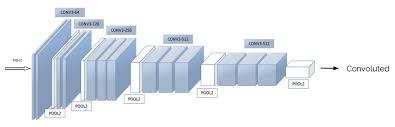
Following the original NST paper, we shall use the VGG network. Specifically, we’ll use VGG-19, a 19-layer version of the VGG network. This model has already been trained on the very large ImageNet database, and thus has learned to recognize a variety of low level features (at the earlier layers) and high level features (at the deeper layers). The following figure shows how a VGG-19 convolution neural net looks like, without the last fully-connected (FC) layers.
We run the following code to load parameters from the pre-trained VGG-19 model serialized in a matlab file. This takes a few seconds.
model = load_vgg_model(“imagenet-vgg-verydeep-19.mat”)
import pprint
pprint.pprint(model)
{‘avgpool1’: <tf.Tensor ‘AvgPool_5:0’ shape=(1, 150, 200, 64) dtype=float32>,
‘avgpool2’: <tf.Tensor ‘AvgPool_6:0’ shape=(1, 75, 100, 128) dtype=float32>,
‘avgpool3’: <tf.Tensor ‘AvgPool_7:0’ shape=(1, 38, 50, 256) dtype=float32>,
‘avgpool4’: <tf.Tensor ‘AvgPool_8:0’ shape=(1, 19, 25, 512) dtype=float32>,
‘avgpool5’: <tf.Tensor ‘AvgPool_9:0’ shape=(1, 10, 13, 512) dtype=float32>,
‘conv1_1’: <tf.Tensor ‘Relu_16:0’ shape=(1, 300, 400, 64) dtype=float32>,
‘conv1_2’: <tf.Tensor ‘Relu_17:0’ shape=(1, 300, 400, 64) dtype=float32>,
‘conv2_1’: <tf.Tensor ‘Relu_18:0’ shape=(1, 150, 200, 128) dtype=float32>,
‘conv2_2’: <tf.Tensor ‘Relu_19:0’ shape=(1, 150, 200, 128) dtype=float32>,
‘conv3_1’: <tf.Tensor ‘Relu_20:0’ shape=(1, 75, 100, 256) dtype=float32>,
‘conv3_2’: <tf.Tensor ‘Relu_21:0’ shape=(1, 75, 100, 256) dtype=float32>,
‘conv3_3’: <tf.Tensor ‘Relu_22:0’ shape=(1, 75, 100, 256) dtype=float32>,
‘conv3_4’: <tf.Tensor ‘Relu_23:0’ shape=(1, 75, 100, 256) dtype=float32>,
‘conv4_1’: <tf.Tensor ‘Relu_24:0’ shape=(1, 38, 50, 512) dtype=float32>,
‘conv4_2’: <tf.Tensor ‘Relu_25:0’ shape=(1, 38, 50, 512) dtype=float32>,
‘conv4_3’: <tf.Tensor ‘Relu_26:0’ shape=(1, 38, 50, 512) dtype=float32>,
‘conv4_4’: <tf.Tensor ‘Relu_27:0’ shape=(1, 38, 50, 512) dtype=float32>,
‘conv5_1’: <tf.Tensor ‘Relu_28:0’ shape=(1, 19, 25, 512) dtype=float32>,
‘conv5_2’: <tf.Tensor ‘Relu_29:0’ shape=(1, 19, 25, 512) dtype=float32>,
‘conv5_3’: <tf.Tensor ‘Relu_30:0’ shape=(1, 19, 25, 512) dtype=float32>,
‘conv5_4’: <tf.Tensor ‘Relu_31:0’ shape=(1, 19, 25, 512) dtype=float32>,
‘input’: <tensorflow.python.ops.variables.Variable object at 0x7f7a5bf8f7f0>}
The next figure shows the content image (C) – the Louvre museum’s pyramid surrounded by old Paris buildings, against a sunny sky with a few clouds.

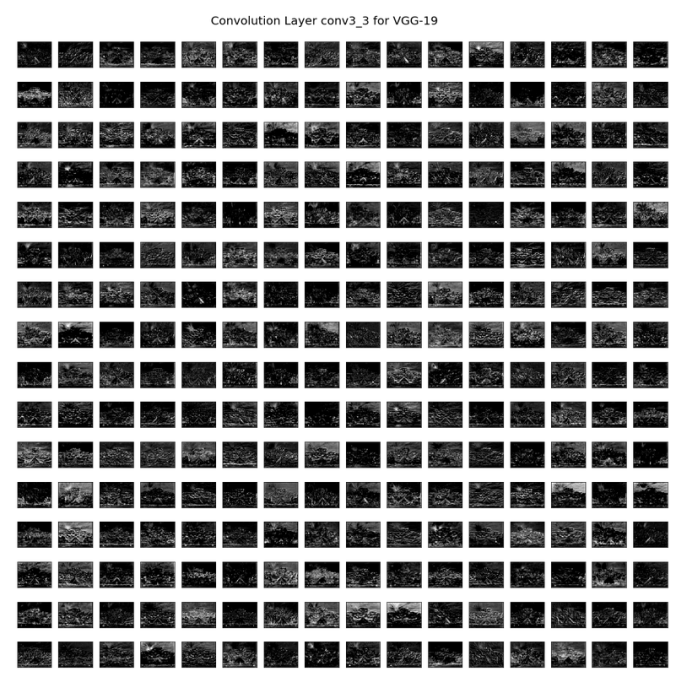
For the above content image, the activation outputs from the convolution layers are visualized in the next few figures.
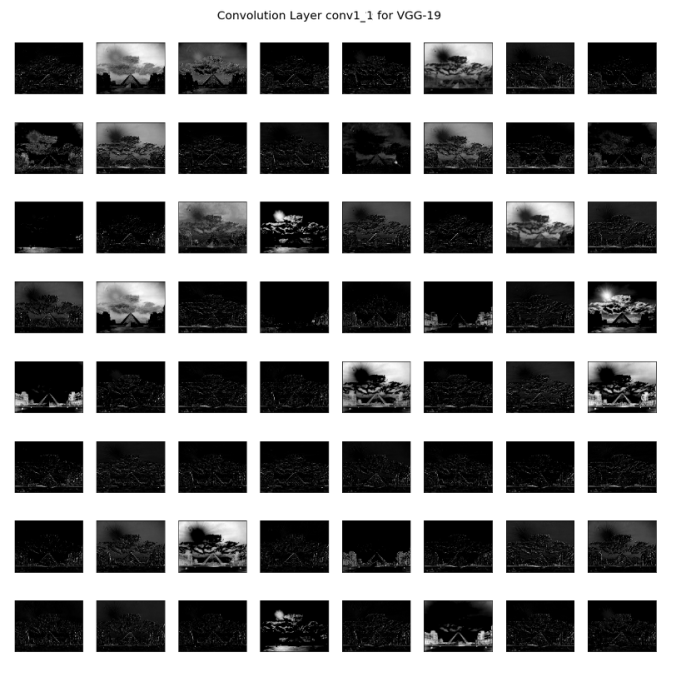
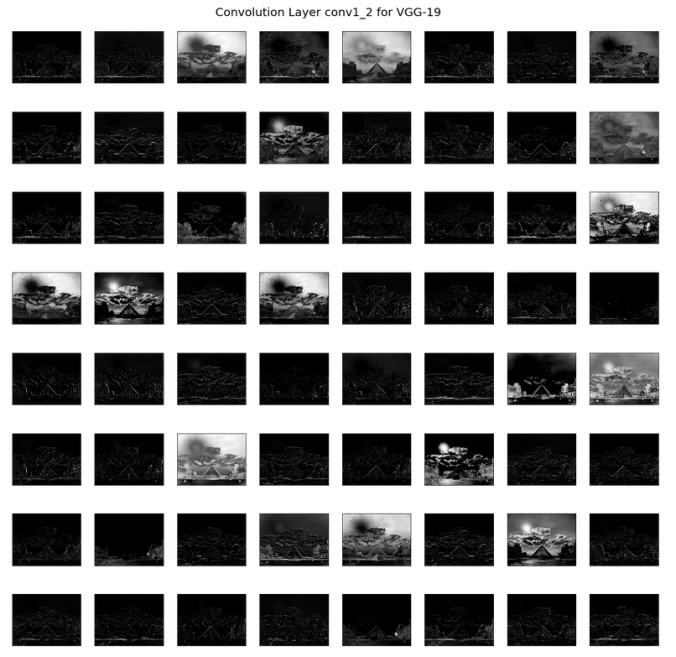
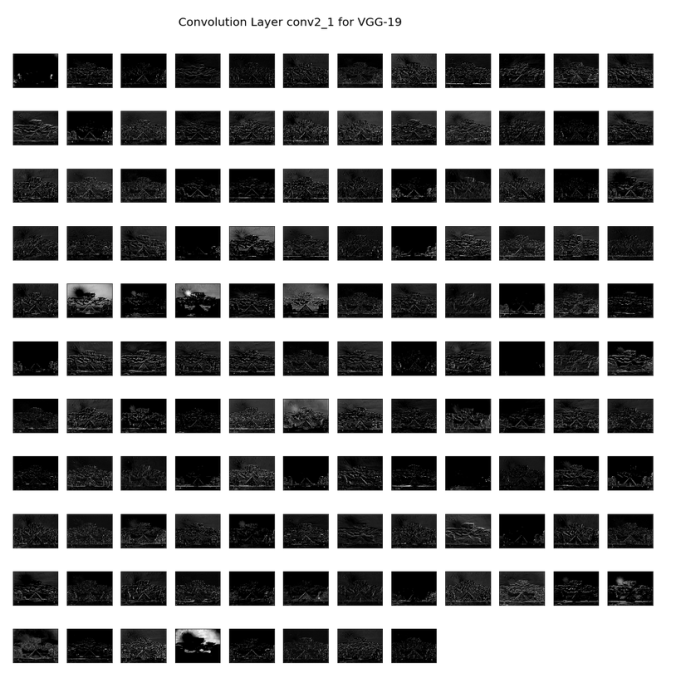
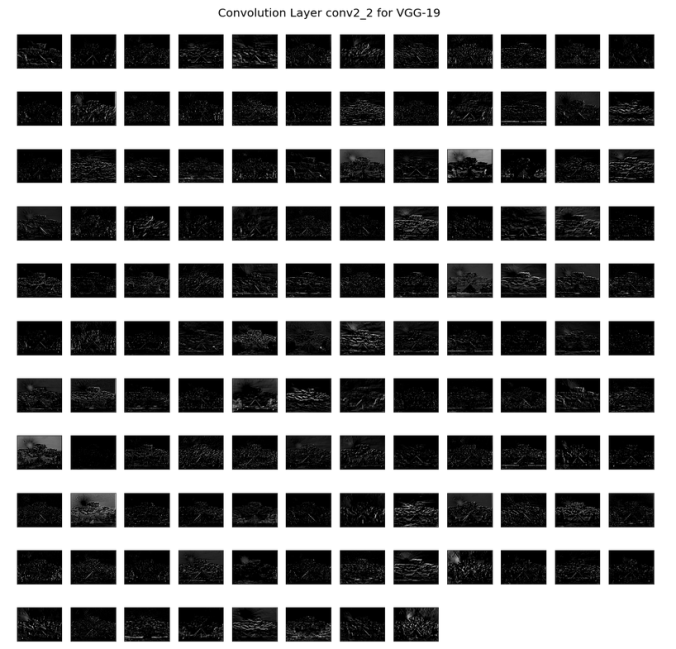
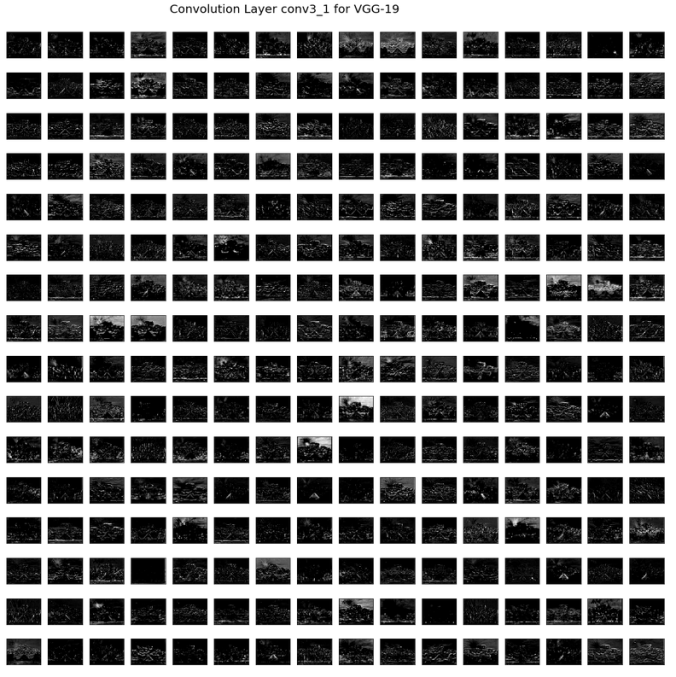
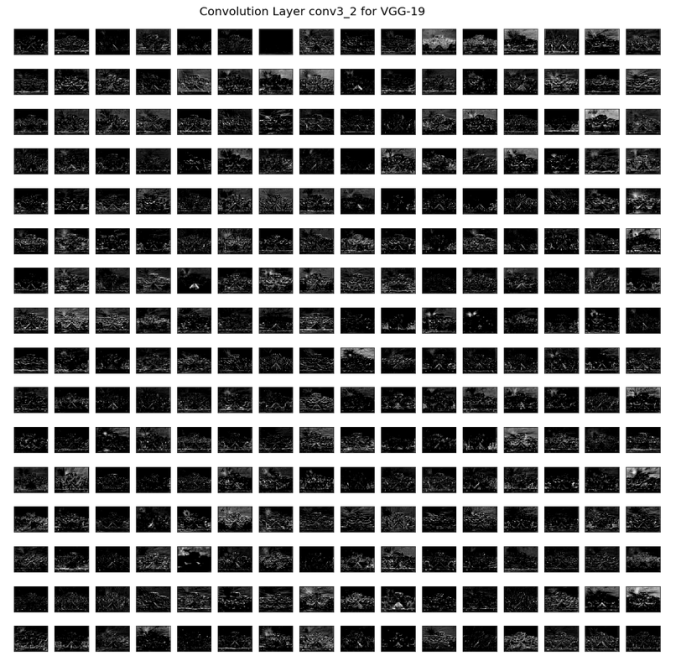
How to ensure that the generated image G matches the content of the image C?
As we know, the earlier (shallower) layers of a ConvNet tend to detect lower-level features such as edges and simple textures, and the later (deeper) layers tend to detect higher-level features such as more complex textures as well as object classes.
We would like the “generated” image G to have similar content as the input image C. Suppose we have chosen some layer’s activations to represent the content of an image. In practice, we shall get the most visually pleasing results if we choose a layer in the middle of the network – neither too shallow nor too deep.
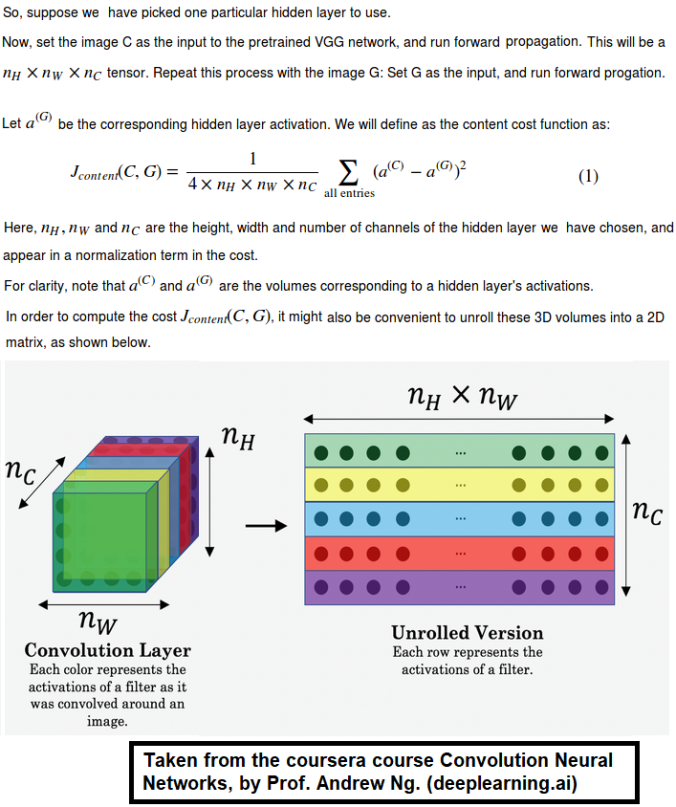
First we need to compute the “content cost” using TensorFlow.
- The content cost takes a hidden layer activation of the neural network, and measures how different a(C) and a(G) are.
- When we minimize the content cost later, this will help make sure G
has similar content as C.
def compute_content_cost(a_C, a_G):
“””
Computes the content cost
Arguments:
a_C — tensor of dimension (1, n_H, n_W, n_C), hidden layer activations representing content of the image C
a_G — tensor of dimension (1, n_H, n_W, n_C), hidden layer activations representing content of the image G
Returns:
J_content — scalar that we need to compute using equation 1 above.
“””
# Retrieve dimensions from a_G
m, n_H, n_W, n_C = a_G.get_shape().as_list()
# Reshape a_C and a_G
a_C_unrolled = tf.reshape(tf.transpose(a_C), (m, n_H * n_W, n_C))
a_G_unrolled = tf.reshape(tf.transpose(a_G), (m, n_H * n_W, n_C))
# compute the cost with tensorflow
J_content = tf.reduce_sum((a_C_unrolled – a_G_unrolled)**2 / (4.* n_H * n_W *
n_C))
return J_content
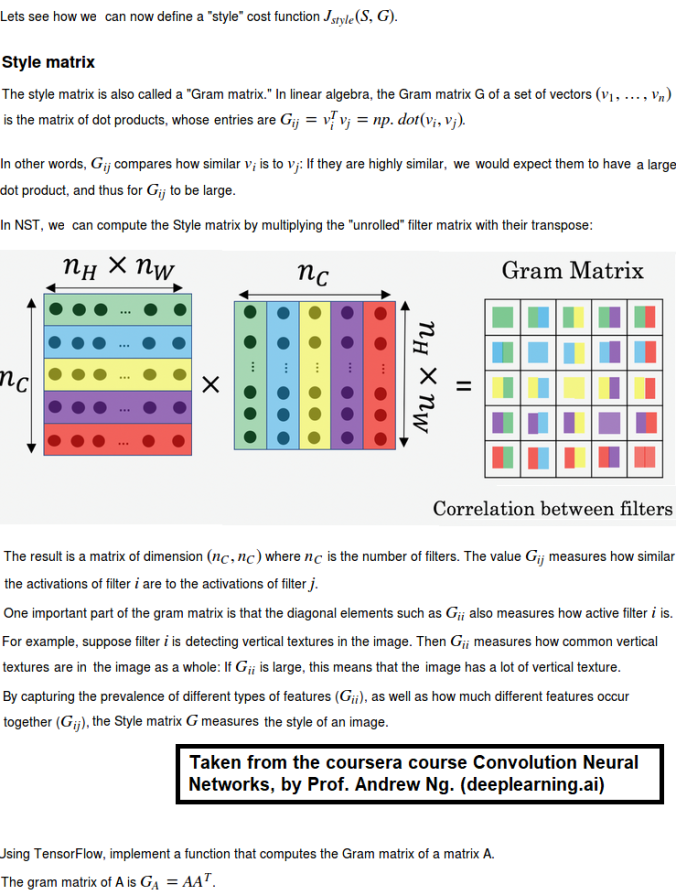
Computing the style cost
For our running example, we will use the following style image (S). This painting was painted in the style of impressionism, by Claude Monet .

def gram_matrix(A):
“””
Argument:
A — matrix of shape (n_C, n_H*n_W)
Returns:
GA — Gram matrix of A, of shape (n_C, n_C)
“””
GA = tf.matmul(A, tf.transpose(A))
return GA
def compute_layer_style_cost(a_S, a_G):
“””
Arguments:
a_S — tensor of dimension (1, n_H, n_W, n_C), hidden layer activations representing style of the image S
a_G — tensor of dimension (1, n_H, n_W, n_C), hidden layer activations representing style of the image G
Returns:
J_style_layer — tensor representing a scalar value, style cost defined above by equation (2)
“””
# Retrieve dimensions from a_G
m, n_H, n_W, n_C = a_G.get_shape().as_list()
# Reshape the images to have them of shape (n_C, n_H*n_W)
a_S = tf.reshape(tf.transpose(a_S), (n_C, n_H * n_W))
a_G = tf.reshape(tf.transpose(a_G), (n_C, n_H * n_W))
# Computing gram_matrices for both images S and G (≈2 lines)
GS = gram_matrix(a_S)
GG = gram_matrix(a_G)
# Computing the loss
J_style_layer = tf.reduce_sum((GS – GG)**2 / (4.* (n_H * n_W * n_C)**2))
return J_style_layer
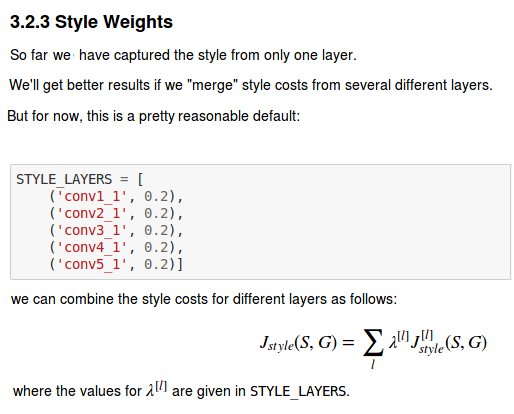
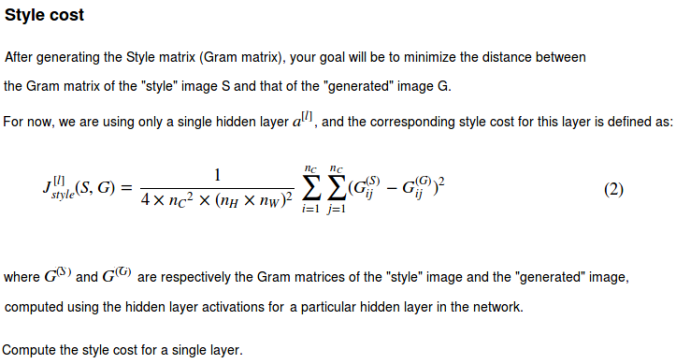
- The style of an image can be represented using the Gram matrix of a hiddenlayer’s activations. However, we get even better results combining this representation from multiple different layers. This is in contrast to the content representation, where usually using just a single hidden layer is sufficient.
- Minimizing the style cost will cause the image G to follow the style of the image S.
Defining the total cost to optimize
Finally, let’s create and implement a cost function that minimizes both the style and the content cost. The formula is:
 https://sandipanweb.files.wordpress.com/2018/01/12.png?w=150&h=16 150w” sizes=”(max-width: 456px) 100vw, 456px” />
def total_cost(J_content, J_style, alpha = 10, beta = 40):
“””
Computes the total cost function
Arguments:
J_content — content cost coded above
J_style — style cost coded above
alpha — hyperparameter weighting the importance of the content cost
beta — hyperparameter weighting the importance of the style cost
Returns:
J — total cost as defined by the formula above.
“””
J = alpha * J_content + beta * J_style
return J
- The total cost is a linear combination of the content cost J_content(C,G) and the style cost J_style(S,G).
- α and β are hyperparameters that control the relative weighting between content and style. (we have used values 10 and 40 respectively for α and β).
Solving the optimization problem
Finally, let’s put everything together to implement Neural Style Transfer!
Here’s what the program will have to do:
- Create an Interactive Session
- Load the content image
- Load the style image
- Randomly initialize the image to be generated
- Load the VGG19 model
- Build the TensorFlow graph:
- Run the content image through the VGG19 model and compute the content cost.
- Run the style image through the VGG19 model and compute the style cost
Compute the total cost. - Define the optimizer and the learning rate.
- Initialize the TensorFlow graph and run it for a large number of iterations (we have used 200 iterations), updating the generated image at every step.
Let’s first load, reshape, and normalize our “content” image (the Louvre museum picture) and “style” image (Claude Monet’s painting).
Now, we initialize the “generated” image as a noisy image created from the content_image. By initializing the pixels of the generated image to be mostly noise but still slightly correlated with the content image, this will help the content of the “generated” image more rapidly match the content of the “content” image. The following figure shows the noisy image:

Next, let’s load the pre-trained VGG-19 model.
To get the program to compute the content cost, we will now assign a_C and a_G to be the appropriate hidden layer activations. We will use layer conv4_2 to compute the content cost. We need to do the following:
- Assign the content image to be the input to the VGG model.
- Set a_C to be the tensor giving the hidden layer activation for layer “conv4_2”.
- Set a_G to be the tensor giving the hidden layer activation for the same layer.
- Compute the content cost using a_C and a_G.
Next, we need to compute the style cost and compute the total cost J by taking a linear combination of the two. Use alpha = 10 and beta = 40.
Then we are going to set up the Adam optimizer in TensorFlow, using a learning rate of 2.0.
Finally, we need to initialize the variables of the tensorflow graph, assign the input image (initial generated image) as the input of the VGG19 model and runs the model to minimize the total cost J for a large number of iterations.
Results
The following figures show the generated images (G) with different content (C) and style images (S) at different iterations in the optimization process.
Content

Style (Claud Monet’s The Poppy Field near Argenteuil)

Generated

Content

Style

Generated
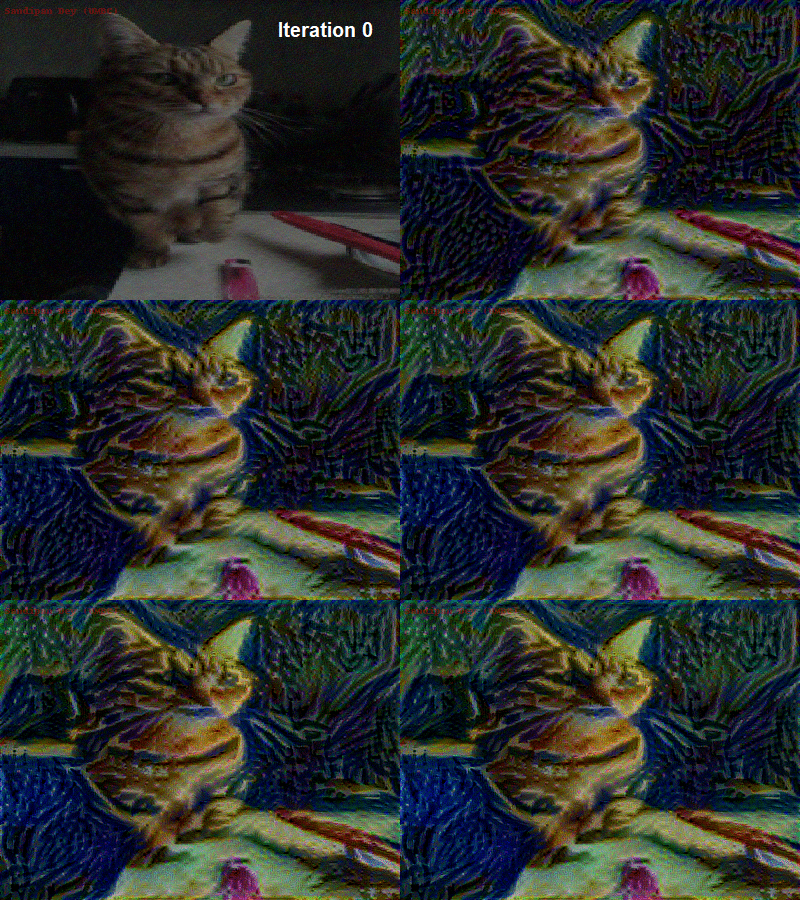
Content
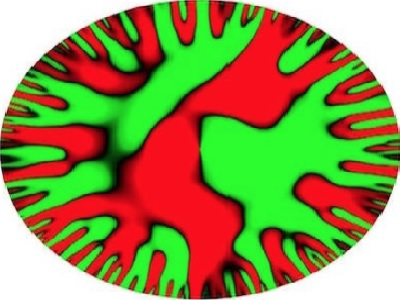
Style

Generated
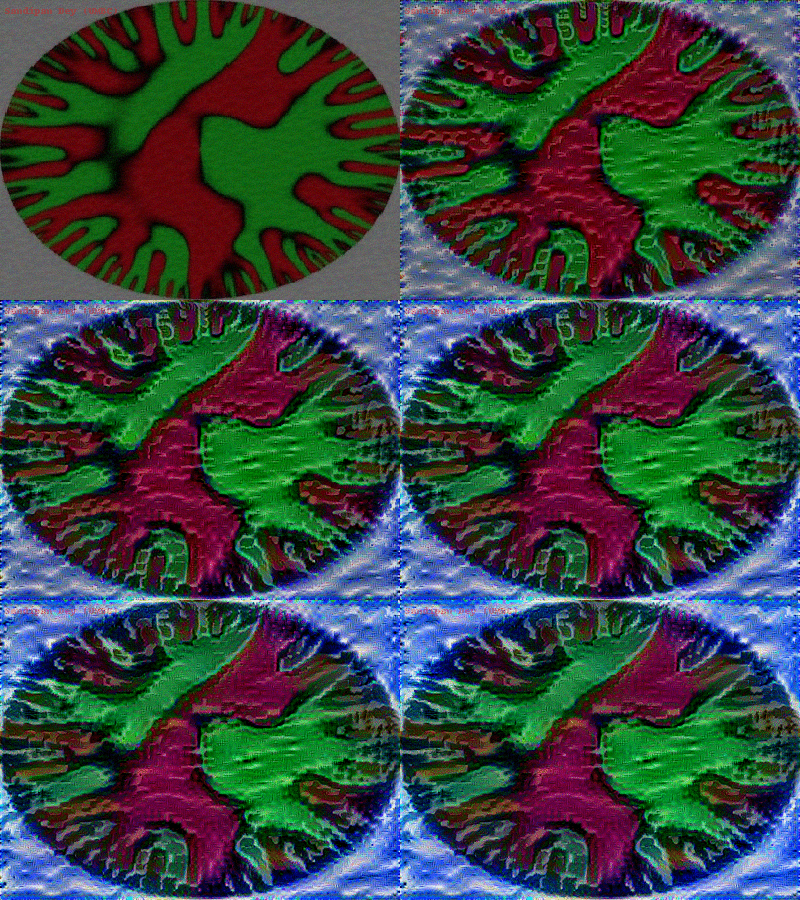
Content

Style (Van Gogh’s The Starry Night)

Generated

Content

Style

Generated
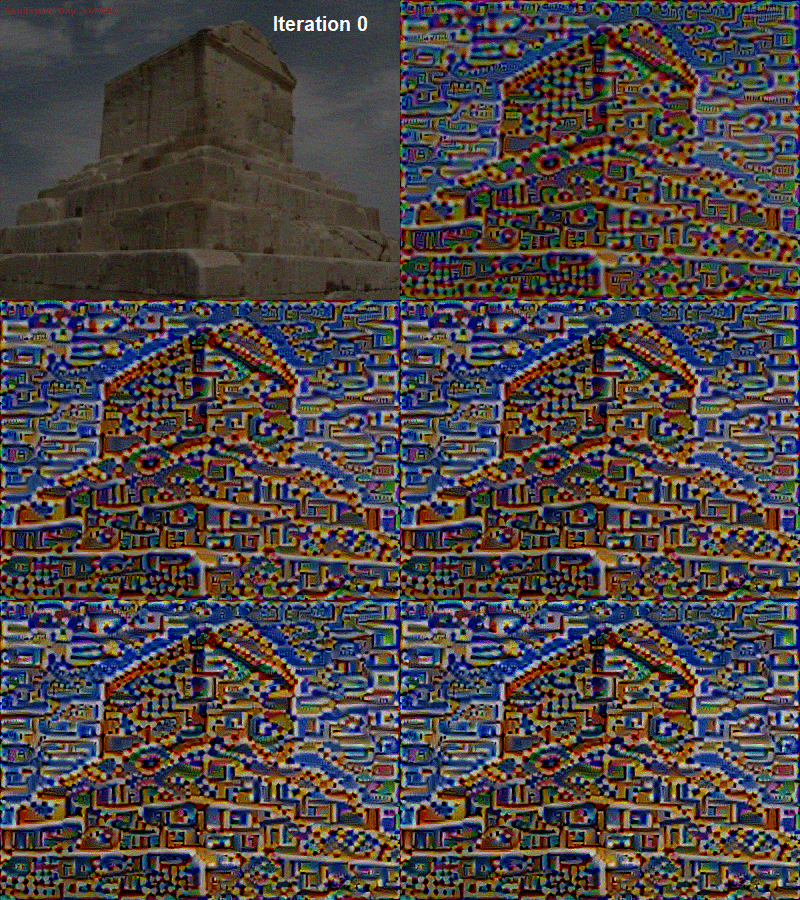
Content (Victoria Memorial Hall)

Style (Van Gogh’s The Starry Night)

Generated

Content (Taj Mahal)

Style (Van Gogh’s Starry Night Over the Rhone)

Generated

Content (me)

Style (Van Gogh’s Irises)

Generated

Content retrieved from: https://www.datasciencecentral.com/profiles/blogs/deep-learning-amp-art-neural-style-transfer-an-implementation.
Difference between Machine Learning, Data Science, AI, Deep Learning, and Statistics
Posted on August 6th, 2018

- Posted by Vincent Granville on January 2, 2017 at 8:30pm
In this article, I clarify the various roles of the data scientist, and how data science compares and overlaps with related fields such as machine learning, deep learning, AI, statistics, IoT, operations research, and applied mathematics. As data science is a broad discipline, I start by describing the different types of data scientists that one may encounter in any business setting: you might even discover that you are a data scientist yourself, without knowing it. As in any scientific discipline, data scientists may borrow techniques from related disciplines, though we have developed our own arsenal, especially techniques and algorithms to handle very large unstructured data sets in automated ways, even without human interactions, to perform transactions in real-time or to make predictions.
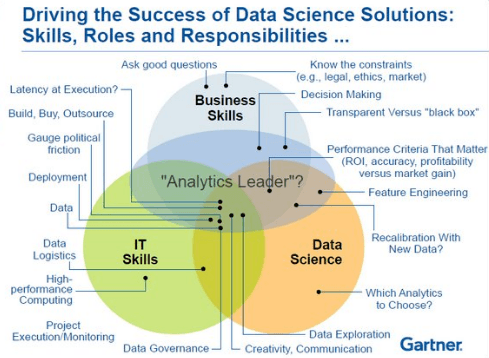
1. Different Types of Data Scientists
Recently (August 2016) Ajit Jaokar discussed Type A (Analytics) versus Type B (Builder) data scientist:
- The Type A Data Scientist can code well enough to work with data but is not necessarily an expert. The Type A data scientist may be an expert in experimental design, forecasting, modelling, statistical inference, or other things typically taught in statistics departments. Generally speaking though, the work product of a data scientist is not “p-values and confidence intervals” as academic statistics sometimes seems to suggest (and as it sometimes is for traditional statisticians working in the pharmaceutical industry, for example). At Google, Type A Data Scientists are known variously as Statistician, Quantitative Analyst, Decision Support Engineering Analyst, or Data Scientist, and probably a few more.
- Type B Data Scientist: The B is for Building. Type B Data Scientists share some statistical background with Type A, but they are also very strong coders and may be trained software engineers. The Type B Data Scientist is mainly interested in using data “in production.” They build models which interact with users, often serving recommendations (products, people you may know, ads, movies, search results).
I also wrote about the ABCD’s of business processes optimization where D stands for data science, C for computer science, B for business science, and A for analytics science. Data science may or may not involve coding or mathematical practice, as you can read in my article on low-level versus high-level data science. In a startup, data scientists generally wear several hats, such as executive, data miner, data engineer or architect, researcher, statistician, modeler (as in predictive modeling) or developer.
While the data scientist is generally portrayed as a coder experienced in R, Python, SQL, Hadoop and statistics, this is just the tip of the iceberg, made popular by data camps focusing on teaching some elements of data science. But just like a lab technician can call herself a physicist, the real physicist is much more than that, and her domains of expertise are varied: astronomy, mathematical physics, nuclear physics (which is borderline chemistry), mechanics, electrical engineering, signal processing (also a sub-field of data science) and many more. The same can be said about data scientists: fields are as varied as bioinformatics, information technology, simulations and quality control, computational finance, epidemiology, industrial engineering, and even number theory.
In my case, over the last 10 years, I specialized in machine-to-machine and device-to-device communications, developing systems to automatically process large data sets, to perform automated transactions: for instance, purchasing Internet traffic or automatically generating content. It implies developing algorithms that work with unstructured data, and it is at the intersection of AI (artificial intelligence,) IoT (Internet of things,) and data science. This is referred to as deep data science. It is relatively math-free, and it involves relatively little coding (mostly API’s), but it is quite data-intensive (including building data systems) and based on brand new statistical technology designed specifically for this context.
Prior to that, I worked on credit card fraud detection in real time. Earlier in my career (circa 1990) I worked on image remote sensing technology, among other things to identify patterns (or shapes or features, for instance lakes) in satellite images and to perform image segmentation: at that time my research was labeled as computational statistics, but the people doing the exact same thing in the computer science department next door in my home university, called their research artificial intelligence. Today, it would be called data science or artificial intelligence, the sub-domains being signal processing, computer vision or IoT.
Also, data scientists can be found anywhere in the lifecycle of data science projects, at the data gathering stage, or the data exploratory stage, all the way up to statistical modeling and maintaining existing systems.
2. Machine Learning versus Deep Learning
Before digging deeper into the link between data science and machine learning, let’s briefly discuss machine learning and deep learning. Machine learning is a set of algorithms that train on a data set to make predictions or take actions in order to optimize some systems. For instance, supervised classification algorithms are used to classify potential clients into good or bad prospects, for loan purposes, based on historical data. The techniques involved, for a given task (e.g. supervised clustering), are varied: naive Bayes, SVM, neural nets, ensembles, association rules, decision trees, logistic regression, or a combination of many. For a detailed list of algorithms, click here. For a list of machine learning problems, click here.
All of this is a subset of data science. When these algorithms are automated, as in automated piloting or driver-less cars, it is called AI, and more specifically, deep learning. Click here for another article comparing machine learning with deep learning. If the data collected comes from sensors and if it is transmitted via the Internet, then it is machine learning or data science or deep learning applied to IoT.
Some people have a different definition for deep learning. They consider deep learning as neural networks (a machine learning technique) with a deeper layer. The question was asked on Quora recently, and below is a more detailed explanation (source: Quora)
- AI (Artificial intelligence) is a subfield of computer science, that was created in the 1960s, and it was (is) concerned with solving tasks that are easy for humans, but hard for computers. In particular, a so-called Strong AI would be a system that can do anything a human can (perhaps without purely physical things). This is fairly generic, and includes all kinds of tasks, such as planning, moving around in the world, recognizing objects and sounds, speaking, translating, performing social or business transactions, creative work (making art or poetry), etc.
- NLP (Natural language processing) is simply the part of AI that has to do with language (usually written).
- Machine learning is concerned with one aspect of this: given some AI problem that can be described in discrete terms (e.g. out of a particular set of actions, which one is the right one), and given a lot of information about the world, figure out what is the “correct” action, without having the programmer program it in. Typically some outside process is needed to judge whether the action was correct or not. In mathematical terms, it’s a function: you feed in some input, and you want it to to produce the right output, so the whole problem is simply to build a model of this mathematical function in some automatic way. To draw a distinction with AI, if I can write a very clever program that has human-like behavior, it can be AI, but unless its parameters are automatically learned from data, it’s not machine learning.
- Deep learning is one kind of machine learning that’s very popular now. It involves a particular kind of mathematical model that can be thought of as a composition of simple blocks (function composition) of a certain type, and where some of these blocks can be adjusted to better predict the final outcome.
What is the difference between machine learning and statistics?
This article tries to answer the question. The author writes that statistics is machine learning with confidence intervals for the quantities being predicted or estimated. I tend to disagree, as I have built engineer-friendly confidence intervals that don’t require any mathematical or statistical knowledge.
3. Data Science versus Machine Learning
Machine learning and statistics are part of data science. The word learning in machine learning means that the algorithms depend on some data, used as a training set, to fine-tune some model or algorithm parameters. This encompasses many techniques such as regression, naive Bayes or supervised clustering. But not all techniques fit in this category. For instance, unsupervised clustering – a statistical and data science technique – aims at detecting clusters and cluster structures without any a-priori knowledge or training set to help the classification algorithm. A human being is needed to label the clusters found. Some techniques are hybrid, such as semi-supervised classification. Some pattern detection or density estimation techniques fit in this category.
Data science is much more than machine learning though. Data, in data science, may or may not come from a machine or mechanical process (survey data could be manually collected, clinical trials involve a specific type of small data) and it might have nothing to do with learning as I have just discussed. But the main difference is the fact that data science covers the whole spectrum of data processing, not just the algorithmic or statistical aspects. In particular, data science also covers
- data integration
- distributed architecture
- automating machine learning
- data visualization
- dashboards and BI
- data engineering
- deployment in production mode
- automated, data-driven decisions
Of course, in many organisations, data scientists focus on only one part of this process.
Content retrieved from: https://www.datasciencecentral.com/profiles/blogs/difference-between-machine-learning-data-science-ai-deep-learning.
Fueling the AI revolution with gaming
Posted on July 28th, 2018

Alison B Lowndes AI DevRel | EMEA – NVIDIA
After spending her first year with NVIDIA as a Deep Learning Solutions Architect, Alison is now responsible for NVIDIA’s Artificial Intelligence Developer Relations in the EMEA region. She is a mature graduate in Artificial Intelligence combining technical and theoretical computer science with a physics background & over 20 years of experience in international project management, entrepreneurial activities and the internet.
She consults on a wide range of AI applications, including planetary defence with NASA, ESA & the SETI Institute and continues to manage the community of AI & Machine Learning researchers around the world, remaining knowledgeable in state of the art across all areas of research. She also travels, advises on & teaches NVIDIA’s GPU Computing platform, around the globe
Abstract
Artificial Intelligence is impacting all areas of society, from healthcare and transportation to smart cities and energy. AI won’t be an industry, it will be part of every industry. NVIDIA invests both in internal research and platform development to enable its diverse customer base, across gaming, VR, AR, AI, robotics, graphics, rendering, visualization, HPC, healthcare & more.
Alison’s article will introduce the hardware and software platform at the heart of this Intelligent Industrial Revolution: NVIDIA GPU Computing. She’ll provide insights into how academia, enterprise and startups are applying AI, as well as offer a glimpse into state-of-the-art research from world-wide labs & internally at NVIDIA, demoing, for example, the combination of robotics with VR and AI in an end-to-end simulator to train intelligent machines. Beginners might like to try our free online 40-minute class using GPU’s in the cloud: www.nvidia.com/dli
Introduction
My name is Alison and I am with NVIDIA. My field is actually artificial intelligence. I went back to university as a mature student, so I concentrated a lot more than most people. What I’m going to do is to explain who Nvidia are why I joined them. Why we’re all over artificial intelligence and also just give you some details on our software, hardware future plans. My first year with Nvidia was basically as a deep learning Solutions Architect across all of these major verticals. This is pretty much daily life for the whole of the of the world and what that allowed me to do on a consulting role was a massive great deal of Applied deep learning. understanding AI permeates everything that both we and all our customers do across gaming, graphics, virtual reality, augmented reality, simulation and medical bioinformatics. Even planetary defense so I wear many hats.


I’m most proud of the frontier development lab. Basically NASA came and said that despite everything that they are capable of doing that they really needed help on AI. Really important in today’s age is cross collaboration, cross discipline collaboration so it’s combining their skill sets in planetary science with skill sets of data scientists and coders like yourselves. nvidia pioneered a new form of computing and this is a new form of computing that’s loved by most of the world’s most demanding users which is gamers. Also scientists and designers and and it’s fueled by this insatiable demand for better and better 3d graphics. For much more realism and so we evolved the GPU into this computing brain. We invented it NVIDIA was formed in 1993. We invented it and introduced it to the world in 1999 and this sparked the growth of the of the PC gaming market which is actually now worth over a hundred sorry billion dollars. Gaming is now over 60 percent of our revenue despite the fact that we’ve pretty much turned our focus to to AI completely.


Super Computing
We continuously reinvent ourselves, we have to. Adaptability is absolutely key to survival in today’s world. You have to be able to just pivot and adapt to it. To what’s being done and coding makes that really simple. We were already working with every car company out there so it was easy for us to pivot to the self-driving car side because they were already using us for infotainment and for visual and as well as the actual design space, VR as well. Obviously GPUs help with this. Our supercomputer capability goes worldwide across US, Japan and Europe. We are a learning machine ourselves that constantly evolves to solve problems that really matter to the to the world. Sheer physics and mathematics, AI can actually predict tornadoes but below is the Oklahoma finger of God that killed 24 people and injured over 350 other people and but what we’re doing here is we’re actually simulating it. The actual simulation itself takes takes upwards of supercomputer capability something called RVCA and eight of them. Digital globe and recon just a few months back demoed this in 3d and in virtual reality. Can you imagine being able to walk through a live tornado simulation. I mean this is basically the the state of play now.
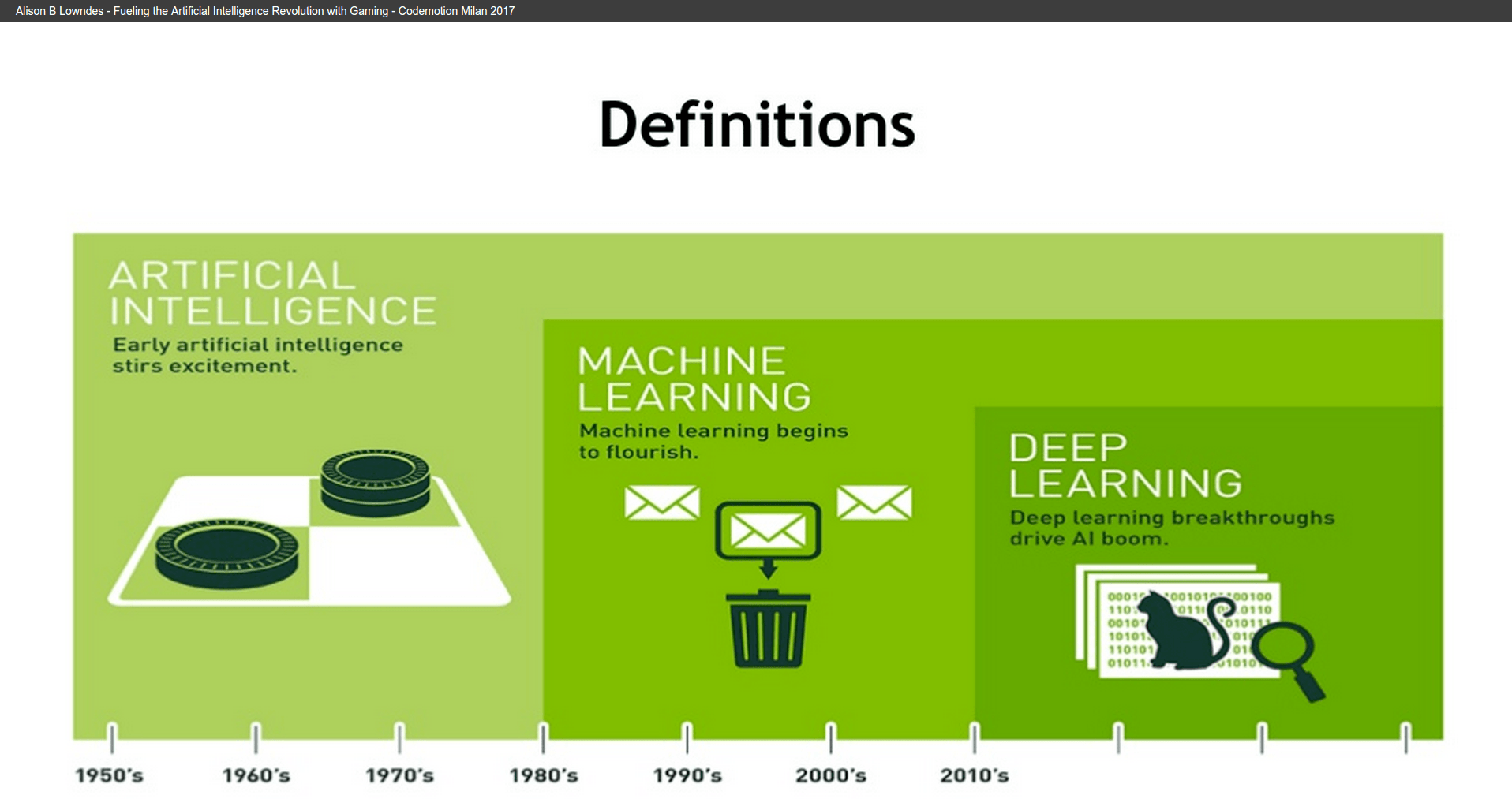
Essentially the year before, a similar disruptive force was just starting to build strength. I’m a massive fan of Feynman. I studied a bit of physics and Feynman. this is a Feynman diagram that basically shows the coming together of the GPU. All the data that we’re providing as a society which is key and the other integral which is the existing algorithms that we already had. It’s really important to understand the the definitions. You hear a whole load of hype about AI and a lot of it, thanks to the movies, is not true. We don’t have terminators yet but it’s really important that you understand so AI actually inlogic and rule-based learning as well as machine learning. Machine learning itself is this subset of deep learning. Deep just means it’s got more than two hidden layers. There’s a few other intricacies but they are related but they’re definitely not equivalent.


Neural Networks
The timeline here is really important as well this is not new technology basically it started in 1956. It’s something called the Dartmouth conference where it was Claude Shannon and a group of friends that put together this term artificial intelligence. They actually thought that they could probably solve it that summer as well but here we are now. If you don’t know the GPU the graphics processing unit which is NVIDIAs lifeblood is a coprocessor you still need the CPU. You’re just passing on the actual part of code that can be parallelized. We even have things called open ACC where you can literally shunt the parallelized sections, for example existing legacy code and then this leaves and frees up the CPU to take on its it’s typical serial jobs and running os’s etc.


CUDA
I don’t have time to actually go into the the intricacies of CUDA but we’ve got a stack of resources online and we run a very technical blog. CUDA itself is at the heart of AI because it’s at the heart of our room GPUs. Even Intel, if you look at some of the publicity that’s going around today it seems to be pivoting that way. Without guys and girls like you people reading the industry has no chance whatsoever in harnessing AI so again take a further look. Take some more courses and pivot towards this because AI is now central even to the people who don’t know it yet. To every single business that is out there today it’s probably the most profound thing since the transistor was invented. There is a whole lot that can that can happen and what you have to realize is that once you actually get the hang of deep learning or AI or any of the hype terms, that you’re here, this will actually help you in your job.


It’s about getting great coders into the workplace and also letting you sort of run free. AI is going to take a lot of the laborious tasks away from us and allow us lots and lots of time to to play in sandbox areas. To even break things and do what humans do really well which is get creative. When you start getting creative in code you can do some incredible things. I’m going to do a quick 101 on deep learning for those that actually don’t know it, so try and think about the differences between these two bikes so that’s my first-ever GSXR 750 on the left and this of course is the Ducati Monster.
What a computer will basically do is try and translate these images into pixels into maths into vectors and work out the actual differences on a pixel level. It will actually be able to capture things that we would never have thought about. It will pick up nuances about backgrounds. Like it has an aliens eyes that have been used to look at every single problem that humanity currently has. The problem that is to actually teach an AI system you have to have a large label data set for supervised learning and as far as I know we don’t yet have a data set like that.


I could go and perhaps create a million pictures of motorbikes off Google but then I would have to label each one. It was things like Stanford running the imagenet competition and the large part of that workload was actually labeling the data but I’m currently working with samasource. Samasource are literally pulling people out of slums in Kenya and India and teaching them how to help us provide these kind of data services like labeling data. It’s really quite profound so basically you’ve got things like like regression where you could take a million data points and and divide them up into a line but drawing that line through the data set you you still need something called a loss function. This measures how rubbish your system is at making a prediction and the key is to converge on a solution that’s acceptable. That’s to a certain level of accuracy and that depends on the actual applications themselves. Now the work course behind that is gradient descent.


Chris Ola of Google’s work, it’s a really cool way of reading papers and reading research papers is a really great way to actually keep up with this with this field. Take a look at this still so scary maths diagram but training a neural network is is all about trying to find a good minimum on an error. Surface deep learning systems, what they’re doing is they are just exploring through huge huge problem spaces and as humans we can’t cope with anything more than 3d maybe 4d and we’re at very very high dimensional capability here so we need AI to help us through this. To convert into maths and we need computers to actually do the computation and GPUs and they’re the workhorse they they take the brunt of it.


Deep Learning
Deep learning is split between two workloads. You have the computationally intensive training part, where although this is based on the on the brain itself, you’re in a supervised learning setup and feeding in lots and lots of labeled data. Once you actually got to a situation where you’ve actually trained and you’ve reached the end the accuracy that you want to get you have something called inference. An inference is basically just doing the forward path so you’re not doing forward backward and change the weights then repeating this process. You’re just doing the forward path so it’s very simple and this is how you can have it deployed on things like a mobile a mobile phone. Again I don’t have enough time to go deep into it but one thing you have to realize is that the world is not static. Images are great. Convolutional neural networks are very very good at working on static problems like like image recognition, but for everything else, which is dynamic, we need recurrent neural networks so things like speech recognition and pattern recognition in sequence looking at lots and lots of historical data.


Recurrent neural networks
Recurrent neural networks are really vital because they they grasp the structure of data dynamically over time. There were several problems with implementation but basically this was over 25 years ago and a guy named Sepp Hochreiter who was actually the first PhD of jurgen schmidhuber who is now director with a Swiss AI lab in Lugano Switzerland. Sepp Hochreiter solved the problem and he created something called long short-term memory, which is used throughout every kind of AI dynamic problem that you actually see today. I’m proud to know him and his team are also working on healthcare problems. They’re winning things like the tox 21 challenge where you can take deep learning and assess and how toxic various chemicals are to humans. Take a look at his paper from from it as it’s a really good one because it gives you an indication of the real understanding of deep learning and how networks represent layer by layer.


Otto Friedrich Karl Deiters (German: November 15, 1834 – December 5, 1863) was a German neuroanatomist. He was born in Bonn, studied at the University of Bonn, and spent most of his professional career in Bonn. He is remembered for his microscopic research of the brain and spinal cord.
Around 1860, Deiters provided the most comprehensive description of a nerve cell that was known to exist at the time. He identified the cells’ axon, which he called an “axis cylinder”, and its dendrites, which he referred to as protoplasmic processes. He postulated that dendrites must fuse to form a continuous network.
This diagram was drawn in 1865 by a guy called Otto Dieters and it’s showing the human nerve cell body. There and all the synapses and dendrites that actually come off. There is a huge body of work now that is mapping together neuroscience and AI. Geoff Hinton considered one of the godfathers of AI who’s actually bristol born but now he’s in montreal. They’re changing the way that that we use layers instead of just multi layer they’re putting layers within layers and this basically allows you to to map a whole lot of more data. More information at a cellular level and again i don’t have time to get into this but this is the really key thing whatever the architecture that you are using, convolutional, neural networks, recurrent, etc. The real power comes from these AI systems. There is nothing more powerful than a human being that’s assisted or augmented by AI. I prefer the term augmented intelligence than artificial intelligence because what it does is it brings us to to what I consider the next stage.


Reinforcement learning
The software is reinforcement learning or the theory is reinforcement learning. The hardware is both the GPUs that are running this and the CPUs but also what we’re deploying into which is robotics of varying shapes and forms both physical and virtual. So everybody has heard about alphago. This was reinforcement which combined dynamic programming and also supervised learning. Alphago zero now doesn’t even need that supervised learning part. It made a lot of headlines by saying that it was doing everything itself. Now when you actually go behind the scenes it couldn’t do anything without coders like you. Whether or not you’re working for Google, it makes no difference without the coders. Reinforcement learning basically is about learning a policy or the best next move to make, and this is across the board and but the key thing is that alphago zero whether it’s doing it entirely on its own or not still can’t play knots and crosses. It can’t play anything other than go so what they needed to do and this was a huge engineering effort.


Deep mind have their own deep mind lab. They needed to provide an environment where the AI agents could actually learn generalization. They could learn to play lots of other different games at the same time and games engines provide an infinite amount of training data. Deep minds latest work is where and I actually learned the word parkour. I’d never heard of the word parkour before but basically it is being able to do lots and lots of different actions like jumping running etc. It’s doing all this by itself. It’s actually learning to do the running and the jumping without any prior instructions whatsoever.
Imitation Learning
Imitation learning is another thing so this is where you you show a robot how to do something only once and this of course is getting close to how we learn. You need to see it twice or three times but ultimately we don’t need to see something a thousand times to actually do it. A researcher Berkeley left and along with them some other people he’s formed a company called embodied intelligence where he literally wants to work on just this. Since then this field has just exploded. I know because I kind of live right in the middle of everything and it’s part of my job to try and cover the research and and stay up with the actual progress. It’s drug design, it’s it’s astronomy, it’s use cases all over the place. I don’t have time as much as I would love to, to go into every single use case. Just in health care alone there is a plethora and there’s some really impactful work going on by harnessing AI. Deep Learning Toolkit (DLTK) is by Imperial College and it’s just a really great toolkit if you are working in the medical space.
This is Jamie by a company called Soul machines, founded by Mark Sagar. He’s responsible for avatar and the technology behind that and also won Oscars for King Kong. What he basically did was he got Cate Blanchett on board and recorded lots and lots of her dialogue and they’ve coupled together with a huge health insurance company in Australia to create this avatar that individuals can use. The Avatar talks to you just the same as Siri would but its actually got a face. She can actually read and understand emotion in voices. It’s an ongoing learning cycle as I’ve got the the the Samsung here, called their assistant Bixby and it tells you over and over again that it’s still learning. The more I use it the better it will be but there we go.


Even unity3d now has an AI lab and here’s a tip. Take a look dopamine games because they’re doing some very very cool stuff considering they’re actually on the smaller end of games out games houses. EAS CEO Andrew Wilson was was recently talking about the fact of feeding an AI system every acting performance in all war films we’ve ever had. Feed that into the actual system. How much is that going to improve the game? how much is it going to improve your experience? Putting AI into characters as well. The game studio respawn is responsible for things like titanfall, so you’re going to start to see AI in those games very very shortly and of course we’re all over this. We have been for quite a few years. We recently launched holo deck simply because we’re already doing lots of work in rendering photorealistic levels. We’re already talking to the car manufacturers and we’ve already been working with them for decades. This is about being able to get together with your collaborators wherever they are in the world put on a VR headset and you’re there with a full res setup of whatever you’re actually working on. This is a supercar that we actually demoed but built on built on the back of this is is Isaac. Isaac is a robotics learning platform that incorporates reinforcement learning as well as any robot that you want to put in there.


In 2013 I was working with the National Nuclear laboratory and we were coding a virtual robot. Controlling it with just an Xbox controller. So you can bring anything into this platform, teach it, get a trained system and then deploy it in a real robot. This is just a screenshot of Isaac in the nursery that we built within the holo deck and in there it can actually interact with you and play Domino’s and learn from you all using reinforcement learning. We’re only just scraping the surface here. We’re only in beta access but there are so many different opportunities here and of course the ultimate robot which we’ve been working on for quite a few years. Although this is a slightly different problem set because of course you’re talking about collision avoidance. With robots it’s all about touch, grasp and and haptics. The problem with this is the rest of the world that is so complex that we literally had to put together a whole new chipset. We put this together on various iterations starting with Drive px2 and and then we went to Xavier on the actual chipset.


The Pegasus chip is now capable of 320 Tflops, that’s trillion operations per second. It’s capable of perceiving the world through high res. It’s capable of 360 degree surround cameras localizing the the actual vehicle within centimeter accuracy but this is such a huge problem space that we want to see the fastest possible adoption of AI technology. We can’t address everything so we open-source the actual deep learning accelerator part of this chipset. We’re also right across the high-performance computing scenario and to prove that we have over 500 GPU ready apps. You can actually go to look at them and I don’t have time to list those 500 but it’s across each of those verticals in the slide right at the beginning.


Just to give you an indication now of how we enable people, all our software is free. You simply just go online to developer NVIDIA .com and we work with every single framework so the frameworks are basically the building blocks. They’re the way of, literally in some cases in natural language, creating the layers of the neural network that you’re going to use in code. There are over 60 different frameworks but there’s probably a top ten. We work with as many as we possibly can. I don’t really want to recommend but cafe 2 is really rocking well at the moment. I personally started in torch so PI torch of course is a big favorite of mine. We work with all the teams directly. Apache and Amazon are widely used and so they’re really good if you’re looking for which framework out of those 60-odd. There’s lots of information online but basically all our software is free just go to developer.android.com and sign up. To actually gain from CUDA, the programming language for the GPU (launched it in in 2006) this is exactly why you’re seeing a revolution in AI now. It’s because people are able to program the GPUs.


Deep Learning Frameworks

Caffe2
Caffe2 is a deep-learning framework designed to easily express all model types, for example, CNN, RNN, and more, in a friendly python-based API, and execute them using a highly efficiently C++ and CUDA back-end. Users have flexibility to assemble their model using combinations of high-level and expressive operations in python allowing for easy visualization, or serializing the created model and directly using the underlying C++ implementation. Caffe2 supports single and multi-GPU execution, along with support for multi-node execution.

Cognitive ToolkitThe Microsoft Cognitive Toolkit, formerly known as CNTK, is a unified deep-learning toolkit that describes neural networks as a series of computational steps via a directed graph. In this directed graph, leaf nodes represent input values or network parameters, while other nodes represent matrix operations upon their inputs.

MATLABMATLAB makes deep learning easy for engineers, scientists and domain experts. With tools and functions for managing and labeling large data sets, MATLAB also offers specialized toolboxes for working with machine learning, neural networks, computer vision, and automated driving. With just a few lines of code, MATLAB lets you create and visualize models, and deploy models to servers and embedded devices without being an expert. MATLAB also enables users to generate high-performance CUDA code for deep learning and vision applications automatically from MATLAB code.

MXNetMXNet is a deep learning framework designed for both efficiency and flexibility. It allows you to mix the flavors of symbolic programming and imperative programming to maximize efficiency and productivity.In its core is a dynamic dependency scheduler that automatically parallelizes both symbolic and imperative operations on the fly. A graph optimization layer on top of that makes symbolic execution fast and memory efficient. The library is portable and lightweight, and it scales to multiple GPUs and multiple machines.

NVIDIA CaffeCaffe is developed by the Berkeley Vision and Learning Center (BVLC) and by community contributors. NVIDIA Caffe, also known as NVCaffe, is an NVIDIA-maintained fork of BVLC Caffe tuned for NVIDIA GPUs, particularly in multi-GPU configurations.

PyTorchPyTorch is a Python package that provides two high-level features:Tensor computation (like numpy) with strong GPU accelerationDeep Neural Networks built on a tape-based autograd systemYou can reuse your favorite Python packages such as numpy, scipy and Cython to extend PyTorch when needed.

TensorFlowTensorFlow is an open source software library for numerical computation using data flow graphs. Nodes in the graph represent mathematical operations, while the graph edges represent the multidimensional data arrays (tensors) that flow between them. This flexible architecture lets you deploy computation to one or more CPUs or GPUs in a desktop, server, or mobile device without rewriting code. For visualizing TensorFlow results, TensorFlow offers TensorBoard, suite of visualization tools.

ChainerChainer is a Python-based deep learning framework aiming at flexibility. It provides automatic differentiation APIs based on the define-by-run approach, also known as dynamic computational graphs, as well as object-oriented high-level APIs to build and train neural networks. It supports CUDA and cuDNN using CuPy for high performance training and inference.

PaddlePaddlePaddlePaddle provides an intuitive and flexible interface for loading data and specifying model structures. It supports CNN, RNN, multiple variants and configures complicated deep models easily.It also provides extremely optimized operations, memory recycling, and network communication. PaddlePaddle makes it easy to scale heterogeneous computing resources and storage to accelerate the training process.
NVIDIA Deep Learning SDK
The NVIDIA Deep Learning SDK provides powerful tools and libraries for designing and deploying GPU-accelerated deep learning applications. It includes libraries for deep learning primitives, inference, video analytics, linear algebra, sparse matrices, and multi-GPU communications.


Graph analytics is across the board on many massive problem sets. So we’ve sped all that up with with MV graph and a visualization tool. When I was doing research in University I was just command-line and getting all my input from the from the very good output that’s given from torch and but then digits came along and you get to see exactly what’s going on in the actual layers. You get a visualization. You get a graphical understanding of the of the accuracy and how the loss is going. There’s also now a ton of pre trained models for data curation in the problem set. This is actually the majority of the work. It’s like 70% of the work. The AI side, you can just pick a pre-trained model and the job is done so as I said tensor RT is is for vastly faster inference.


Deep stream is for if you do an intelligent video analysis and a lot of people are. On the hardware side we are spending literally billions to actually get the best that we possibly can. The recent launch, which was Walter, is 21 billion transistors. We are at the limit now. We are right at the edge of what is possible. What we’ve had to do is is make fine tunings right down at the instruction set to actually provide even more speed up. When you’re talking about using tensor RT these are the differences in just up from just our previous chip which was Pascal.


AlexNet which is which is a type of convolutional neural network is a lot bigger now so it creates a lot more demand. The tensor core as I said has this brand new instruction set. AI is pretty much just matrix multiplication and accumulate or summation. That is really at the heart of it so what we did is we we managed to do the 4 by 4 multiply simultaneously and that in itself gives you 12 times the actual throughput already. The the tensor cores are part so there’s actually 640 of them with the over 5,000 cores that are now on our voltage chips. All that sounds great but how do you actually really cope with with massive problems? What we do is we put multiple cards into one unit. The dgx family was actually launched back in 2016 and this is eight high-end cards with our own interconnects because PCIe just doesn’t cut it anymore. We have our own interconnect called MV link.


We’ve containerized all that software I’ve spent the hours and hours trying to get all the dependencies together to actually do deep learning work. We’ve put it all now inside containers optimized to all the major frameworks and onboard dgx. It’s now Volta and what’s really important is that the software is optimized. You simply login to the system. It’s actually designed to do tasks very quickly. Pascal is a hundred and seventy teraflops so trillion floating point operations and voltages just blown that out of the window.
This is addressing the simple fact that there are teams of people who are now working on these problems and so it’s the ability with containers. At the moment it’s docker but we are looking at all the other use cases because the HPC will prefer things like singularity. Kubernetes is is very popular so we’re looking at all that and we’re implementing it as fast as we can. Dgx is actually a server so obviously it needs to be rack mounted if you don’t have that capability you can actually now get a desk side version with Volta. This is actually for cards, it’s water-cooled so it’s nice and quiet. Dgx the server is not quiet because you’ve got eight massive cards doing a lot of work.


Alternatively you can now access Walter right now via Amazon Web Services up in the cloud. We have something called NGC or the NVIDIA GPU cloud where you have the the capability in three simple steps to sign up. You can either choose to use the cloud or choose to use local compute. If you’ve got some of our geforce cards or you have dgx and then you simply just pull one of these containers down. We have an entire registry of containers now for all of the of the frameworks. All other possible combinations and versions of Cuda etc but the the the real key here is everything’s up to date. There’s no more going through the whole rigmarole. You’d simply just just click on that up-to-date container and it really just makes life a lot easier. We build the products for training things like dgx and we build the products for inferencing. That’s in the data center like our Tesla cards.

There is this other part and that’s inference and this is this is huge. I mean this is in billions of cameras, billions of edge devices. We actually have no idea how big this problem is going to be but we have to address it now. This is just some of the actual use cases that we’re dealing with on on a daily basis. So of course we need an embedded GPU and we have a credit card size GPU called Jetson now tx2. The version that is capable of between one and one and a half trillion floating point operations per second in a credit card space and there’s lots and lots of people using this for various use cases. You can actually buy it very cheaply in a dev kit formats. Its got loads of IO, it’s got a camera on board, or if you’re in academic we actually give them away with an entire robotics and embedded teaching kit alongside.


TX 2 Development Kit
So we have these these teaching kits that we’ve worked with NYU and young laocoon as well specifically for deep learning. Servo city work with us on on these teaching kits. There is this entire embedded space. There’s $11,000 Nvidia but that’s not a big enough market so we have to put the entire embedded space online. That means you can get every single piece of information and the hardware purely via the website. Including jetpack and if I wrote another article that would not be enough to tell you all about the the various parts of jet pack and what it can do. Everything that we try to do is is so that you can develop and deploy right across the same architecture. That’s hardware architecture with the same software that you’ve been using and prototyping on.
We do so much training now that we developed something called the deep learning Institute and this is using ipython or Jupiter notebooks so you can do hands-on coding on our GPUs in Amazon Web Services right now. We also work with Microsoft Azure and our GPUs are in every cloud provider that there is so this will eventually branch out. We have over 200 different classes you can go online to that website now and do at least three of those for free. Hands-on coding in an in a variety of different frameworks. You just go on to a setup called quick labs which was actually bought by Google. Google’s entire cloud platform is going to be accessible via quick labs.
About 200 different use cases and there’s there’s a few that are actually free for you to have a go at and there you can actually get down into the actual code and work with code and start to understand it. If you’re actually thinking of setting up a start up then please just do a very quick sign up to NVIDIAs inception program where we can actually give you a ton of support and big discounts to hardware and of course all the software. I just want to leave you with the fact that we are hiring massively right now if you have any kind of deep learning machine learning skills or just the ninja coder please contact NVIDIA.
Machine learning predicts World Cup winner
Posted on July 21st, 2018
This AI Simulated the 2018 World Cup 100,000 Times to Predict a Winner
A group of researchers used AI and machine learning to predict that Spain and Germany are the most likely winners of the 2018 World Cup in Russia.

The 2018 soccer World Cup kicks off in Russia on Thursday and is likely to be one of the most widely viewed sporting events in history, more popular even than the Olympics. So the potential winners are of significant interest.One way to gauge likely outcomes is to look at bookmakers’ odds. These companies use professional statisticians to analyze extensive databases of results in a way that quantifies the probability of different outcomes of any possible match. In this way, bookmakers can offer odds on all the games that will kick off in the next few weeks, as well as odds on potential winners.An even better estimate comes from combining the odds from lots of different bookmakers. This approach suggests Brazil is the clear favorite to win the 2018 World Cup, with a probability of 16.6 percent, followed by Germany (12.8 percent) and Spain (12.5 percent).But in recent years, researchers have developed machine-learning techniques that have the potential to outperform conventional statistical approaches. What do these new techniques predict as the likely outcome of the 2018 World Cup?An answer comes from the work of Andreas Groll at the Technical University of Dortmund in Germany and a few colleagues. These guys use a combination of machine learning and conventional statistics, a method called a random-forest approach, to identify a different most likely winner.

First some background. The random-forest technique has emerged in recent years as a powerful way to analyze large data sets while avoiding some of the pitfalls of other data-mining methods. It is based on the idea that some future event can be determined by a decision tree in which an outcome is calculated at each branch by reference to a set of training data.However, decision trees suffer from a well-known problem. In the latter stages of the branching process, decisions can become severely distorted by training data that is sparse and prone to huge variation at this kind of resolution, a problem known as overfitting.The random-forest approach is different. Instead of calculating the outcome at every branch, the process calculates the outcome of random branches. And it does this many times, each time with a different set of randomly selected branches. The final result is the average of all these randomly constructed decision trees.This approach has significant advantages. First, it does not suffer from the same overfitting problem that plagues ordinary decision trees. It also reveals which factors are most important in determining the outcome.So if a particular decision tree includes lots of parameters, it becomes easy to see which ones have the biggest impact on the outcome and which do not. These less important factors can then be ignored in future.Groll and co use exactly this approach to model the 2018 World Cup. They model the outcome of each game the teams are likely to play and use the results to construct the most probable course of the tournament.Groll and co begin with a wide range of potential factors that might determine the outcome. These include economic factors such as a country’s GDP and population, FIFA’s ranking of national teams, and the properties of the teams themselves, such as their average age, the number of Champions League players they have, whether they have home advantage, and so on.Interestingly, the random-forest approach allows Groll and co to include other ranking attempts, such as the rankings used by bookmakers.Plugging all this into the model provides some interesting insights. For example, the most influential factors turn out to be the team rankings created by other methods, including those from bookmakers, FIFA, and others.

Other important factors include GDP and the number of Champions League players on the team. Unimportant factors include the country’s population, the nationality of the coach, and so on.The predictions arrived at through this process differ from others in some important ways. For a start, the random-forest method picks out Spain as the most likely winner, with a probability of 17.8 percent.However, a big factor in this prediction is the structure of the tournament itself. If Germany clears the group phase of the competition, it is more likely to face strong opposition in the 16-team knockout phase. Because of this, the random-forest method calculates Germany’s chances of reaching the quarter-finals as 58 percent. By contrast, Spain is unlikely to face strong opposition in the final 16 and so has a 73 percent chance of reaching the quarter-finals.If both make the quarter-finals, they have a more or less equal chance of winning. “Spain is slightly favored over Germany mainly due to the fact that Germany has a comparatively high chance to drop out in the round-of-sixteen,” say Groll and co.But there is an additional twist. The random-tree process makes it possible to simulate the entire tournament, and this produces a different result.

Groll and co simulated the entire tournament 100,000 times. “According to the most probable tournament course, instead of the Spanish the German team would win the World Cup,” they say.Of course, because of the huge number of permutations of games, this course is still extremely unlikely. Groll and co put the odds at about 1 in 100,000.So there you have it. At the beginning of the tournament, Spain has the best chances of winning, according to Groll and co. But if Germany makes the quarter-finals, it then becomes the front-runner.The tournament kicks off on Thursday, when the hosts, Russia, take on Saudi Arabia. Sadly, neither of these teams looks likely to make even the quarter-finals.Ref: arxiv.org/abs/1806.03208 : Prediction Of The FIFA World Cup 2018 – A Random Forest Approach With An Emphasis On Estimated Team Ability Parameters