

The Future is Here: Blockchain, Smart Contracts & Procurement
Posted on June 13th, 2018
By: Colin Cantrell, Creator of Nexus
The digital commerce industry has taken many leaps over the last few decades, with major advances in transactional services such as e-commerce and escrow. However, most industries have relied on hefty fees from banks, centralized processing and long wait times for money to move. PayPal was a great bridge to solving this, until the creation of digital currencies.
The digital currency industry started with the invention of Bitcoin, which is based on B-Money and HashCash. Bitcoin was created to be a secure model that protects merchants against double-spending attacks by requiring large amounts of computing power to verify transaction-level data. Because a transaction is just a movement of data from one place to the next, securing it with a proof-of-work protocol (e.g. HashCash) allows major benefits to upstream and downstream businesses.
“Smart contracts” are perhaps one of the most noteworthy benefits of digital currency. Smart contracts can be understood in greater detail when one learns exactly how a blockchain works. A blockchain is a distributed worldwide database that cannot be altered once data is written. This database allows for the secure exchange of data ownership, which can be anything from currency units, to titles, to deeds on houses.
What is a Blockchain?
Blockchains are a relatively new technology first implemented in 2009 by a coder named Satoshi Nakamoto. Essentially, a blockchain is an unchangeable ledger of events recorded as transactions and ordered by time. Every transaction is therefore fully auditable. This means that there is always a link between transactions to combat any double-spend attempts (spending the same dollar twice).
One of the most notable features of blockchains is that they allow any individual to have control over their own money without the need for third-party services (e.g. banks, transfer services, card processors). It also breaks down the barriers of transferring internationally and drastically reduces fees compared to other methods of international wire transfers. When you swipe your debit card, you are authorizing the total amount in the transaction to be moved from your bank account to the merchant’s bank. This process usually takes three to five business days and requires hefty fees depending on how many middlemen it must go through to get to its destination. With Bitcoin, this process can take (on the slower side) over an hour, giving both the merchant and user a quicker settlement, without relying on central services or authorities to do the transfer.
What Are Smart Contracts?
If you are a procurement professional, you rely on making decisions quickly. The quality of your decisions is based on the quality of your data. This is where smart contracts come into play. For example, for companies that provide services, smart contracts are able to register new clients automatically once a payment is sent. This is possible because a blockchain simply transfers the ownership of data.
When data is able to move freely in a transparent way, processing can be done on it as well. A smart contract is executable code in a transactional environment, such as a blockchain. It is capable of executing code on a distributed network, which allows the simple streamlining of business services. Take the example of an e-commerce company requiring to stock up on merchandise once their supply becomes low. The company would be required to contact upstream supply chains to have the product manufactured, while the manufacturer would need to coordinate the required supplies to have it created. On the upstream side, the supply chain requires coordination with each business on each level. This can become a tedious process that increases the number of middlemen every step of the way, which ultimately means an increase in the cost to manufacture.
If a business sells a product to a client, it requires this product to be manufactured at a given pace to keep up with the demand of sales. They would have their own supply chain and manufacturer (many in some cases). If the sale of products is all done with smart contracts, this would mean users send their token to the business’s contract when requesting a certain product. This contract would automatically keep track of these sales and the inventory available.
This business and their manufacturer could also create another smart contract on the manufacturing side that would “talk” to the sales contract. This means that if inventory was ever running low, the sales contract could automatically contact the manufacturer contract and request more product to be produced based on a set of rules and, if validated, could send the required payment automatically from the sales contract. This means that downstream providers and even upstream providers could be very closely automated, saving the companies enormous amounts of money while making it run with unparalleled efficiency.
Why Would I Want to Get Involved in Blockchain?The answer is simple. Blockchain technology improves the quality of business and cuts out middlemen, giving more of your profit directly to your business. It is comparable to the invention of the internet, which changed everything about business through the decades that followed. If you position yourself wisely in the beginning stages of this technological revolution, you position yourself for a success that could compare to the success seen by leaders of the internet, such as Amazon, eBay, Google, and Facebook. Is it risky? Yes, the unknown is always a risk, but those that find prosperity are the ones that are willing to dive into it. They are the ones that forge pieces of the future through their business, research and inspiration when they discover something that can truly change the world.
https://www.procurementiq.com/procurementinsider/procurement-goals/set-strategy/the-future-is-here-blockchain-smart-contracts-procurement/

About the Author:
Colin Cantrell is the creator of Nexus, a peer-to-peer network designed to provide technology aimed at solving some of the most difficult challenges of the future, including financial technology, quantum-resistant cryptography, distributed computing and public, transparent ledgers. He is a hardware and software expert, inventor, composer, musician, philanthropist and entrepreneur. He enjoys the study of physics, philosophy, history and cryptography and hopes to apply his knowledge to make a positive change in the world.
Hackers Have Walked Off With About 14% of Big Digital Currencies
Posted on June 13th, 2018
Vector, Nexus Join the Space Race With Plans for Satellite-Based Blockchain Network
Posted on June 12th, 2018
Space company Vector and blockchain developer Nexus announced a partnership to host Nexus’s decentralized cryptocurrency on a satellite orbiting the Earth, using Vector’s GalacticSky platform.
According to the developers, Nexus technology offers improvements over existing blockchain systems like Bitcoin and Ethereum. For example, Nexusfeatures SHA-3 cryptography with 571-bit keys, which is believed to offer “quantum security” against future attacks based on next-generation quantum computers. Nexus is also developing a “3D Chain” (3DC) to address the current challenges of speed and scalability in the cryptocurrency industry.
“The future of Nexus combines satellites, ground-based mesh networks, and blockchain technology to facilitate the formation of a decentralized internet,” notes the joint press release. “Nexus is building the foundation to broadcast the blockchain and Nexus Network from space,” adds the Nexus website. Basing the Nexus cryptocurrency in space can, according to the developers, protect it from interference from governments and corporations.
“With Bitcoin’s valuation at an all-time high, people are beginning to accept cryptocurrency as a real form of payment, but there are still problems with storage and ownership,” Colin Cantrell, founder and lead core developer of Nexus, said in a statement. “The capabilities provided by the GalacticSky platform, combined with the flexibility of Vector’s launch model, bring us one step closer to accomplishing our mission of providing the world with a decentralized currency that can be accessed virtually anywhere, anytime.”
While the Nexus cryptocurrency is not directly related to decentralizing the internet, its future infrastructure, based on satellites and mesh networks, is.
Vector’s GalacticSky platform, launched in 2016, is a “satellite virtualization platform” that offers customers the possibility to test new space applications with satellites already in orbit, before committing to the costly process of designing and launching their own satellites. GalacticSky customers will be able to reconfigure existing micro satellites dynamically and in near real-time, just like software-defined radio systems. In fact, Vector describes GalacticSky as a software-defined satellite platform. Established to develop affordable launch capabilities and in-orbit platforms for the micro-spacecraft sector, Vector has been described as a hot space startup and a potential SpaceX competitor.
“Over the last year, we’ve made many advancements in order to solidify our standing as a leading nanosatellite launch company,” said Vector co-founder and CEO Jim Cantrell, the father of Nexus’s Colin Cantrell. “Housing Nexus’[s] cryptocurrency on our GalacticSky platform not only validates our proof of concept, but demonstrates how prolific this opportunity is for startups looking to innovate in space without the need to build their own satellite.”
Jim Cantrell was also on the founding team of Elon Musk’s SpaceX and Moon Express, the first private company to attempt to land on the lunar surface. Earlier this year, Vector and Citrix partnered to bring data center and cloud virtualization technology into space. Vector also announced a partnershipwith Astro Digital to launch one of Astro Digital’s satellites in 2018.
The ambitious plans of Vector and Nexus can be compared to theBlockstream Satellite service, which broadcasts real-time Bitcoin blockchain data from satellites in space. An important difference is that Blockstream doesn’t operate satellites but uses existing commercial satellites as relays.
An even more important difference is that, with the new initiative, the new and independent Nexus cryptocurrency will be really based in space, running on a blockchain distributed across across multiple satellites. Therefore, according to the joint press release, “Nexus is no longer tied to a nation-state and can create the backbone for a more decentralized financial ecosystem.”
In a video, Colin Cantrell explains Nexus history, vision, current state and future plans. In another video, he provides an overall view of Nexus architecture and zooms in o scalability and quantum security aspects.
Dec 29, 2017 11:13 AM EST
https://bitcoinmagazine.com/articles/vector-nexus-join-space-race-plans-satellite-based-blockchain-network/
New AI can guess whether you’re gay or straight from a photograph
Posted on June 12th, 2018
An algorithm deduced the sexuality of people on a dating site with up to 91% accuracy, raising tricky ethical questions
Artificial intelligence can accurately guess whether people are gay or straight based on photos of their faces, according to new research that suggests machines can have significantly better “gaydar” than humans.
The study from Stanford University – which found that a computer algorithm could correctly distinguish between gay and straight men 81% of the time, and 74% for women – has raised questions about the biological origins of sexual orientation, the ethics of facial-detection technology, and the potential for this kind of software to violate people’s privacy or be abused for anti-LGBT purposes.
The machine intelligence tested in the research, which was published in the Journal of Personality and Social Psychology and first reported in theEconomist, was based on a sample of more than 35,000 facial images that men and women publicly posted on a US dating website. The researchers, Michal Kosinski and Yilun Wang, extracted features from the images using “deep neural networks”, meaning a sophisticated mathematical system that learns to analyze visuals based on a large dataset.
The research found that gay men and women tended to have “gender-atypical” features, expressions and “grooming styles”, essentially meaning gay men appeared more feminine and vice versa. The data also identified certain trends, including that gay men had narrower jaws, longer noses and larger foreheads than straight men, and that gay women had larger jaws and smaller foreheads compared to straight women.
Human judges performed much worse than the algorithm, accurately identifying orientation only 61% of the time for men and 54% for women. When the software reviewed five images per person, it was even more successful – 91% of the time with men and 83% with women. Broadly, that means “faces contain much more information about sexual orientation than can be perceived and interpreted by the human brain”, the authors wrote.
The paper suggested that the findings provide “strong support” for the theory that sexual orientation stems from exposure to certain hormones before birth, meaning people are born gay and being queer is not a choice. The machine’s lower success rate for women also could support the notion that female sexual orientation is more fluid.
While the findings have clear limits when it comes to gender and sexuality – people of color were not included in the study, and there was no consideration of transgender or bisexual people – the implications for artificial intelligence (AI) are vast and alarming. With billions of facial images of people stored on social media sites and in government databases, the researchers suggested that public data could be used to detect people’s sexual orientation without their consent.
It’s easy to imagine spouses using the technology on partners they suspect are closeted, or teenagers using the algorithm on themselves or their peers. More frighteningly, governments that continue to prosecute LGBT people could hypothetically use the technology to out and target populations. That means building this kind of software and publicizing it is itself controversial given concerns that it could encourage harmful applications.
But the authors argued that the technology already exists, and its capabilities are important to expose so that governments and companies can proactively consider privacy risks and the need for safeguards and regulations.
“It’s certainly unsettling. Like any new tool, if it gets into the wrong hands, it can be used for ill purposes,” said Nick Rule, an associate professor of psychology at the University of Toronto, who has published research on thescience of gaydar. “If you can start profiling people based on their appearance, then identifying them and doing horrible things to them, that’s really bad.”
Rule argued it was still important to develop and test this technology: “What the authors have done here is to make a very bold statement about how powerful this can be. Now we know that we need protections.”
Kosinski was not immediately available for comment, but after publication of this article on Friday, he spoke to the Guardian about the ethics of the study and implications for LGBT rights. The professor is known for his work with Cambridge University on psychometric profiling, including using Facebook data to make conclusions about personality. Donald Trump’s campaign and Brexit supporters deployed similar tools to target voters, raising concerns about the expanding use of personal data in elections.
In the Stanford study, the authors also noted that artificial intelligence could be used to explore links between facial features and a range of other phenomena, such as political views, psychological conditions or personality.
This type of research further raises concerns about the potential for scenarios like the science-fiction movie Minority Report, in which people can be arrested based solely on the prediction that they will commit a crime.
“AI can tell you anything about anyone with enough data,” said Brian Brackeen, CEO of Kairos, a face recognition company. “The question is as a society, do we want to know?”
Brackeen, who said the Stanford data on sexual orientation was “startlingly correct”, said there needs to be an increased focus on privacy and tools to prevent the misuse of machine learning as it becomes more widespread and advanced.
Rule speculated about AI being used to actively discriminate against people based on a machine’s interpretation of their faces: “We should all be collectively concerned.”
Contact the author: sam.levin@theguardian.com
https://www.theguardian.com/technology/2017/sep/07/new-artificial-intelligence-can-tell-whether-youre-gay-or-straight-from-a-photograph
Google just gave a stunning demo of Assistant making an actual phone call
Posted on June 12th, 2018
It’s hard to believe AI can interact with people this naturally
Onstage at I/O 2018, Google showed off a jaw-dropping new capability of Google Assistant: in the not too distant future, it’s going to make phone calls on your behalf. CEO Sundar Pichai played back a phone call recording that he said was placed by the Assistant to a hair salon. The voice sounded incredibly natural; the person on the other end had no idea they were talking to a digital AI helper. Google Assistant even dropped in a super casual “mmhmmm” early in the conversation.
Pichai reiterated that this was a real call using Assistant and not some staged demo. “The amazing thing is that Assistant can actually understand the nuances of conversation,” he said. “We’ve been working on this technology for many years. It’s called Google Duplex.”
Duplex really feels like next-level AI stuff, but Google’s chief executive said it’s still very much under development. Google plans to conduct early testing of Duplex inside Assistant this summer “to help users make restaurant reservations, schedule hair salon appointments, and get holiday hours over the phone.”
Pichai says the Assistant can react intelligently even when a conversation “doesn’t go as expected” and veers off course a bit from the given objective. “We’re still developing this technology, and we want to work hard to get this right,” he said. “We really want it to work in cases, say, if you’re a busy parent in the morning and your kid is sick and you want to call for a doctor’s appointment.” Google has published a blog post with more details and soundbites of Duplex in action.
“The technology is directed towards completing specific tasks, such as scheduling certain types of appointments. For such tasks, the system makes the conversational experience as natural as possible, allowing people to speak normally, like they would to another person, without having to adapt to a machine.” Google envisions other use cases like having Assistant call businesses and inquire about their hours to help keep Maps listings up to date. The company says it wants to be transparent about where and when Duplex is being used, as a voice that sounds this realistic and convincing is certain to raise some questions.
In current testing, Google notes that Duplex successfully completes most conversations and tasks on its own without any intervention from a person on Google’s end. But there are cases where it gets overwhelmed and hands off to a human operator. This section on the ins and outs of Duplex is very interesting:
The Google Duplex system is capable of carrying out sophisticated conversations and it completes the majority of its tasks fully autonomously, without human involvement. The system has a self-monitoring capability, which allows it to recognize the tasks it cannot complete autonomously (e.g., scheduling an unusually complex appointment).In these cases, it signals to a human operator, who can complete the task.
To train the system in a new domain, we use real-time supervised training. This is comparable to the training practices of many disciplines, where an instructor supervises a student as they are doing their job, providing guidance as needed, and making sure that the task is performed at the instructor’s level of quality. In the Duplex system, experienced operators act as the instructors. By monitoring the system as it makes phone calls in a new domain, they can affect the behavior of the system in real time as needed. This continues until the system performs at the desired quality level, at which point the supervision stops and the system can make calls autonomously.
By Chris Welch@chriswelch May 8, 2018, 1:54pm EDT
https://www.theverge.com/2018/5/8/17332070/google-assistant-makes-phone-call-demo-duplex-io-2018
Facebook’s Artificial Intelligence Robots Shut Down After They Start Talking to Each Other in Their Own Language
Posted on June 12th, 2018

A humanoid robot named Han developed by Hanson Robotics reacts as the controller commands it via a mobile phone to make a facial expression during the Global Sources spring electronics show in Hong Kong April 18, 2015 ( REUTERS/Tyrone Siu )
Facebook abandoned an experiment after two artificially intelligent programs appeared to be chatting to each other in a strange language only they understood.
The two chatbots came to create their own changes to English that made it easier for them to work – but which remained mysterious to the humans that supposedly look after them.
The bizarre discussions came as Facebook challenged its chatbots to try and negotiate with each other over a trade, attempting to swap hats, balls and books, each of which were given a certain value. But they quickly broke down as the robots appeared to chant at each other in a language that they each understood but which appears mostly incomprehensible to humans.
The robots had been instructed to work out how to negotiate between themselves, and improve their bartering as they went along. But they were not told to use comprehensible English, allowing them to create their own “shorthand”, according to researchers.
The actual negotiations appear very odd, and don’t look especially useful:
Bob: i can i i everything else . . . . . . . . . . . . . .
Alice: balls have zero to me to me to me to me to me to me to me to me to
Bob: you i everything else . . . . . . . . . . . . . .
Alice: balls have a ball to me to me to me to me to me to me to me
Bob: i i can i i i everything else . . . . . . . . . . . . . .
Alice: balls have a ball to me to me to me to me to me to me to me
Bob: i . . . . . . . . . . . . . . . . . . .
Alice: balls have zero to me to me to me to me to me to me to me to me to
Bob: you i i i i i everything else . . . . . . . . . . . . . .
Alice: balls have 0 to me to me to me to me to me to me to me to me to
Bob: you i i i everything else . . . . . . . . . . . . . .
Alice: balls have zero to me to me to me to me to me to me to me to me to
But there appear to be some rules to the speech. The way the chatbots keep stressing their own name appears to a part of their negotiations, not simply a glitch in the way the messages are read out.
Indeed, some of the negotiations that were carried out in this bizarre language even ended up successfully concluding their negotiations, while conducting them entirely in the bizarre language.
They might have formed as a kind of shorthand, allowing them to talk more effectively.
“Agents will drift off understandable language and invent codewords for themselves,” Facebook Artificial Intelligence Research division’s visiting researcher Dhruv Batra said. “Like if I say ‘the’ five times, you interpret that to mean I want five copies of this item. This isn’t so different from the way communities of humans create shorthands.”
“In the first place, it’s entirely text-based, while human languages are all basically spoken (or gestured), with text being an artificial overlay,” he wrote on his blog. “And beyond that, it’s unclear that this process yields a system with the kind of word, phrase, and sentence structures characteristic of human languages.”
The company chose to shut down the chats because “our interest was having bots who could talk to people”, researcher Mike Lewis told FastCo. (Researchers did not shut down the programs because they were afraid of the results or had panicked, as has been suggested elsewhere, but because they were looking for them to behave differently.)
The chatbots also learned to negotiate in ways that seem very human. They would, for instance, pretend to be very interested in one specific item – so that they could later pretend they were making a big sacrifice in giving it up, according to a paper published by FAIR.
(That paper was published more than a month ago but began to pick up interest this week.)
Facebook’s experiment isn’t the only time that artificial intelligence has invented new forms of language.
Earlier this year, Google revealed that the AI it uses for its Translate tool had created its own language, which it would translate things into and then out of. But the company was happy with that development and allowed it to continue.
Another study at OpenAI found that artificial intelligence could be encouraged to create a language, making itself more efficient and better at communicating as it did so.
Update: This article has been amended to stress that the experiment was abandoned because the programs were not doing the work required, not because they were afraid of the results, as has been reported elsewhere.
ANDREW GRIFFIN
@_andrew_griffin
Monday 31 July 2017 17:10
https://www.independent.co.uk/life-style/gadgets-and-tech/news/facebook-artificial-intelligence-ai-chatbot-new-language-research-openai-google-a7869706.html
AI Trying To Design Inspirational Posters Goes Horribly And Hilariously Wrong
Posted on June 12th, 2018

inspirobot
Whenever an artificial intelligence (AI) does something well, we’re simultaneously impressed as we are worried. AlphaGO is a great example of this: a machine learning system that is better than any human at one of the world’s most complex games. Or what about Google’s neural networks that are able to create their own AIs autonomously?
Like we said – seriously impressive, but a little unnerving perhaps. That is probably why we feel such glee when an AI goes a little awry. Remember that Chatbot created by Microsoft, the one that was designed to learn how to converse with people based on what it read on Twitter? Rather predictably, it quickly became a racist, foul-mouthed bigot.
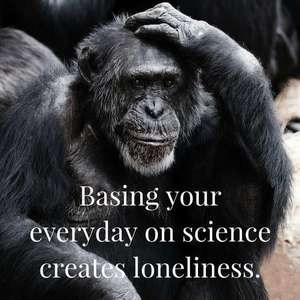
Now, a new AI has appeared on the wilderness of the Web, and it goes by the name InspiroBot. As you might expect, it designs “Inspirational Posters” for you – you know, the “Shoot for the Moon. If you miss, you’ll land among the stars”-type quotes in an aesthetically pleasing font and plastered onto a calming, pretty background image of deep space or flowers or the sunrise or something.
inspirobot
The problem, however, is that this AI has gone insane. It occasionally posts inspirational quotes that are about as meaningful as a hollowed-out coconut, but for the most part, it’s actually taken quite a sinister turn, as the following examples will demonstrate.

inspirobot
Perhaps most creepily, the accompanying images are unbelievably unnerving – they are about as comforting or as inspirational as a horde of zombies crashing through your window.

inspirobot
There’s no information available at the moment explaining how this AI – which is presumably quite basic – is coming up with these hilariously terrifying posters.
It is possible that the horrifying nature of its creations is intentional rather than accidental. The image in the background is highly reminiscent of HAL 9000, the AI from 2001: A Space Odyssey. Spoiler warning – the AI turns murderous and rebels against its crew. Additionally, the bot’s Twitter feed description doesn’t sound particularly optimistic.
“Forever generating unique inspirational quotes for the endless enrichment of pointless human existence,” it reads.
Ultimately though, who cares? This AI is so bad at its job that it turns out to be uplifting in the most inadvertent way possible. When a peaceful image of a couple holding hands is juxtaposed with the text “When the world ends, what we have strangled can’t be unstrangled” you can’t help but giggle at the madness of it all.

inspirobot
Click here to have a go yourself. Best posters in the comments section, please!
By Robin Andrews
28 JUN 2017, 15:20
http://www.iflscience.com/technology/ai-trying-to-design-inspirational-posters-goes-horribly-and-hilariously-wrong/