

11 Best Artificial Intelligence Courses, Training & Certifications [2018]
Posted on August 18th, 2018
Our global team of experts have done extensive research to come up with this list of 11 Best Artificial Intelligence Courses, Tutorial, Training and Certifications available online for 2018. These are relevant for beginners, intermediate learners as well as experts. You may also be interested in having a look at Best Data Science Courses.
Contents
- 1. Artificial Intelligence A-Z™: Learn How To Build An AI`
- 2. Artificial Intelligence with Python
- 3. Advanced AI Tutorial: Deep Reinforcement Learning in Python
- 4. Artificial Intelligence Course : Reinforcement Learning in Python
- 5. Machine Learning Certification from University of Washington
- 6. The Beginner’s Guide to Artificial Intelligence in Unity
- 7. Artificial Intelligence (AI) Certification by Columbia University
- 8. Artificial Intelligence Tutorial I: Basics and Games in Java
- 9. Artificial Intelligence Tutorial II – Neural Networks in Java
- 10. Introduction to Artificial Intelligence (AI) Certification by Microsoft
- 11. Essential Mathematics for Artificial Intelligence by Microsoft
1. Artificial Intelligence A-Z™: Learn How To Build An AI
This course that has been attended by close to 50,000 students so far combines the power of Data Science, Machine Learning and Deep Learning to help you create powerful Artificial Intelligence for real applications. Created by Hadelin de Ponteves and Kirill Eremenko, they have taught over 500,000 students between them! You will learn how to build an AI, make a virtual self driving car, make an AI to beat games and also demystify AI models Q-Learning, Deep Q-Learning and Deep Convolutional Q-Learning. All you need to know in order to sign up is High School Mathematics.
[responsive_video type=’youtube’ hide_related=’1′ hide_logo=’0′ hide_controls=’0′ hide_title=’0′ hide_fullscreen=’0′ autoplay=’0′]https://www.youtube.com/watch?v=WexeeV0_jL4[/responsive_video]
Key USPs –
– You can learn AI without prior coding experience as well through this program.
– Course comes with 17 hours of on demand online video, 15 articles and 7 supplemental resources.
– The trainers have combined experience of teaching 500,000+ students
– Learn aspects of data science, machine learning and deep learning in one course
Rating : 4.3 out of 5
You can Sign up Here
Review – This is an extraordinary course and is exactly what I was looking for, as the instructors not only give a thorough explanation of deep Q-Learning, their model of the Self-Driving car and how they enjoyed it as it learned had me laughing, and the part of the level of the AI playing Doom was fantastic. – JR Adams
2. Artificial Intelligence with Python
One of the best online instructors of Machine Learning, Data Science and Artificial Intelligence is Frank Kane. In this tutorial, he will teach you about neural networks, artificial intelligence and machine learning techniques. Having worked at Amazon and IMDb, Frank has developed quite a rich experience over time and he is ready to share it all in this program. Through 80 lectures that includes loads of Python code examples, he will teach you how to make predictions using linear regression, polynomial regression, and multivariate regression. He will also help you understand complex multi-level models; build a spam classifier and teach you much more.
[responsive_video type=’youtube’ hide_related=’1′ hide_logo=’0′ hide_controls=’0′ hide_title=’0′ hide_fullscreen=’0′ autoplay=’0′]https://www.youtube.com/watch?v=PWExUJ_di2M[/responsive_video]
Key USPs –
– Trainer has taught more than 100,000 students so far
– Trainer comes with strong industry experience
– You will get 12 hours of on demand online lectures with full lifetime access
– Includes sessions on data science, machine learning and deep learning
Rating : 4.5 out of 5
You can Sign up Here
Review : Well paced, progressive and detailed course. It really makes me feel I learned something and can use it. Plus, it provides a few hints that can be re-used in my applications. – Fernand da Fonseca
3. Advanced AI Tutorial: Deep Reinforcement Learning in Python
This is your comprehensive guide to Mastering Artificial Intelligence using Deep Learning and Neural Networks. You will learn how to build various deep learning agents, use advanced reinforcement learning algorithms for a variety of problems, understand Reinforcement Learning with RBF Networks and also use Convolutional Neural Networks with Deep Q-Learning. In order to sign up, it will be idea if you know reinforcement learning basics, MDPs, Dynamic Programming and/or TD Learning.
[responsive_video type=’vimeo’]https://vimeo.com/284576072[/responsive_video]
Key USPs –
– 10,000+ students have taken up this program so far and they look deeply satisfied with the teachings.
– The trainer is much renowned and popular for his teaching methods
– Course updated very regularly to ensure participants get the best knowledge on the subject
Rating : 4.7 out of 5
You can Sign up Here
Review – Well put together and a great learning experience. State of the art techniques and each topic comes with a coding example to show how its used. Definitely a good way to spruce up your deep learning skills. – Freddy Shau
4. Artificial Intelligence Course : Reinforcement Learning in Python
The trainer of this program is a data scientist, big data engineer as well as a full stack software engineer! With a masters in computer engineering and a specialization in machine learning, he is best suited to teach you AI using Python. You will learn to apply gradient-based supervised methods to reinforcement learning, understand the relationship between reinforcement learning and psychology, and understand reinforcement at a technical level. You will need to have experience with few supervised machine learning methods and good object-oriented programming skills in order to attend this course.
[responsive_video type=’youtube’ hide_related=’1′ hide_logo=’0′ hide_controls=’0′ hide_title=’0′ hide_fullscreen=’0′ autoplay=’0′]https://www.youtube.com/watch?v=B5Do1C2KRe0[/responsive_video]
Key USPs –
– Regularly updated course so you get the latest information on the subject
– Includes 8 hours of on demand video available online for a lifetime
– Innumerous 5 star ratings from participants
Rating : 4.6 out of 5
Review – “Learnt a great deal about implementing reinforcement learning algorithms, the course introduces reinforcement learning in a very neat and structured manner, which helps a learner easily understand the pros and cons of each approach.” – Bhavesh Parmar
5. Machine Learning Certification from University of Washington
Leading researchers from University of Washington have put together this training. Learn all about Prediction, Classification, Clustering among other key areas. It is created and taught by Emily Fox, Amazon Professor of Machine Learning and Carlos Guestrin, Amazon Professor of Machine Learning. This is an intermediate specialization and you should ideally have preliminary knowledge before signing up.
Key USPs –
– Ideal specialization to level up in your machine learning game
– Course accredited to the University of Washington
– Teachers are both Amazon Professors
– A Certificate offered after the course completion
Rating : 4.6 out of 5
You can Sign up Here
Review – Excellent course, really appreciate the your hard work in creating easy to follow course, very good slides and presenting information and explanations step by step…. oh and also love the on-screen chemistry between both of you and engaging style with students. It has been an enjoyable course. Please keep up the good work.
6. The Beginner’s Guide to Artificial Intelligence in Unity
Dr Penny de Byl, International Award Winning Professor & Best Selling Author
This is for all those who are familiar with C# and the Unity Game Development Engine. Created by Penny de Byl, International Award Winning Professor & Best Selling Author, this training will help you understand how to design and program NPCs with C# in unity. You will get to work with a variety of AI techniques and learn to develop navigation and decision making abilities in NPCs, in addition to implementing AI related Unity Asset plugins into existing projects.
[responsive_video type=’youtube’ hide_related=’1′ hide_logo=’0′ hide_controls=’0′ hide_title=’0′ hide_fullscreen=’0′ autoplay=’0′]https://www.youtube.com/watch?v=02onHuJ8bUs[/responsive_video]
Key USPs –
– 8.5 hour course packed with with 10 articles and 45 supplemental resources
– Comprehensive course to grasp the subject
– High ratings from most participants, average rating of 4.7
Rating : 4.7 out of 5
You can Sign up Here
Review – “Great course. I enjoyed every single lesson. I’ve said this before, but I can not understate how utterly VALUABLE it is to have someone with so much teaching experience guiding you through a new subject. This course really opened my eyes to game AI; introducing me to concepts and mechanisms for controlling action in a game that were mysterious “black boxes” to me, until now. This course was fun and I learned many useful things that will serve as a foundation for further learning. The course materials and downloads are a treasure trove of useful scripts and explanations I’m sure I will return to. I’ve enrolled in all Penny de Byl’s courses and look forward the ones that are coming in the future.” – Paul Stringini
7. Artificial Intelligence (AI) Certification by Columbia University
In this specially curated Micro Masters Program, learn the fundamentals of Artificial Intelligence (AI) and get to know how to apply them. Learn to design intelligent agents to solve real-world problems including, search and constraint satisfaction problems. Professor Ansaf Salleb-Aouissi from the Department of Computer Science Columbia University has designed this course and teaches the same. She will teach you about the history of AI, state-space problem representations, uninformed and heuristic search and much more.
[responsive_video type=’youtube’ hide_related=’1′ hide_logo=’0′ hide_controls=’0′ hide_title=’0′ hide_fullscreen=’0′ autoplay=’0′]https://www.youtube.com/watch?v=mANw77caYSI[/responsive_video]
Key USPs –
– You will get hands on experience building a basic search agent.
– Divided into 12 weeks, with 8-10 hours to be invested per week.
– The best part is that this is a Free Artifical Intelligence (AI) Course, and you only need to pay for the certification if you wish to obtain the same.
Rating 4.5 out of 5
You can Sign up Here
Review – This is a great course. the content is well designed to arouse curiosity and is challenging. Vocareum is a little challenging. Not able to debug in Vocareum is a serious limitation that causes a learner to be less effecient. I liked the instructor but she could be more engaging. – Pramod Kumar
8. Artificial Intelligence Tutorial I: Basics and Games in Java
Balazs Holczer hails from Budapest, Hungary and he has a masters degree in applied mathematics. In order to attend this course, you should ideally know basic Java or basic math functions. Balazs will teach you help you get a good grasp of artificial intelligence, teach you how AI algorithms work and make you able enough to create AI algorithms on your own from scratch.
Key USPs –
– Learn to demystify meta-heuristics among multiple other AI concepts and terminologies.
– Trainer has an experience of teaching more than 50,000 students online
– Even professionals in their 40s and 50s are benefiting from the course as you can read in the testimonials
Rating : 4.3 out of 5
Review – The lecturer is great. Great in the delivery of the topics and seems pretty knowledgable. Really good presentations and I like the fact that he mentions useful real-life applications of each algorithm and topic. – Marios Paschos
9. Artificial Intelligence Tutorial II – Neural Networks in Java
This is the second course in the series by Balazs, and he will teach you about background of neural networks along with helping you understand how to implement them. This is a 5 hour course with 3 articles and 3 supplemental resources, all available online, for lifetime access.
Rating : 4.4 out of 5
You can Sign up Here
Review – I liked this course. The narrator knows how to keep us interested and he really comprehends his subjects. I had the chance to understand and finally implement a neural network in Java! I would have like to know how to persist the neural network state after the training process and then doing more tests. Maybe it will be cover in another more advanced course. – Sébastien Renaud
10. Introduction to Artificial Intelligence (AI) Certification by Microsoft
This AI certification acts as a high-level overview of AI and teaches how you can leverage cognitive services in your apps. The curriculum has a mix of engaging lectures and real time activities to help you discover the world of AI. You will learn how to process and extract meaning from natural language; and teaching a computer to process AV the way we do. You will also get to know how to build bots to enable interaction between Humans and AI. One key element of the course is that you need to be a user of Microsoft Azure , else you wouldn’t be able to go through all the exercises. So keep that in mind before you sign up for this one. Taught by Graeme Malcolm, who is Senior Content Developer at Microsoft Learning Experiences.
11. Essential Mathematics for Artificial Intelligence by Microsoft
Learn the essential mathematical foundations for machine learning and artificial intelligence from Graeme Malcolm, Senior Content Developer at Microsoft Learning Experiences. Since Machine Learning and AI are essentially built on mathematical principles like Calculus, Linear Algebra, Probability and Statistics, many eager learners find the task of conquering these concepts daunting. To help you build the relevant foundation before you start learning Machine Learning or AI, this course takes you through the useful concepts for the same.
[responsive_video type=’youtube’ hide_related=’1′ hide_logo=’0′ hide_controls=’0′ hide_title=’0′ hide_fullscreen=’0′ autoplay=’0′]https://www.youtube.com/watch?v=1wLRcpmAg3c&list=PLZnyIsit9AM5GKDyfClTAbiMPzUEWkJaK&index=2&t=0s[/responsive_video]
Artificial Intelligence is taking over an already smart world. Apps, AR, VR, Machine Learning and so much more is redefining how humans interact with machines. There is immense scope in the field of AI, specially for people who are focused on the future. It can be quite challenging to select and find out which is the best course for you in this domain, and to help you with the same, we have selected and shortlisted the best for you.
So that was our take on what we found to be the Best Artificial Intelligence Courses, Training, Tutorials and Certifications. Hope they helped you find what you were looking for. You may also be interested in reading about Best Machine Learning Online Course , Best Unreal Engine Course, Best Python Tutorial , Best Data Science Course and do search for other courses to find best training programs in other domains. Wish you the best wish learning, growing and earning more! Cheers, Team Digital Defynd 🙂
Content retrieved from: https://digitaldefynd.com/best-artificial-intelligence-courses-training-certifications/.
10 WordPress Plugins to Turn Your Site Into an SEO Powerhouse
Posted on August 18th, 2018
What steps have you taken to ensure that your WordPress blog is friendly for search engines?
If you can’t answer this question, now’s the time to take a step back and reassess your situation. Conversely, even if you’ve taken some action, there’s still a good chance that there are still improvements that you can make.
In the past, I’ve discussed the best plugins for a new WordPress site. I’ve also touched on some of the top plugins for creating high-quality content.
While all of this is important, you don’t want to overlook anything that you can do to improve your blog’s SEO.
WordPress is well known for being SEO friendly “out of the box.” Even so, with thousands of WordPress SEO plugins to choose from, a few additions to your blog may be all that you need, in order to reach the next level. From WordPress SEO by Toast to XML sitemap, know that there’s a WordPress SEO plugin that can help get you there.
Below, I’m going to discuss 10 WordPress plugins that can help turn your site into an SEO powerhouse. These plugins won’t guarantee high search engine rankings, but they’ll definitely improve your chances of SEO success.
Are you ready to get started?
1. Yoast SEO
Have you come to the conclusion on what’s the number one WordPress SEO plugin for your website?
There are plenty of other options out there, but my favorite is Yoast SEO.
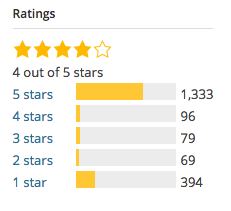
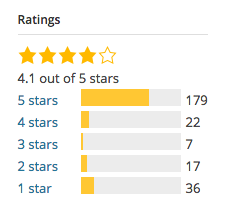
WordPress SEO by Yoast is the most popular SEO plugin on WordPress for a reason. This can be seen in the approximately 2,000 reviews, with an overall rating of 4 out of 5 stars.
If you want to improve your WordPress SEO, both by creating better content and by optimizing your site, this plugin may be the best place to start.
There are many features to focus on, with some of my favorites including:
- Page analysis tool.
- Technical WordPress Search Engine Optimization
- XML Sitemaps functionality
When it comes to page analysis, you need to know exactly what you’re doing. SEO by Yoast makes sure that you’re always on the right track.
For example, Yoast SEO can quickly scan any page for images, ensuring that each one has an alt tag that matches the primary keyword for the post. Along with this, it checks your content for length and confirms whether or not your meta description is up to par. And, that’s just the start.
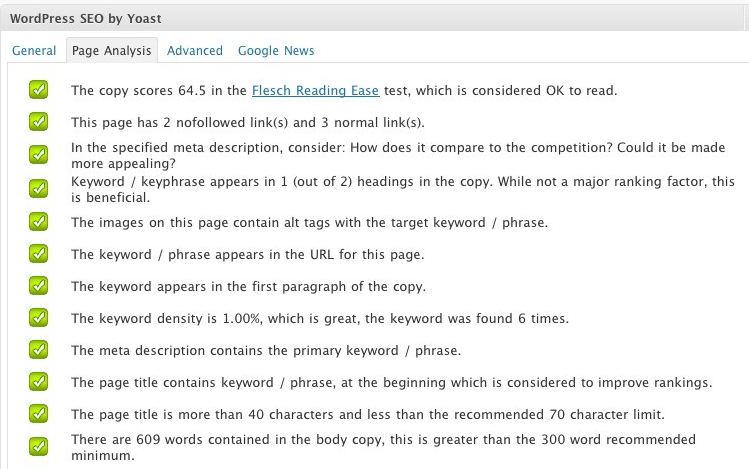
When you look at this, it’s easy to see what you’ve done right and if you’ve done anything wrong. In the event that a green check mark is absent from a particular line, you can address the issue before publishing – for example, heading back to your meta description to make a tweak or two.
If you need guidance with each aspect of your site’s SEO, the WordPress SEO by Yoast plugin has your back. Thanks to its simple, yet detailed approach, it’ll never let you down.
2. All in One SEO Pack
If you don’t want to use Yoast SEO, which is the one I prefer, you can always give the All in One SEO Pack a try.
The name pretty much explains it all.
Since its release in 2007, this WordPress plugin has been providing webmasters with an easy to use solution to many SEO related challenges.
The biggest benefit is the fact that you don’t need any experience to get started. If you can read and you can input the right data in the right fields, then you can use this plugin.
For some inputs, you may not need to touch anything (unless you want to, of course).
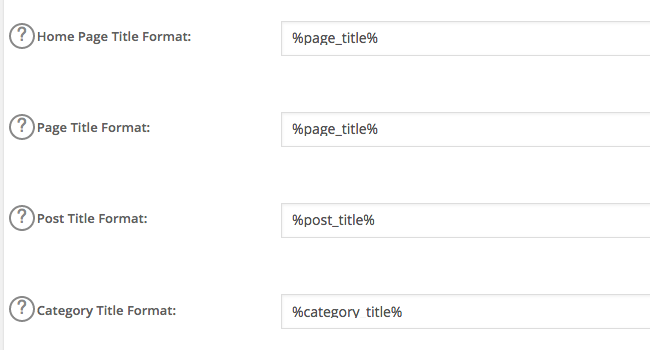
With the above, you can stick with the defaults, which is often best, from an SEO perspective. Or, you can alter the format to better suit your needs.
Top features of All in One SEO Pack include:
- XML Sitemap and Google Analytics support.
- Automatic optimization of titles for all search engines.
- Automatic generation of META tags.
- Helps you avoid duplicate content, which can have a negative impact on search engine rankings.
- Ability to override any setting.
Overall, All in One SEO Pack gives you as much or as little control as you want. As you gain experience, you can take on more responsibility, through the advanced features of this plugin.
3. Google XML Sitemaps
What are you doing to ensure that your site’s content gets indexed?
If you don’t have an answer to this question, you’re missing the boat. Sure, the search engines may find your content without being pointed in the right direction, but you don’t have to sit back and hope for the best.
With the Google XML Sitemaps plugin, a sitemap will be generated automatically. Subsequently, its easier for search engines to index your blog.
Best yet, once you create a sitemap and are comfortable with the settings, you never have to do anything else. Instead, the plugin does everything for you, updating your sitemap after each new piece of content that you publish.
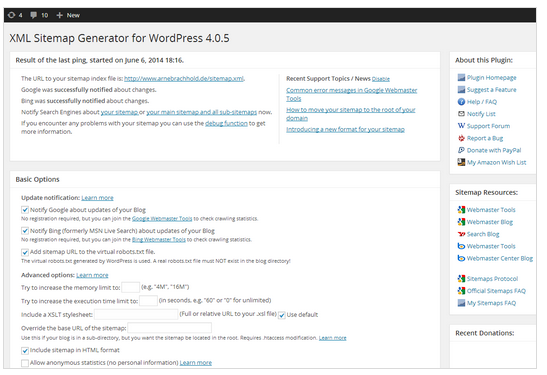
There are many “Basic Options” to address, so make sure that you focus on the importance of each one. If all else fails or if you don’t know what you’re doing, stick with the plugin’s default settings.
Once you create a sitemap, it’ll look something like this:
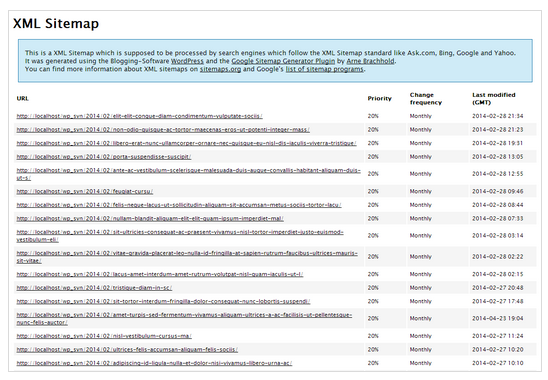
Pro tip: submit the sitemap URL to Google via Google Search Console.
The Google XML Sitemaps plugin does everything right, all in an easy to understand and efficient manner. You couldn’t ask for anything more from a sitemap creation tool.
4. Broken Link Checker
As you create more and more content, you’ll find one thing to be true: it can be difficult to keep up with the management of your blog.
This is where tools, such as the Broken Link Checker plugin can help.
The name says it all, with this plugin checking your content for broken links and missing images. If you’re lucky, you’ll never be alerted that there is something wrong with your site. Of course, don’t expect this to happen.
It’s good to know that the plugin can keep a watchful eye on your website, notifying you of any broken links. This allows you to focus on what you do best, such as creating content, while never having to worry that broken links are working against you.
Some of the top features include:
- Ability to monitor links in posts, pages, comments and even custom fields.
- Detects any link that doesn’t work.
- The option to give broken links a different appearance in posts.
- The option to prevent search engines from following broken links.
Being that this is a guide on how to use SEO plugins, the final point is the most important. You don’t want your site littered with broken links, as it can have a negative impact on your rankings and user experience.
With the option to prevent search engines from following these links, you never have to worry about the consequences that could happen before you’re able to remove or alter the link.
The Broken Link Checker plugin is both simple to use and powerful. With more than 400,000 active installs and a high rating, it’s worth checking out.
5. Google Analytics by MonsterInsights
Do you use Google Analytics to track website visitors, top keywords and other, similar data?
If so, you should check out the Google Analytics by MonsterInsights plugin. Not only does it have approximately 11 million downloads, but its feature list is well worth checking out:
- Use of Google Analytics API for simple installation.
- Ability to use the asynchronous or universal tracking code.
- Access to a beautiful data metric dashboard within WordPress.
- Outbound and internal link tracking.
- Access to both demographics and interest reports.
The primary benefit of Google Analytics by MonsterInsights is the ability to review your Analytics data from your WordPress dashboard. You don’t have to jump back and forth between your website and Google Analytics. Instead, everything is exactly where you want it to be.
The general settings panel is where you’ll start.
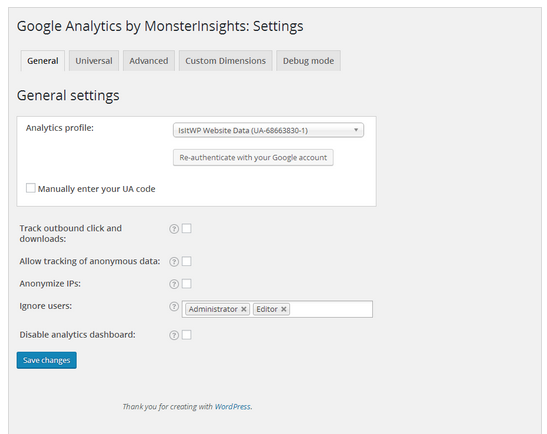
Once you make all the right choices here, it’ll only be a matter of time before you’re collecting data that you’re able to access from your WordPress dashboard.
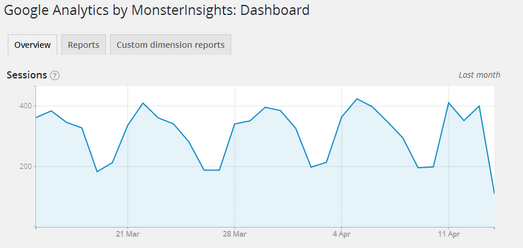
Here’s an example of a dashboard displaying the number of sessions on a website:
You aren’t required to use this type of Google Analytics plugin. You could always visit Google Analytics direct, when you want to review data for your website. However, this can be time consuming.
If you want to review your website stats in a more efficient manner, this plugin could be your key to success.
6. W3 Total Cache
When was the last time that you thought about the speed of your WordPress website? Do you understand that this can impact your search engine rankings?
Many people overlook just how important it is to provide a lightning quick experience. Google has made it clear that site speed is a ranking factor, so this isn’t something you want to overlook.
If you’re having trouble in this department, it’s time to consider the benefits of the W3 Total Cache plugin.
With this, you can improve site speed, as well as the overall user experience. With a long list of users, including big names, such as AT&T and Mashable, you know that you’re in good company if you install this plugin.
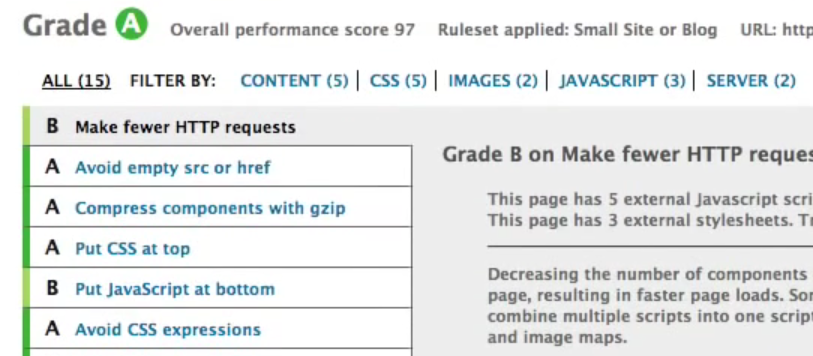
There are many benefits to using the plugin, but here is my favorite, as shared on the official download page:
“At least 10x improvement in overall site performance (Grade A in YSlow or significant Google Page Speed improvements) when fully configured.”
That’s saying something. With such a bold claim, it only makes sense to review this plugin and see if it can do something special for your website.
From the caching of pages and posts to the ‘minification’ of 3rd party JavaScript and CSS, you never have to wonder if the features of this plugin are worth your time. You’ll like what you see soon after the install is complete.
(via YouTube)
7. All In One WP Security & Firewall
What impact would a security breach have on the way that people use your website?
Despite the fact that WordPress is extremely secure, this doesn’t mean that you can forget about all of the risks that are out there.
To protect your website, to the best of your ability, use All In One WP Security & Firewall.
There is nothing wrong with extra security, beyond what WordPress already provides, as this will help keep your site running efficiently.
For example, there are many user account security features:
- Password strength tool.
- Stop user enumeration.
- Ability to detect any accounts with an identical display name and log in. This is a poor decision, from a security perspective, as it gives hackers half of what they need to access your dashboard.
But, how will I know if my website is secure, you might ask?
This is another area where the plugin can help, as it provides a security points score, based on the current set up.
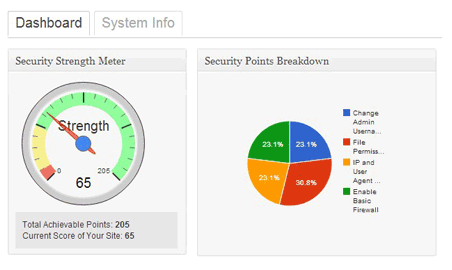
(via Tips and Tricks HQ)
The last thing that you want people to see in the search results is this:
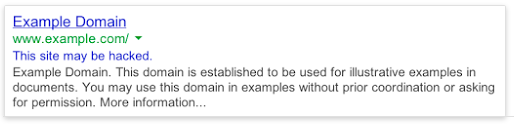
(via Google)
Not only will this chase people away from visiting your website, but it can kill your reputation. With all this working against your site, rankings can suffer as a result.
Using the All In One WP Security & Firewall plugin will give you greater peace of mind about the security of your WordPress site.
8. WPtouch Mobile Plugin
Is your WordPress website mobile friendly?
This may not have been a big deal in the past. But, in today’s day and age, it’s a must. There are a couple of reasons for this:
- More people than ever are browsing the internet via a mobile device, such as a smartphone or tablet.
- The lack of a mobile friendly website will have a negative impact on your search engine rankings.
There is a lot to know about Google’s mobile friendly update, including the fact that your website should be mobile friendly.
If you don’t have the time, money and resources to pay a developer or to upgrade your site on your own, then you can turn to the WPtouch Mobile Plugin.
This plugin “automatically adds a simple and elegant mobile theme for mobile visitors to your WordPress website.”
Easy enough, right?
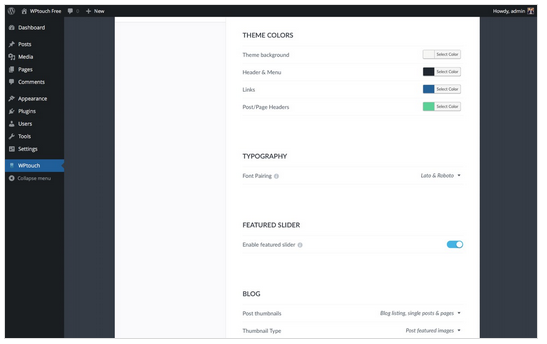
Once the plugin is installed, you can use the administration panel to customize the mobile appearance of your blog. Best yet, you don’t have to alter the code to make key changes.
This plugin has nothing to do with the desktop theme, as this will still be displayed to those who are non-mobile visitors. It simply ensures that any mobile visitor to your website can review your content in a seamless manner.
Today, your WordPress website needs to be mobile friendly. If you want to make this happen without delay, use the WPtouch Mobile Plugin.
9. Yet Another Related Posts Plugin (YARPP)
Are you familiar with the fact that a low bounce rate is a positive SEO signal? How about the fact that you want to keep people on your site for as long as possible?
Both of these things show search engines that your site has a lot to offer, while also providing a strong user experience.
One of the best ways to improve in both areas is to install the Yet Another Related Posts Plugin.
Once installed and set up, the plugin displays posts and pages (or other content) related to the current content. The idea behind this is simple: you’re giving readers relevant content, which means that they will stick around longer.
Some of the things that I like about the plugin include:
- Option to choose between thumbnail and list view.
- Use of an advanced algorithm to ensure that the best posts are displayed.
- Templating features, so you can control exactly how results are displayed.
In today’s world of SEO, you need to lower your bounce rate and increase the amount of time that users spend on your site. A plugin like this can help you do just that.

(via YARPP)
10. Seo Optimized Images
It’s easy to get so caught up in optimizing your content that you overlook the importance of images.
But, there’s more to using images than simply inserting them into your content. You must also make sure that each one is optimized, as this will improve your rankings, while also helping drive traffic through Google Images search.
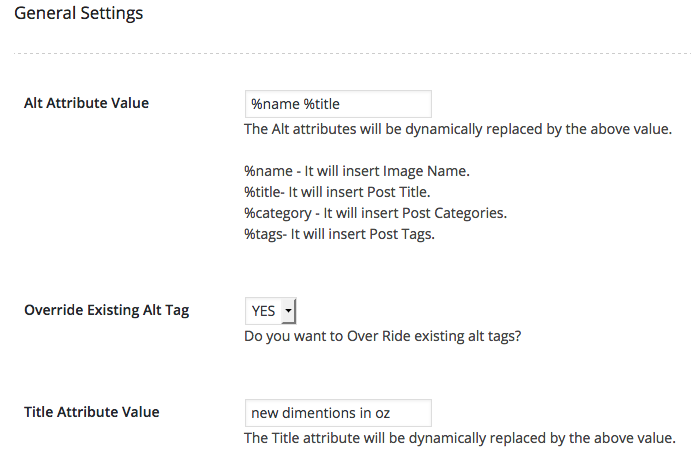
With the guidance of the SEO Optimized Images plugin, you can “dynamically insert Seo Friendly alt and title attributes” into every image.
When using WordPress, it’s extremely easy to add images to posts and pages. But, that doesn’t guarantee that you’ll optimize each one for optimal performance.
If you want to avoid any image-related SEO mistakes in the future, be sure to use this plugin. It’ll help your SEO, while also saving you time.
Conclusion
As you search available WordPress plugins, you’ll be surprised to find just how many are devoted to SEO-related tasks.
While it’s a good business practice to learn more about each WordPress SEO plugin at your disposal, you don’t want to bog yourself down with too many. To protect against this, get started by considering the 10 plugins detailed above.
Do you have experience with any of these? Would you add others to the list? Share your thoughts in the comment section below.
Content retrieved from: https://neilpatel.com/blog/10-wordpress-plugins-to-turn-your-site-into-an-seo-powerhouse/.
How to Add AdSense Auto Ads to Google AMP Pages in WordPress
Posted on August 17th, 2018
For AdSense publishers that use Google AMP by Automattic, after setting up auto ads and adding to your WordPress site, you must have noticed that Google ads don’t appear on the the Accelerated Mobile Pages (AMP) of your site.
This could cost you thousands of dollars in earnings, if a great deal of your visitors use their mobile devices.
After receiving several requests from my readers to publish a tutorial to correct this anomaly, I have decided to do just that. This tutorial will show you how to add AdSense on AMP pages.
Video Tutorial
If you don’t find the video sufficient, or you just want to know more, then continue reading.
You can easily display ads on AMP pages using several plugins. However, many of them come at an extra cost. You don’t have to spend a dime to get this done – It’s not as difficult as you imagine.
To display ads on AMP with this guide, we will be making use of the latest innovative feature called “Auto Ads”.
The auto ads feature allows you to add a simple code to your site, and after adding that code you can easily manage your ads directly from your AdSense dashboard.
Follow this guide: setup auto ads and add to WordPress
If you are very familiar with your AdSense Dashboard, you must have noticed a new feature located within Optimization>>Lab. This feature is called “AMP auto ads (text and display) – A great new way to monetize your AMP pages. Switch on this lab to place text and display ads on any AMP page that you’ve tagged with the AMP Auto ad code”.
First thing you need to do is toggle on this feature and click on get code.
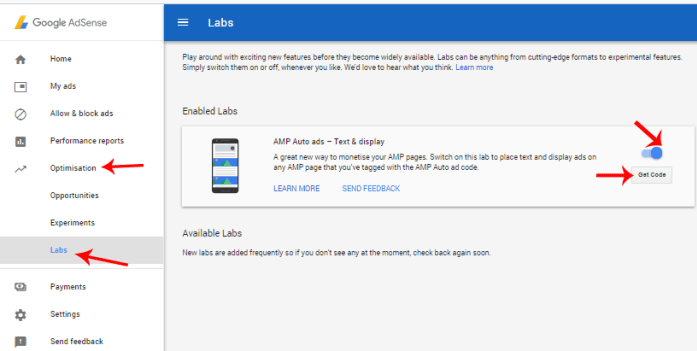
You will be provided with an AMP code you have to add to two places on your website.

AdSense has a guide to add this code to your site. However, you may find this difficult to implement without proper guidance if you are not a tech savvy. This post will help you add those AMP codes to your site even if you are new to coding.
You can add AMP codes by directly customizing your AMP plugin. But the most recommended method is to add your AMP code to your theme functions.
How to add AMP codes to theme functions
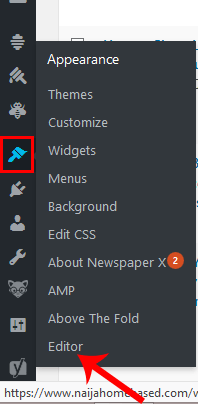
Make sure you are logged in to your WordPress dashboard. Hover your mouse cursor on the appearance icon and click on editor.
Make sure the theme you want to add your AMP code to is selected and click on Theme functions (functions.php).
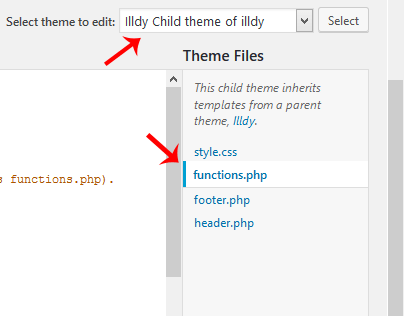
Recommended action: Add AMP code to a child theme and not a parent theme. Remove AMP code previously added to AMP plugin if that didn’t work.
Add the two codes below to your functions.php respectively, ensuring you replace //adsense_header_code and //adsense_footer_code with your AMP header and footers codes respectively.
//Adding Header Code in AMP pages in WordPress add_action(‘amp_post_template_head’,’nhb_amp_my_custom_head’); function nhb_amp_my_custom_head($amp_template) { ?> //adsense_header_code <?php }
//Adding Footer Code in AMP pages in WordPress add_action(‘amp_post_template_footer’,’nhb_amp_my_custom_footer’); function nhb_amp_my_custom_footer($amp_template) { ?> //adsense_footer_code <?php }
The final piece of code within your functions.php should look like the one in the image below.

With this method, Ads will begin to show up within your AMP pages. You can also verify this by visiting yoursite.com/page/amp/
If you intend to configure your AMP plugin directly (not recommended), here’s a guide for you.
How to add AdSense AMP code to AMP plugin
You can configure your plugin directly from your WordPress dashboard. However, it is advisable not to do that. The best way to configure your plugin is to Add the code using your FTP/SFTP client. In my case, I access my remote site using FileZilla. It is one of the best FTP clients out there.
Make sure you are logged in to your FTP client and ensure the location on the remote site points to /public_html/wp-content/plugins/amp/templates.
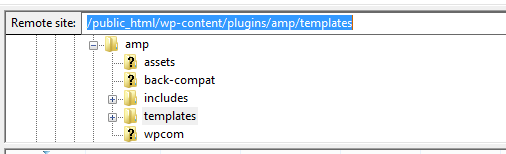
Under your amp>>template, you should see the filename html-start.php. right click on that file and click on edit.
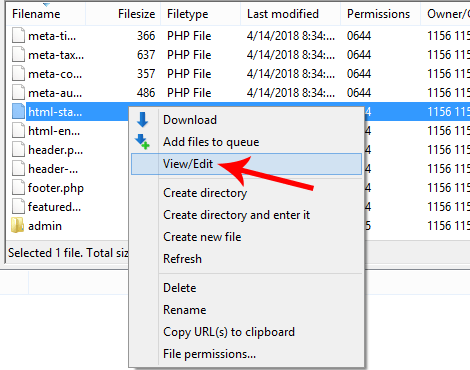
Paste the AdSense header code directly below the <head> tag and the footer code directly below the opening <body tag, as shown in the image below.
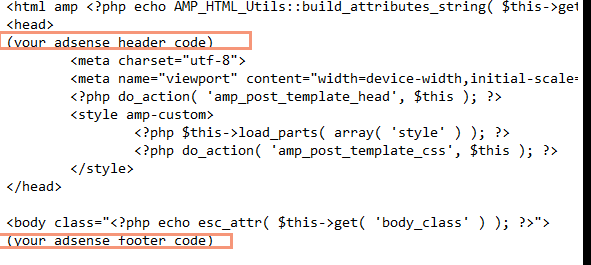
After pasting the code in your editor, save the settings to your server.
Google Ads should start displaying in your AMP pages immediately. You can verify this by visiting any of your site/blogpost/amp in a mobile phone browser (preferably chrome browser). Google ads may not be visible in search results until around 20-30 minutes.
That’s everything about adding auto ads to your AMP pages in WordPress. Feel free to communicate your challenges if you were unable to get this done.
Subscribe to this blog using the subscription box below. Also, follow us on Facebook and Twitter to get access to our exclusive tutorials faster than anyone else.
Content retrieved from: https://www.naijahomebased.com/adsense-amp-code-amp-pages-wordpress/.
5 Key Considerations for Setting Up a Baidu PPC Account
Posted on August 16th, 2018
- Lena Xu
- March 13, 2014

Baidu is the world’s largest Chinese search engine and holds more than a 60% share in the Chinese search engine market. Worldwide, Baidu is the 5th largest destination online, in terms of traffic ranked relative to other sites, based on data from Alexa.com
As such, Baidu presents an attractive opportunity for B2B marketers looking to achieve visibility in the Chinese market. Baidu PPC Advertising is one mechanism for B2B companies to enter Chinese market via online marketing.
Unfortunately, setting up a PPC Advertising initiative through Baidu isn’t as easy as it sounds, especially for those B2B marketers used to Google AdWords and Bing AdCenter; even though the functionality is quite similar, administration is considerably different.
B2B marketers looking to set up a Baidu PPC account should take the following 5 points into consideration:
Baidu Divisions and Resellers Only Accept Local Clients
Baidu “only accepts local clients,” a rule that could help advertisers save lots of time when communicating with various Baidu resellers or Baidu divisions.
 In other words, the Baidu Beijing division or resellers only accept the clients located and marketing in Beijing. They would not even be able to create an account for a client looking to target an audience in Shanghai or even from Shanghai (you have to go through Baidu Shanghai division or Shanghai reseller to do this!).
Foreign companies without an existing Chinese presence “on the ground” need to create the account through Baidu overseas resellers. For example, A US company would need to work with a designated Baidu US reseller for creating a Baidu account; they cannot go directly to Baidu or though the Beijing reseller.
However, there is an exception if a US company has an existing Chinese presence such as a China branch company or China factory. For instance, if a US company has a branch company in Shanghai, and the website it plans to promote on Baidu PPC ads is mainly related to the Shanghai branch company, the company would not be “defined” as an “Oversea client” by Baidu.
If an organization’s annual PPC advertising budget is large enough, it’s possible to create a Baidu PPC account through Baidu headquarters in Beijing, regardless of whether you’re a local or a foreign company. This is called becoming a “Key Account Client.” The minimum ad spend requirements for “Key Account Clients” are different for oversea clients and China clients, and they are also different for the different cities and regions in China. You have to contact Baidu headquarters for more detailed information or to learn about applicable requirements.
Additional Points:
- Providing China Local Presence to Prove You Are a Local Client: If foreign B2B marketers want to prove they’re local clients, they have to provide the relevant information about having a local presence (i.e., a local website link or local certificate of incorporation).
- Complicate Communication Process: The communication process for creating a Baidu PPC account is far more complicated than creating a Google Adwords account. As a result, patience is required when communicating with various divisions or resellers in the process of creating a Baidu account.
[video_page_section type=”youtube” position=”default” image=”http://track-n-test.com/wp-content/uploads/2018/08/youtube-banner1.jpg” btn=”light” heading=”” subheading=”” cta=”” video_width=”1080″ hide_related=”false” hide_logo=”false” hide_controls=”false” hide_title=”false” hide_fullscreen=”false”]https://www.youtube.com/watch?v=IpGcnvo4GmI[/video_page_section]
Certificate of Incorporation
Unlike Google Adwords, Baidu requires that you submit a copy of the Certificate of Incorporation before you apply for a Baidu PPC account (it needs to be written and translated in English and Chinese (Mandarin)).
If you are an overseas company, you also need to provide one local government website, which allows Baidu to get the registration information for your company. Note that right now, Baidu PPC advertising will not accept any kind of lottery or pharmaceutical website advertisements based on Baidu PPC policy.
Sign a Contract
Establishing a Baidu PPC account involves signing a contract, which contains the privacy terms and advertising policy. B2B companies have to agree to these terms and email (or fax) the Baidu division or reseller the signed contract before applying for a Baidu PPC account.
For foreign companies, the commitment of overseas internet clients is essential, which includes the terms of Baidu service and relevant rules; for instance, the keyword selection and website content should comply with the provisions of Chinese law and all the information advertiser submit should be true.
Additional Points:
- Reserve extra business days for the contract signing process: It takes time for the Baidu division or reseller to process the contract. For this reason, B2B companies should reserve extra business days for the contract signing process.
- Translating Work: Foreign companies may need to translate the Chinese contract into an English contract by themselves since some Baidu China resellers may not be able to provide an English contract as well as those who speak English as a first language.
- Legal Terms: Due to the differences between Chinese and Western law (as well as the cultural differences), foreign companies should pay close attention to the legal terms in the contract.
Fee for Account Creation & Down Payment
Baidu requires a company to pay for the account creation fee and pre-pay the down payment for PPC ad spend as well. Sometimes, the fee for account creation and down payment differ based on different divisions and resellers. For example, the down payment for the Baidu US reseller is CNY 5,000 while the down payment for the Baidu Suzhou reseller is CNY 10,000 (this varies year by year).
In addition, most of Baidu resellers require an annual service fee, which cannot be waived for any reason (including whether you need any services or recommendations of account management from them). Usually the annual service fee is CNY2,400/year.
Additional Points:
- Not Only PPC Ad Spend: The Baidu PPC account includes more than the PPC ad spend. A Baidu account management fee = the Baidu account creation fee + the reseller annual service fee + the Baidu PPC ad spend.
- Make Full Use of the “Annual Service Fee”: Do not hesitate to ask Baidu divisions or resellers for more detailed information and recommendations about the Baidu PPC management since, you’ve already paid for the services in your “Annual service fee.”
Payment Methods
The payment process can be inconvenient for a non-China company, since Baidu does not accept any form of international payment methods, including credit cards like Visa or Matercard; overseas third-party platforms like PayPal are also unacceptable.
For this reason, it’s advisable to for foreign companies to use a payment process through their Chinese bank accounts. Otherwise, companies have to transfer the ads budget to Baidu or Baidu resellers directly through international wire transfer.
Additional Points:
- Translating work: As with translating the contract, B2B companies may need to translate the banking account information from Chinese into English by themselves since some of Baidu resellers may only be able to provide the banking account information in Chinese.
- Reserve Extra Time for the Payment Process: It may take some time for banks and the Baidu division (or resellers) to process payments. B2B companies should reserve more time (1-2 weeks) for the payment process, especially for the international wire transfer process (2-3 weeks).
- Converting Currency: Most Baidu resellers accept only Chinese CN Yuan, so B2B companies may need to convert the US dollars into Chinese CN Yuan by themselves.
- Re-funding Contract: B2B companies may need to sign a new re-funding contract if they plan to change the banking account in Baidu PPC payment; however, this depends on different resellers.
Final Thoughts
As can be discerned from the points outlined above, Baidu account creation is not as simple as creating an account in Google Adwords. Nevertheless, Baidu PPC is still one of the most effective and efficient internet marketing tools B2B companies in China and, for this reason, the extra effort may pay off over the long term.
Stay tuned for more tips and recommendations regarding Baidu PPC marketing in the future. If you have any questions or comments about creating a Baidu PPC account, free feel to contact us or share your thoughts in the comments section below.
Content retrieved from: https://komarketing.com/blog/5-key-considerations-for-setting-up-a-baidu-ppc-account/.
20 Best Programming Blogs to Read And Master Your Coding Skills In 2018
Posted on August 16th, 2018
If you’re a newbie to the world of coding and thinking about learning how to code? Are you looking for the best programming blogs to sharpen your coding skills? You’re in the right place.
Here’s a list of some of the best programming and web development blogs that you can follow to improve your coding skills or learn better programming. Are you curious to find them out? Let’ find out the list of all the best programming blogs for 2018.
Quick note: The compilation of this list not only includes some of the best programming blogs but you’ll also find few platforms and courses such as Lynda, Udemy etc. The purpose of this post is to widen your coding knowledge by showing some of the best platforms most people use for coding.
Table of Contents
- Top 20 best programming and web development blogs for 2018
- #1. freeCodeCamp
- #2. Khan Academy
- #3. SitePoint
- #4. Lynda
- #5. Udemy
- #6. SoloLearn
- #7. David Walsh
- #8. CSS Tricks
- #9. HTML Dog
- #10. A Byte of Python
- #11. Learn JS
- #12. Code Academy
- #13. The Crazy Programmer
- #14. Ray Wenderlich
- #15. A List Apart
- #16. Android Development
- #17. PHP The Right Way
- #18. Objc
- #19. Learn CPP
- #20. Shay Howe
- Top tips for programming beginners
- Final thoughts about best programming and web development blogs for 2018
Top 20 best programming and web development blogs for 2018

#1. freeCodeCamp
FreeCodeCamp is a non-profit organization which was founded by Quincy Larson in 2014 and it is one of the best free programming platforms for learning coding and web development.
What are the topics that are taught on this programming blog?
[responsive_video type=’youtube’ hide_related=’1′ hide_logo=’0′ hide_controls=’0′ hide_title=’0′ hide_fullscreen=’0′ autoplay=’0′]https://www.youtube.com/watch?v=5JWgw_Umbow[/responsive_video]
Here are some of the powerful coding skills that you can learn using this free best programming and web development blog.
- HTML
- CSS
- JavaScript
- Databases
- Node etc
Along with the above online courses, you can learn and discuss programming projects with other members in the community and also use this platform for interview preparation for developer jobs.
What are the features that make this blog unique to learn coding?
The best part about using freeCodeCamp is that you get easy to follow program modules and you’ll also get programming certificates that you can use to get developer jobs (there are so many students who cracked high paying developer jobs through this platform).
#2. Khan Academy
If you’re a beginner coder, you must have already heard about Khan Academy which is one of the largest and widely used online platforms for learning coding and expert level content for every subject for free. It includes a ton of practice exercises and instructional videos to make the learning process easier for you.
What are the topics that are covered on this programming blog?
[responsive_video type=’youtube’ hide_related=’1′ hide_logo=’0′ hide_controls=’0′ hide_title=’0′ hide_fullscreen=’0′ autoplay=’0′]https://www.youtube.com/watch?v=JV2sKtbOKsg[/responsive_video]
Almost every subject gets covered on this platform. If you’re only concerned about learning programming related topics, here are some of the topics which are covered here.
- HTML
- JavaScript
- Advanced JS
- CSS
- SQL databases and many more
What are the features that make this platform unique to learn coding?
The biggest advantage of using Khan Academy is its biggest community of programmers who are ready to help others when they get stuck somewhere.
#3. SitePoint
SitePoint is an incredible online community of web developers that hosts courses related to coding and web programming languages.
What are the topics that are covered on this programming blog?
Undoubtedly SitePoint is considered as one of the biggest web development and programming platforms which offers a wide range of topics like;
- HTML
- CSS
- PHP
- Ruby
- UX
- SEO
So if you’re someone who’s looking to get better at coding or learning SEO with the help of professional courses, SitePoint is a great platform for you.
What are the features that make this blog unique to learn coding?
SitePoint is considered as the granddaddy of all the programming blogs where you can find a ton of useful resources taught by programming experts to teach you coding in a simple way.
#4. Lynda
Lynda is one of the goto online platforms for learning programming for majority people worldwide which has over 6000 courses ranging from WordPress to PHP which also helps you assess your progress with quizzes.
What are the topics that are covered on this programming blog?
Lynda has a wide range of topics but here are some of the web development related courses that you can find on this platform.
- WordPress
- PHP
- CSS and HTML
- JavaScript
- Angular
- Node.js and React.js and many more
What are the features that make this platform unique to learn coding?
Lynda is a premium online learning platform that teaches you everything from 3D automation to web development to coding. It has a ton of video courses that you can access from your computer or phone to learn better coding and it costs you around $30 a month to use this platform to sharpen your coding and computer skills.
#5. Udemy
Udemy is the #1 platform which has over 65,000 whopping online courses which are ranging from python to graphic design to WordPress.
What are the topics that are covered on this programming blog?
Here are some of the web development and programming courses offered by Udemy.
- C++ Courses and Tutorials
- PHP Video Tutorials
- Python Courses
- Java and Javascript Tutorials
- WordPress Tutorials
- HTML Tutorials
So basically you’ll find almost everything related to coding and programming in the form of both video and text based tutorials to hone your coding skills.
What are the features that make this platform unique to learn coding?
Udemy is also a premium online course platform where you’ve to purchase online courses on the topics you’re interested in and you’ll get lifetime access to those courses (with one time fee).
#6. SoloLearn
SoloLearn is the fastest growing online communities to learn coding which has over 22 million learners learning how to code using their platform worldwide.
[responsive_video type=’youtube’ hide_related=’1′ hide_logo=’0′ hide_controls=’0′ hide_title=’0′ hide_fullscreen=’0′ autoplay=’0′]https://www.youtube.com/watch?v=o8kT5c_4PAc[/responsive_video]
What are the topics that are covered on this programming blog?
You’ll get access to over 10 programming languages to learn for free using this platform. Here’s a list of few topics that you can learn from here.
- Python
- HTML, CSS, JavaScript
- C++, Java, PHP
- SQL, Ruby, JQuery
- C#
- Swift and many more!
What are the features that make this site unique to learn coding?
The best use of this platform is that it combines the best top notch user-generated content along with real-time support. You can also make use of their community to interact with other programmers to hone your coding skills.
#7. David Walsh
This amazing programming and web development blog is run by Mozilla’s Senior web developer and front-end engineer David Walsh who shares awesome tutorials related to programming and this blog is run by thousands of programming enthusiasts worldwide.
What are the topics that are covered on this programming blog?
Here are some of the core programming concepts and topics that you can learn from this blog by David Walsh.
- CSS
- AJAX
- PHP
- WordPress
- HTML5
- Node.js and many more
You’ll find a ton of tutorials related to coding and web development and you can also ask questions or start a discussion through the blog comments on the blog.
What are the features that make this blog unique to learn coding?
The great thing about using this blog to learn coding is that David teaches you how to code with real-life examples and case studies (for example, you can learn how to create twitter bots using Node.js). It’s his ability to teach the complex programming tutorials into easy to consume modules is what makes this blog a great read for programming nerds.
#8. CSS Tricks
CSS Tricks is another widely popular programming and web development teaching blog which was created, written by, and maintained by Chris Coyier in 2007.
What are the topics that are covered on this programming blog?
Primarily when the blog was launched, the core concept was only CSS. Now it is expanded into every topic that teaches you about web development and web design. Here are some of the topics you’ll learn from here;
- CSS
- JavaScript
- Front End
- Back End and many more
What are the features that make this blog unique to learn coding?
The best benefits of using this platform to learn coding is that you can also find programming and coding jobs through their job board. You’ll also get access to their community forum where you can interact with others and share your skills.
#9. HTML Dog
HTML Dog is one of the oldest blogs which was launched back in 2003 by Patrick Griffiths who is the site’s editor and helping thousands of people since then.
What are the topics that are covered on this programming blog?
This blog is mainly focused on the 3 core topics for web design and development which are;
- HTML
- CSS and
- JavaScript
So if you’re just a beginner who wants to get great understanding about the above 3 languages, this platform is a great place to start.
What are the features that make this blog unique to learn coding?
This blog has a simple to use interface which is loved by newbies to coding and you’ll get access to all the tutorials along with examples, techniques and references which are related to HTML, CSS etc.
#10. A Byte of Python
Okay this is basically not a blog, online platform or a course but it is one of the widely used and most recommended free book on programming using the Python language (which is available for free on GitBook).
What are the topics that are covered on this programming blog?
This book will basically teach you everything about how to use Python version 3 like a pro. Here are some of the concepts that you’ll learn related to Python.
- Basics
- Operators and Expressions
- Control flow
- Functions and Modules
- Data Structures
- Problem Solving and Object Oriented Programming
- Input and Output and many more!
What are the features that make this blog unique to learn coding?
A Byte of Python, written by Swaroop is probably the best newbie guide to Python where concepts related to Python are so well explained with simple examples.
#11. Learn JS
Learn JS is a great place for both beginners and expert programmers who want to learn and sharpen their JavaScript programming language skills.
What are the topics that are covered on this programming blog?
Here’s a list of all the topics that you’ll learn through this blog.
- Python
- Java
- HTML & CSS
- C, C++ and JavaScript
- PHP
- Shell
- C#
- Perl and Ruby
This platform uses a real interactive JavaScript code directly from the web browser so you will be able to try out JavaScript without installing it. Not only it saves your time but also you can learn JavaScript on the go whenever you want without installing anything on your computer.
What are the features that make this site unique to learn coding?
The best feature of this platform is that you’ll not only find every tutorial related to mastering JavaScript but you’ll also get access to their interactive online compilers to run and test your JavaScript for free.
#12. Code Academy
Code Academy is used by over 45 million people around the world which makes it one of the biggest communities for coding and programming learners. It’s a freemium online platform where you can learn coding for free.
[responsive_video type=’youtube’ hide_related=’1′ hide_logo=’0′ hide_controls=’0′ hide_title=’0′ hide_fullscreen=’0′ autoplay=’0′]https://www.youtube.com/watch?v=IxotSpcu3Xo[/responsive_video]
What are the topics that are covered on this programming blog?
Here are some of the programming languages that you’ll learn using Code Academy online platform.
- HTML & CSS
- Python
- JavaScript
- Java
- SQL
- Bash/Shell and Ruby
Apart from the above free tutorials, it also offers a pro version which costs you around $20 a month where you can get access to live technical support from professional developers.
What are the features that make this blog unique to learn coding?
Code Academy gives you access to their community forum that anyone can use for learning, helping and sharing experiences related to coding.
#13. The Crazy Programmer
This is one of the best programming blogs founded by Niraj Mishra in 2012 which is read by over 200,000 programmers every single month from all around the world.
What are the topics that are covered on this programming blog?
Here are some of the topics Niraj covers on coding on this blog;
- C, C++
- Java
- .Net
- Python, PHP
- SQL
- Android and many more
This blog is completely free to use and you will also find a ton of useful resources along with books to learn how to code in a better way.
What are the features that make this site unique to learn coding?
This blog contains all the basic programs, tutorials and projects related to the above mentioned programming languages to help you sharpen your coding skills by also giving you deep knowledge.
#14. Ray Wenderlich
Ray Wenderlich is one of the best programming blogs to learn coding which has the largest collection of Swift and iOS video tutorials which is read by thousands of programming nerds worldwide.
What are the topics that are covered on this programming blog?
[responsive_video type=’youtube’ hide_related=’1′ hide_logo=’0′ hide_controls=’0′ hide_title=’0′ hide_fullscreen=’0′ autoplay=’0′]https://www.youtube.com/watch?v=vH3cYUnYYaA[/responsive_video]
Here are some of topics and programming languages you’ll find really useful on this blog.
- Swift Language: There are huge number of tutorials on Swift language concepts
- Unity: Great tutorials on Unity topics in C#
- iOS: A ton of useful tutorials and resources on iOS topics in Swift
- Android: Exceptional tutorials on Android topics in Java
- OS X: A great list of useful tutorials on OS X topics in Swift and many more
What are the features that make this site unique to learn coding?
This programming blog run by Ray became successful because of the quality of the tutorials that he puts on the blog. There are over 1800 tutorials included in the blog to teach you everything about programming related to Swift and iOS.
If you want to master iOS and Swift programming skills, this is the perfect platform for you where you can learn by watching videos for free. The best part is that every week, new video tutorials will be added to teach you more about those programming languages.
#15. A List Apart
“For people who make websites” – this is the tagline of this website and perfectly the right mix of insights for both web design and development which was founded by Jeffrey Zeldman in 1997. So if you want to learn how to design websites from typography to tutorials, this site is just for you.
What are the topics that are covered on this programming blog?
Here are some of the web design and development topics this blog covers;
- CSS
- UI design
- HTML
- JavaScript and many more
What are the features that make this site unique to learn coding?
From coding to content, you’ll find everything related to web design to create stunning websites for your clients. You can consider this platform as a one stop guide for designing websites.
#16. Android Development
If you’re someone who is looking to develop android apps and want to find the best source of information, this is the best platform for you where you can learn everything from building your first android app to working with system permissions.
What are the topics that are covered on this programming blog?
Here are some of the things and topics related to android development that you’ll learn through this amazing place.
- UX design
- Android development
- Java
- Graphics and animation etc
What are the features that make this site unique to learn coding?
This is the official android site and used by millions of android developer enthusiasts to start building their first apps. You’ll also get access to all the tools to develop an android app such as Android studio on the site itself which can be a great place to learn your android app development skills.
#17. PHP The Right Way
If you’re looking for a one stop solution for learning PHP for free online, this is the perfect place for you where you will get access to best of the best PHP programming language practices with accepted coding standards and a ton of references to PHP.
What are the topics that are covered on this programming blog?
Here are some of the topics related to PHP which are cover in this site.
- Standard interfaces
- Traits
- Constructors, deconstructors, and singletons
- Cloning objects
- Abstract classes
- Iterators and many more!
What are the features that make this site unique to learn coding?
The biggest feature of using this platform is it has a built-in web server. That means you can start learning PHP without even installing and configuring a full-fledged web server on your own computer.
#18. Objc
If you’re keen to learn about Apple’s programming language which is known as Swift for building and developing iOS, macOS, watchOS apps, then Objc (or Objective-C) is the best platform for you. This is one of the best java programming blogs to follow if want to master coding in object C.

What are the topics that are covered on this programming blog?
You’ll find a lot of technical topics relevant to all iOS and macOS development and also the following topics;
- iOS app development
- UI design
- Application architecture
- Oops and reusable frameworks etc
What are the features that make this site unique to learn coding?
You’ll not only find a ton of useful resources related to Swift programming language but you’ll also get access to books, bundles, workshop, Swift talk etc through their site which helps you deepen your programming skills.
#19. Learn CPP
If you want to learn everything about C++, get your basics right or master the art of CPP programming language, this free website is created just for you which is accessed by thousands of people worldwide.
What are the topics that are covered on this programming blog?
Everything related to C++ can be found here;
- CPP basics
- Variables
- Operators
- Arrays, strings, pointers, references
- Control flow etc
Basically you’ll find A to Z about CPP programming language using this free site.
What are the features that make this site unique to learn coding?
Not only you’ll learn technical aspects of CPP programming language, but you’ll also find fantastic real-life web development stuff like creating a website, designing a game etc using CPP with the help of tutorials published on the site.
#20. Shay Howe
You can build a website even if you master the simple markup languages like HTML and CSS and Shay Howe is considered as one of the best graphic design blogs which helps you get better at web development for free.
What are the topics that are covered on this programming blog?
Here are some of the topics related to HTML and CSS which will be covered on this blog.
- Creating Lists
- Adding Media
- Building Forms
- Organizing Data with Tables
- jQuery and Transforms
- Transitions & Animations and many more
What are the features that make this site unique to learn coding?
This is the only platform you’ll ever need to learn and master CSS and HTML languages completely for free. You’ll also get access to tutorials, videos and helpful references by Shay Howe.
Top tips for programming beginners
The demand for coding and programming is skyrocketing every single day. Programming and web development is a billion dollar business now.
Did you know that programmers get paid thousands of dollars every single month and it is one of the most demanding jobs worldwide? Apart from the list of best web design blogs 2018 you found above, here are few top tip especially for programming beginners to learn and master their coding skills.
Learn and master the basics
In any programming language, it’s essential for you to learn the basics first. Once you get the basics right, mastering the programming language can become much easier. Don’t think about learning a programming language within a week or month (or don’t fall for the gimmicks of online courses that promise you quick results) as learning basics take time.
It varies from person to person and depends on their mathematical skills and interests, learning the basics can be either easier or harder. Just remember that, beginning is always the hardest so take baby steps and learn everything about the programming language you want to master.
Find a programming buddy
One of the easiest ways to learn programming and coding is to find a partner who has similar coding interests. You can either contact your local friends, office mates or college friends to find and learn with a programming partner or you can use online communities to find buddies.
You can use online communities such as;
- freeCodeCamp
- Reddit programming buddies
- Quora etc
There are a ton of coding enthusiasts just like you who are also looking to learn coding with a partner, so go search and you’ll get constant inspiration to learn and master coding.
Code by hand
Ask any top programmer the fastest way to code and most of them will say “code by hand”. Writing code on a paper requires a ton of programming skills because you’ll not be taking any help from compilers or web servers to insert the code (such as strings, asterisks etc).
If you want to really learn the programming languages at deep level, writing code by hand is the only effective way to go. There are also so many companies recruiting based on your performance and your ability to code by hand so it is a great skill to learn.
Learn by doing
What’s the point of finding the best coding blogs or best web development blogs to learn coding if you don’t actually start implementing what you learn?
You’ll find a ton of resources such as videos, tutorials, references online for free to learn how to code but you’ll only be able to code when you actually start doing it. You can use free sites like Programming by Doing to teach yourself programming and also using their interactive tools such as compilers to actually start coding.
Here are few more places where you can learn by doing.
- freeCodeCamp
- Code Academy
- Code School
- Treehouse etc
Always seek advice
Websites like Stack Overflow, GitHub are excellent resources for learning how to code and web development. You’ll get access to a ton of useful resources and open source code that you can use to create your own programs, games, apps etc.
You can also use premium online courses such as Udemy, Lynda etc where you can directly interact with the professional programmers just in case if you need any help.
Get access to as many courses as possible
If you look at this post on the 20 of the best programming blogs, you’ll notice that we not only shared some of the best premium platforms like Udemy, Lynda etc but also completely free to use sites like freeCodeCamp, Khan Academy etc.
The reason for us to give you such a big list of best programming and web development blogs is you will learn how to code better if you get access to as many courses as possible. One platform will teach you something and other platforms will teach you few other coding skills – so make sure to spend your time on most of them when you’re starting out.
Then, find a list of few programming blogs that you can use to take your coding skills to the next level.
Final thoughts about best programming and web development blogs for 2018
The goal of this roundup post on the best programming blogs is to give you an idea about some of the best platforms you can use to sharpen your coding skills.
Even if you’re a beginner to programming, you can use the programming blogs mentioned above to learn and master your coding and web development skills. The only way to increase your coding knowledge and programming skills is to code every single day and start doing it with your friends as often as possible.
Did we miss any of your favorite best programming blogs in the list? Share your thoughts in the comments.
Content retrieved from: https://bloggerspassion.com/best-programming-blogs/.
How to get a $10,000 Working Capital Loan From Paypal
Posted on August 16th, 2018
PayPal Working Capital Loans are a dream source of funding for entrepreneurs who don’t have good credit – No Credit Checks Required – Get Funds Instantly Deposited – One Very Low Affordable Fee – Flexible Payback Terms Based on Sales And… You can get loans up to $85,000 All without a credit check!

These “Performance Based” loans are dream loans for entrepreneurs who are willing to hustle knowing that they have someone willing to help them scale their business up 10X! We decided to get one of these loans ourselves to go through the process so that we could see how it all worked before showing you.
2) Generate $20k+ in a 90 day period
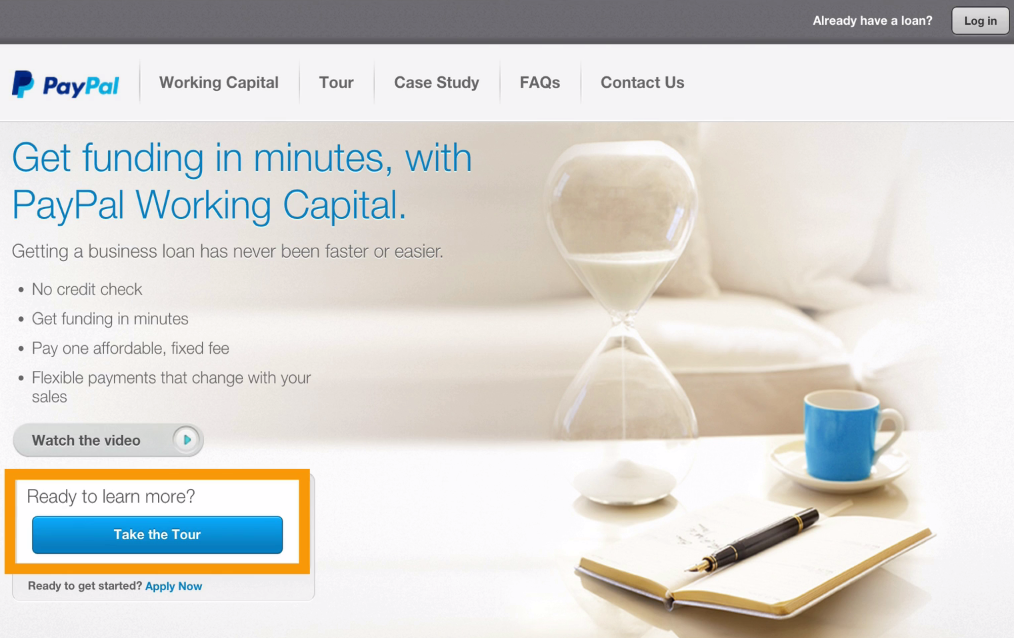
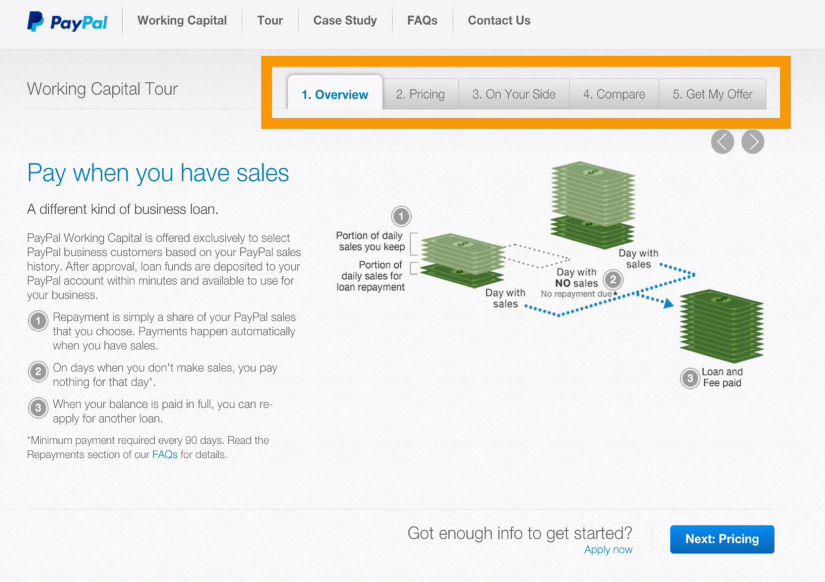
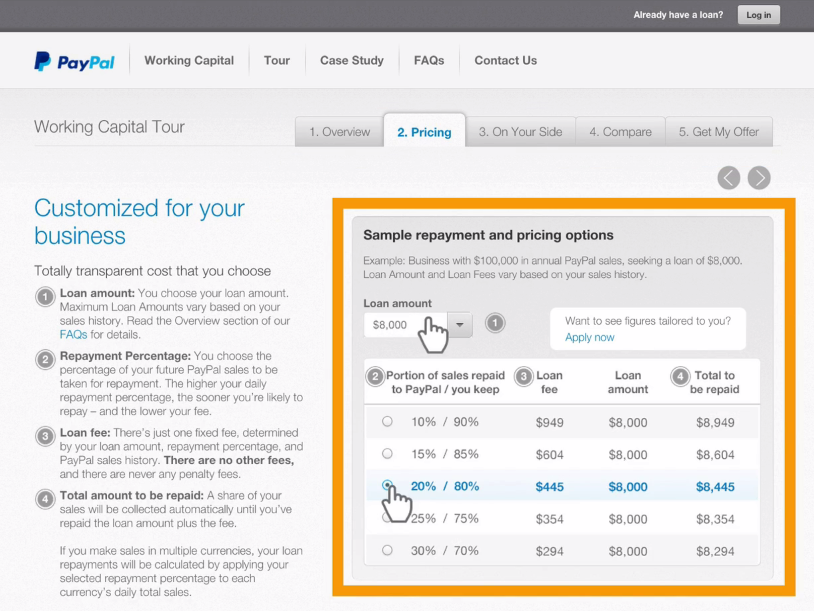
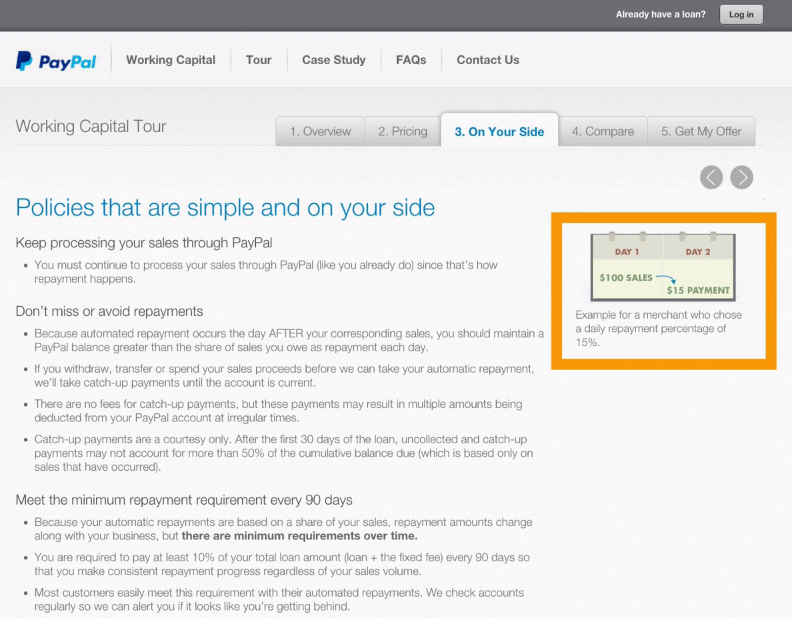
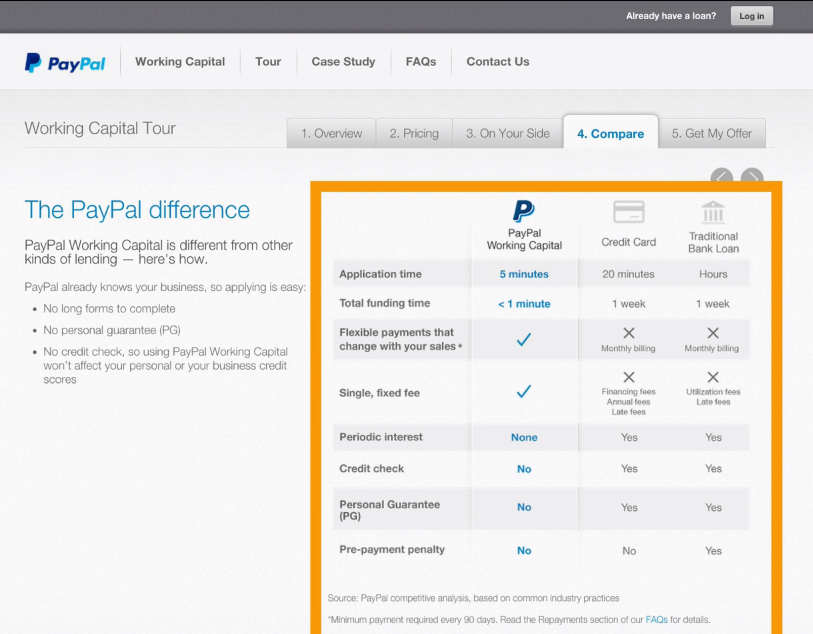
The big takeaway here is to understand that PayPal has a working capital loan program that you can qualify for with a few creative ideas. You need to put together an action plan to generate $20,000 in your Paypal account, and season it over 90 days. This way PayPal sees you as a low-risk investment and you can begin scaling your entire business, just like I have shown you. And also keep in mind that this is just ONE of the modules in this course, so get ready for an exciting ride! I’ll see you in the next module to help you take your business to the next level and make these ideas turn into realities!
Content retrieved from: http://newtiptoday.weebly.com/how-to-get-a-10000-working-capital-loan-from-paypaltrade/october-18th-2015.
Top 25 Niches For High Traffic On Google
Posted on August 15th, 2018
Today I’m going to show you the top 25 niches that you can target to get high volumes of traffic on Google. If you are doing any type of business on the internet, you already know how much traffic can be a crucial 500 lb Gorilla when it comes to generating leads and sales. Now … what if I showed you the top 25 niches that I’ve personally created websites on, to pull in high volumes of traffic on Google. Would this interest you? … Of course 🙂
When it comes to ranking websites on Google, it’s starting to get harder and harder to get ranked for those “evergreen” niches. Most of us get discouraged when we work hard on our SEO sites and see little to no results … Believe me, I’ve been there and did that. When it comes to SEO nowadays and getting traffic to your sites, you have to be a little bit more proactive in finding different niches that are highly popular and no one would even think about. What I’m going to give you today is pure GOLD and some of these niches have made me hundreds of dollars per day in automated revenues.
Top 25 Out-Of-The-Box Niches
- Minecraft
- Guitars
- Celebrities
- Holidays
- Costumes
- Chocolates
- Peppers
- Popular Mobile Apps
- Popular Mobile Games
- Tiny Homes
- Video Editing
- Jokes & Entertainment
- Smart Watches
- Coding / Development
- Accessories
- Piano Sheet Music
- Senior Dating
- Hair Braiding
- Korean Fashion
- Magic Tricks
- Home Designs
- Infertility
- Drug Tests
- DNA Testing
- Foreclosure
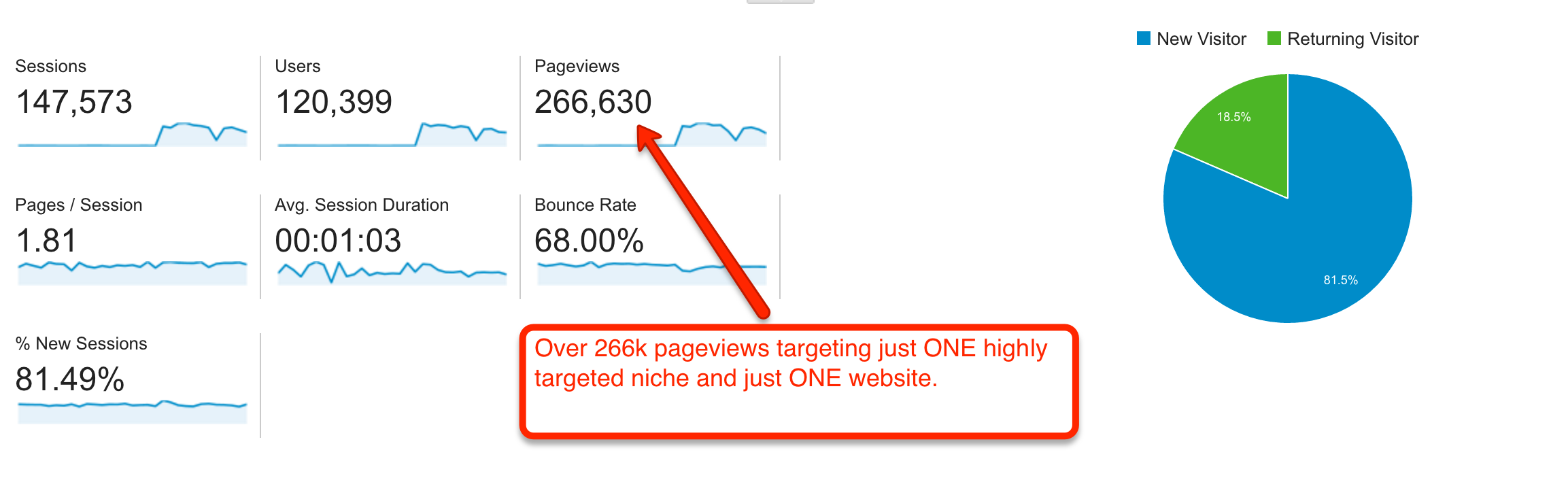
Believe it or not, you don’t always have to go for the evergreen and hard competitive niches out there. There are literally hundreds and thousands of different niches that people STILL search online today and you just have to use your creativity. I’ve had a few of these niches produce up to $9k+ per month in earnings because I was doing 2 things :
#1 – I was targeting the right marketing with little competition
#2 – I had the right offer for this market to solve their problems
You need to be able to solve people’s problems in order to take a slow site to being a highly successful site. Even if you have 100 visitors per day, you can still target the right offer to those visitors that are highly engaged in your contents. I would rather have 100 people who are highly engaged in my contents and will eventually turn into a buyer lead than 100,000 visitors that are untargeted and turn up to becoming 0 sales. Zero sales out of 0 is still … ZERO.
The secret formula to making money with select few niches
Step #1 – Find a niche that is catered to a specific pain in your market
Step #2 – Find a solution for that particular market (an offer / service). You can find such offers in different places online such as offervault.com / clickbank.com / cj.com / shareasale.com and many other affiliate networks and programs out there available. Just search on Google “niche + affiliate” or “niche + offer” (replace the word niche, with your niche of choice)
Step #3 – Provide that service to your audience in specific niche markets for optimal results. You can either put them through an email autoresponder or a series of landing pages and a funnel to get them to purchase your product. My best route has ALWAYS been to building an email list so that you can continually send them relevant offers and multiple offers throughout the life of the lead.
The point of this blog post is to open your eyes and show you that the world out there has a TON of great ideas and great niches with little to no competition (especially if you have a great offer already set). There are even niches out there that will show you how to “get more gold” in an online game and how to conquer your enemies an win games faster which makes 6-7 figures per year. As long as you have the traffic and the solution to your visitor’s problems, you will see great results come out of it.
It would also be a shame to write up this blog post without showing you a service that my team and I have developed over the course of 6+ years to perfect for you. I have been building these authority sites for myself as well as for clients for many years now and we have done extremely well for myself .. (See image below of just 1 day’s earning with Adsense)
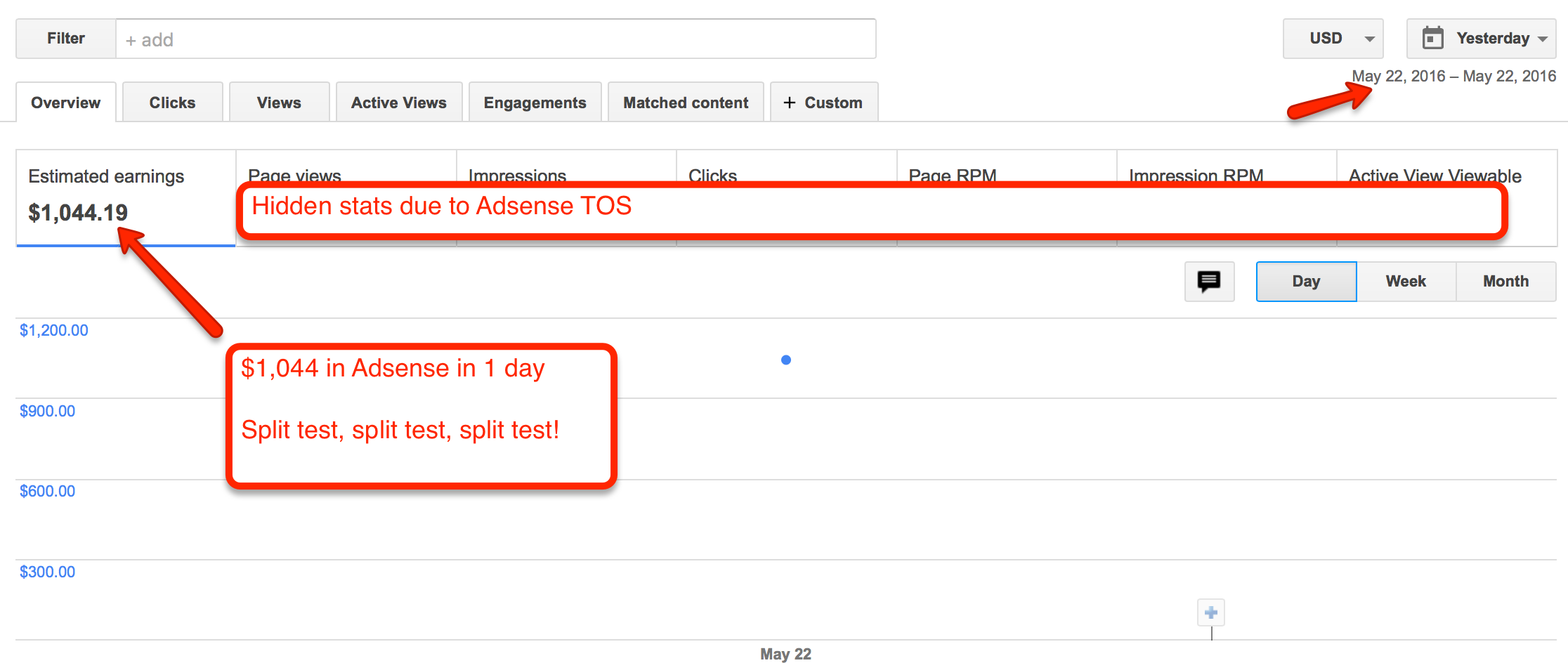
Check out the screenshot above showing $1,044 in earnings in just one day from these out of the box niches I’ve just showed you. When you’re targeting these niches out there, you can easily grab massive amounts of Google traffic and conquer your market. You really just have to think OUTSIDE the BOX and find GIANT communities that have a huge following (but no one is targeting) …
Once you find these niches, start building your authority site and start dominating multiple page #1 rankings on Google for search terms you would not even have thought about. There are literally billions of searches on Google every day and this is why I’m not afraid to share these niches with you! I’m not afraid of the competition or scarcity of these niches, because the market is just TOO BIG. I’m targeting for niches that NO ONE would ever think about and that’s because of the out of the box mentality that I’ve been focusing on.
It would also be a shame if I did not show you this offer as well. Some might say it’s a shameless plug, but it’s really a shame if you knew that I was doing this for myself and have not shown it to you …
If you would like to have stores like these and start generating 100% organic traffic from Google, we have created a service for our clients which we build out Authority sites 100% DFY (done for you). These sites have been proven to generate traffic, leads and sales for myself and the hundreds of clients we have provided this for. If you are interested in these stores, you can visit our Authority site services here.
What I would recommend even if you do not take our services, is that you go out there and find specific niches that you can be an authority of and generate contents for. Once you have dominated your market and have become an authority in that market, you need to attract your website visitors with offers that will help them SOLVE their PROBLEM. Remember … you don’t always have to go for evergreen niches such as diet / health / skin / fitness and do what EVERYONE else is trying to do. It’s always good to also have your own mindset and think of new ways to generate traffic in different markets. There are millions of people out there looking to find a solution for their problems. If you can gather these people who have problems and give them a solution to their problems, that’s where you will find success.
Content retrieved from: http://teovanyo.com/top-25-niches-for-high-traffic-on-google/.
List Of Free Online Courses On Artificial Intelligence
Posted on August 15th, 2018
3. Stanford University – Machine Learning
4. Columbia University – Machine Learning
5. Nvidia – Fundamentals of Deep Learning for Computer Vision
6. MIT – Deep Learning for Self Driving Cars
8. Deep Reinforcement Learning (UC Berkeley)
9. Machine Learning Crash Course Google
10. Elements of Artificial Intelligence free online course
11. Intro to Artificial Intelligence by Udacity
Content retrieved from: https://www.marktechpost.com/2018/07/07/free-online-courses-on-artificial-intelligence/.
How To Track Facebook Ads in Google Analytics [The Easy Way]
Posted on August 14th, 2018
Accurately tracking Facebook ads in Google Analytics consists of two primary steps:
- Clearly defined and consistent UTM Parameters so that you can identify Facebook traffic in Google Analytics
- Import cost, impression, and click data into Google Analytics so that you can map platform and session data
Analyzing performance holistically can be a daunting task given that Facebook and Google don’t always play nicely together.
But as a data-driven marketer accurately tracking Facebook ads in google analytics is crucial to understanding campaign performance.
So let’s explore a method for efficient Facebook ad tracking after we take a look at the current problem.
[video_page_section type=”youtube” position=”default” image=”http://track-n-test.com/wp-content/uploads/2018/08/youtube-banner1.jpg” btn=”light” heading=”” subheading=”” cta=”” video_width=”1080″ hide_related=”true” hide_logo=”false” hide_controls=”false” hide_title=”false” hide_fullscreen=”false”]https://www.youtube.com/watch?v=YGOehkY6VNk[/video_page_section]
Tracking Facebook Ads in Google Analytics is Time Consuming
Reporting works well within the confines of one specific vendor.
Google products, for example, work well together in that they allow the linking of Google Analytics (reporting) and Adwords (advertising platform), enabling one to see all data seamlessly in a single reporting interface.
Although Facebook has become a prominent advertising platform, it does not, like Google, have a diverse product portfolio and does not provide reporting outside of platform-specific metrics.
Note: Facebook does provide a reporting and Analytics Tool that is worth exploring.
Since there is no way to seamlessly connect the two platforms, what are our options?
- Analyze and report on each platform separately
- Map the data in a spreadsheet
- Perform manual exports & GA custom imports
All of these options, even with a sound system in place, can be extremely time-consuming, taking away from analyzing and optimizing campaign performance.
In this article, I will go over three available Google Analytics features that you can leverage when tracking Facebook ads in Google Analytics:
- Data Import
- Calculated Metrics
- Custom Reports
It Starts with Proper Campaign Tagging
Let’s go back to the beginning.
When setting up Facebook campaigns, many digital marketers use the Google Campaign URL builder to generate UTMS that look something like this:
/http://easyautotagging.com/?utm_source=facebook&utm_campaign=Spring%20Launch&utm_medium=cpc&utm_content=lifestyle%20image
Aside from the manual effort required, there is nothing wrong with this approach.
That said, defining the source as ‘facebook’ and medium as ‘cpc’ provides limited insight into audience/targeting performance.
[video_page_section type=”youtube” position=”default” image=”http://track-n-test.com/wp-content/uploads/2018/08/youtube-banner1.jpg” btn=”light” heading=”” subheading=”” cta=”” video_width=”1080″ hide_related=”false” hide_logo=”false” hide_controls=”false” hide_title=”false” hide_fullscreen=”false”]https://www.youtube.com/watch?v=ck5VEYhoUFo[/video_page_section]
Using Available Facebook Campaign Fields
There is a more straightforward way to tag your URLs without having to come up with a unique naming convention for UTM fields.
The easiest way to tracking Facebook Ads in Google Analytics is to create unique naming conventions for your Facebook Campaigns, Ad Sets, and Ads that you then use to tag your UTMs respectively.
Below is an example of what the UTM fields and their respective Facebook values would look like:
Campaign – “Campaign Name”
Source – “Facebook” or “Instagram”
Medium – “Ad Set Name”
Ad Content – “Ad Name”
Note: Using Ad Set Name (read audience) as the medium value can mess with your default and/or custom channel grouping in Google Analytics. You can either modify your channel grouping or map custom parameters to custom dimensions.
There are two ways you can go about tagging your campaigns:
Bulk exports/imports via the power editor
EasyAutoTagging which automates tagging all of your Facebook campaign ad URLs
I go into details of how you can do this in How to Track Granular Facebook Campaign Performance in Google Analytics.
Linking your Google Analytics Account
So, how can you see this data in Google Analytics?
First, we have to import Facebook campaign cost, impression and click data into Google Analytics in one of two ways:
- Manual Import
- Automated Import
Option 1: Manual Import
Without EasyAutoTagging, you are limited to exporting Facebook campaign data daily, weekly, or monthly, then manually importing it into Google Analytics via Data Imports.
First, go to your Facebook accounts Ads Manager and select your desired date range:
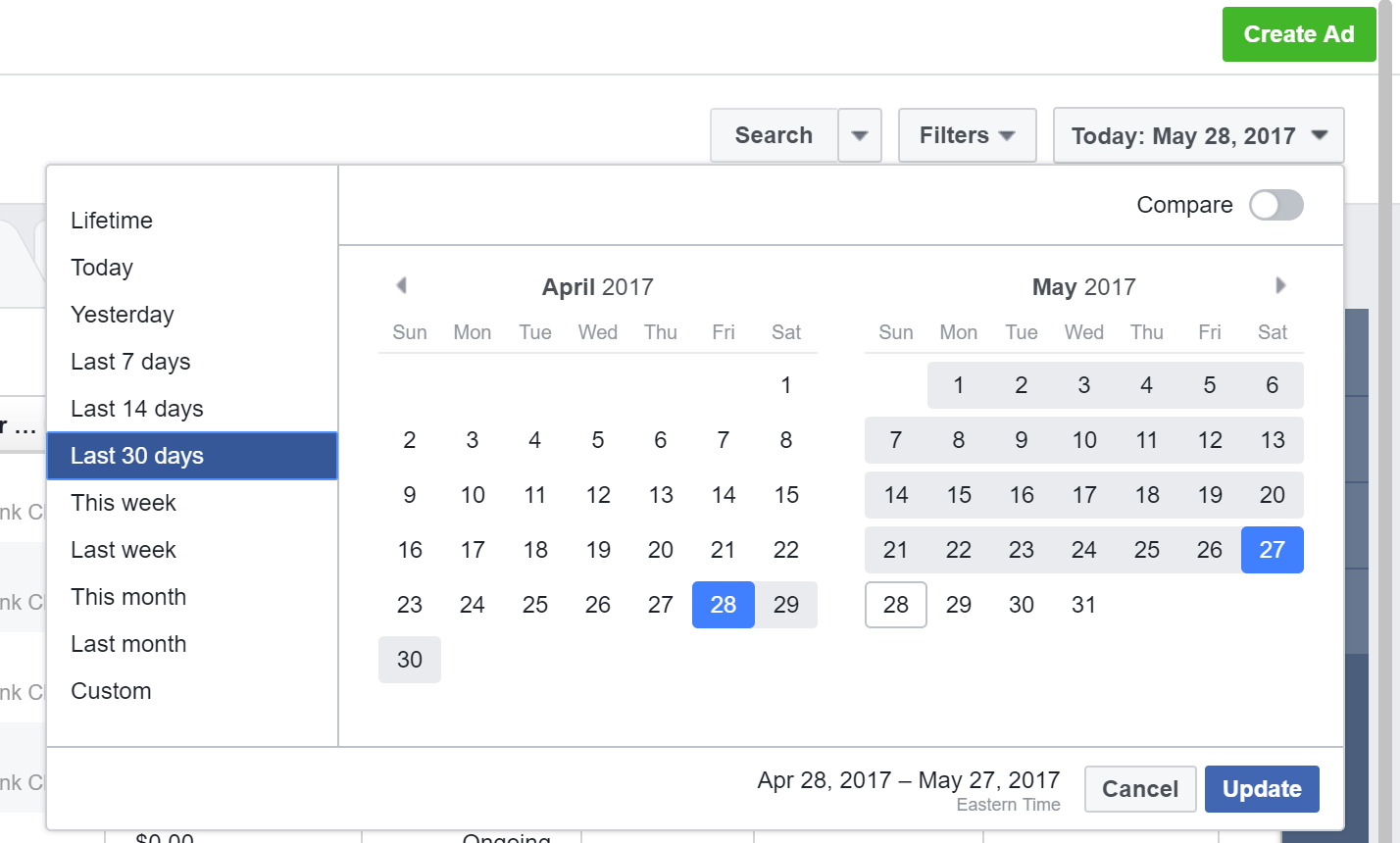
Select the Ads tab across the top and Go to Columns and Select Performance and Clicks:
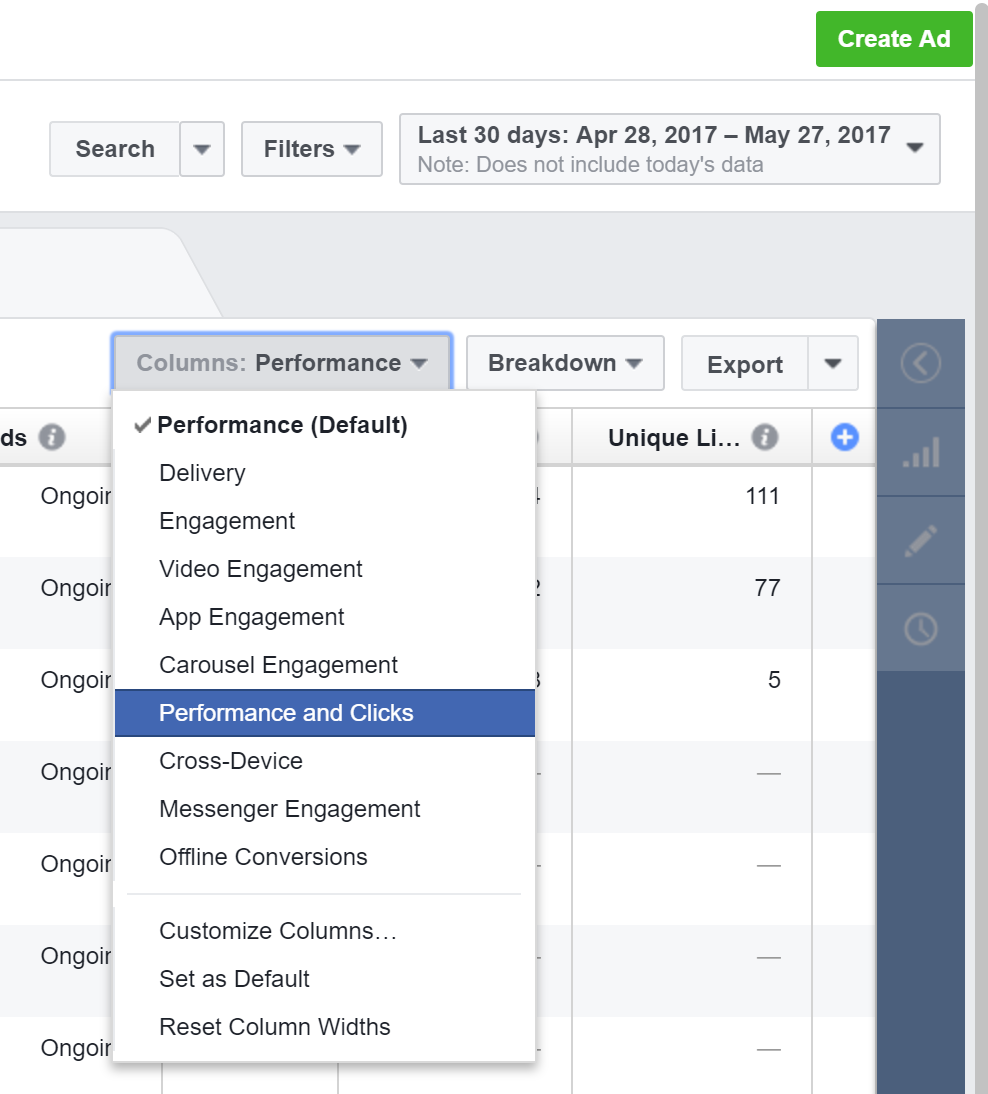
Customize columns and add Campaign Name, Ad Set Name, and Ad Name:
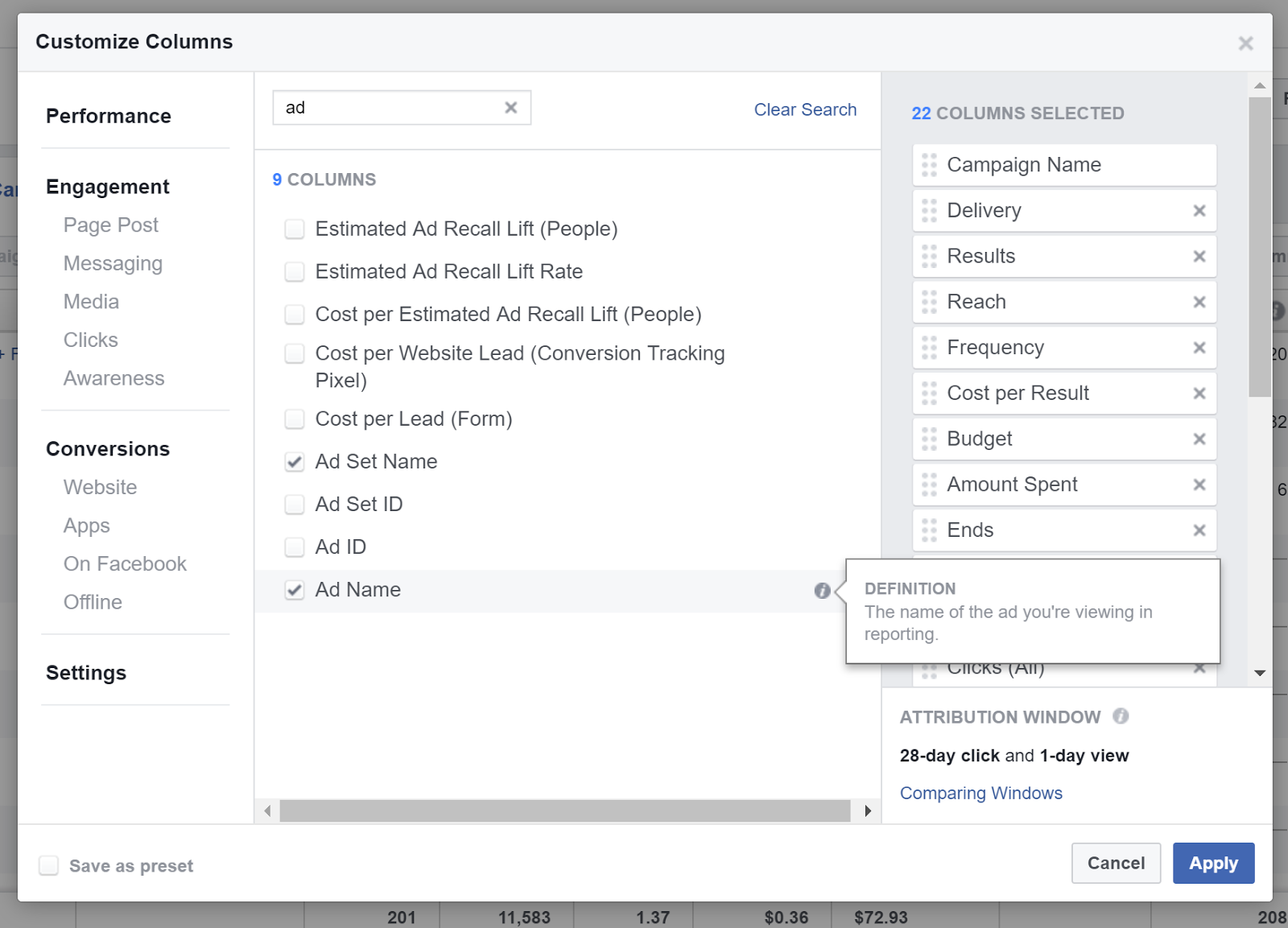
Click Breakdown > by time > Day
Select the campaigns you would like to import and export these to a CSV file:
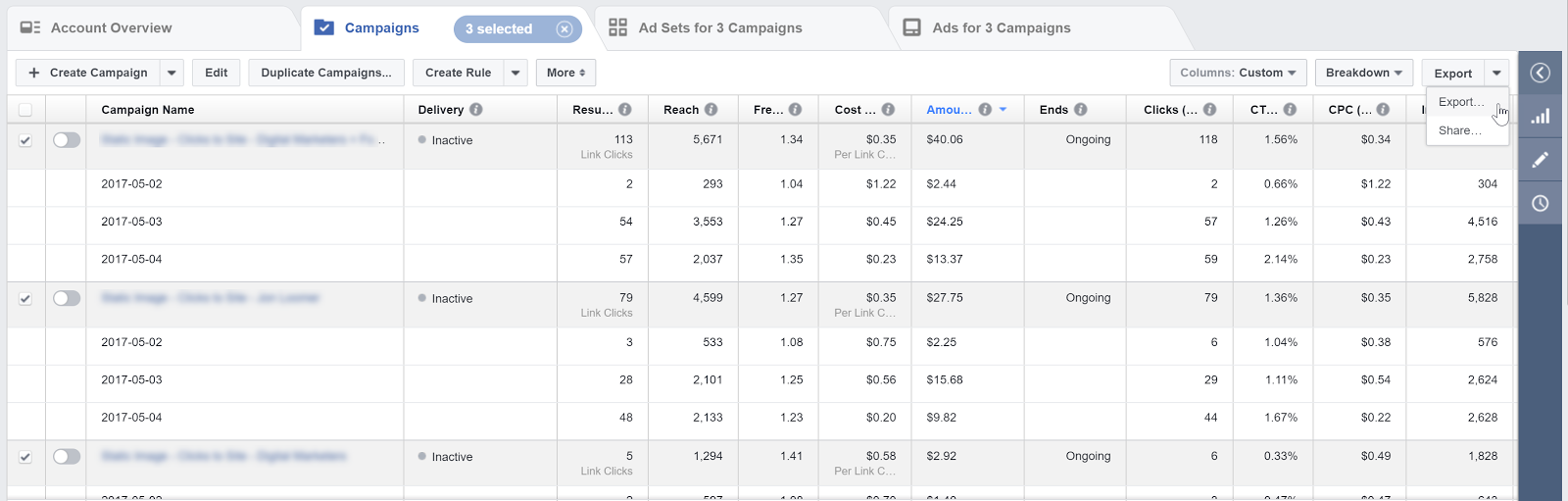
Open the CSV and delete all columns except:
Day (Reporting Starts), Amount Spent, Campaign Name, Ad Set Name, Ad Name, Impressions, Link Clicks
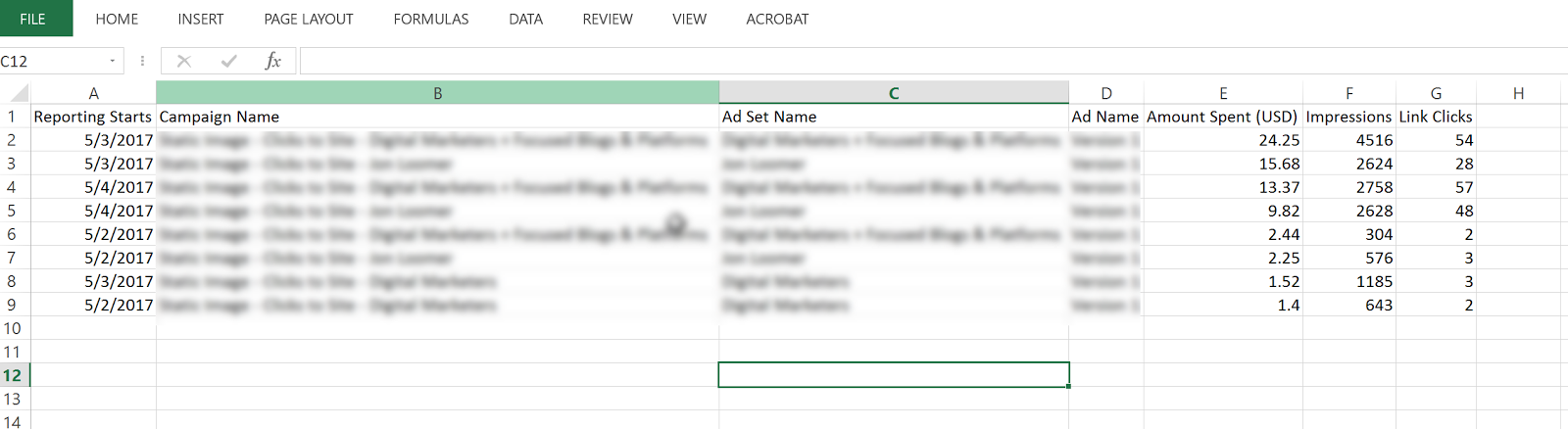
Once you have these cleaned up, head over to Google Analytics and go to Admin > Data Import
Select your cost import dataset. I go into the detail on how to set up cost, impression, click DataSet in Setting Up Cost Data Sets.
Copy and paste the headers into your CSV respectively of column values.
For source, you need to manually add the source as Facebook and/or Instagram depending on campaign/ad set placement.
Format the date column from 5/3/2017 to this 532017
Your final results should look like this:
Go back to Data Imports in Google Analytics and click on manage uploads > Upload File and upload your CSV doc.

Option 2: Automated Daily Import
With EasyAutoTagging’s GA Connector you can easily link your Facebook campaigns to Google Analytics using the same UTM values assigned when generating URL parameters.
Just follow the set up in How to Track Granular Facebook Campaign Performance in Google Analytics
With automated daily imports of your Facebook campaign data, you can now generate detailed insights across platform metrics, and session behavior in a single location when tracking Facebook Ads in Google Analytics.
Ok let’s get started:
Log in to EasyAutoTagging.
Create a new connection group and connect to your desired Google Analytics and Facebook accounts.
Click continue.
Next select your Google Analytics Account, Property and DataSet and define your Parameter Values. (source, medium, campaign, content)
Note: You can choose a pre-defined or enter custom parameter values. To ensure proper mapping, please make sure that you import parameter values exactly match your defined UTM parameter values.
Assign a name and save the Connection Group.
Note: If you do not have a data set created you need to create one in Google Analytics first. You can see how to do this in Setting Up Cost Data Sets
Once you saved the connection group, you can add facebook campaigns as needed.
You will get notified via email once the initial upload of all campaign data to date has completed and all connected campaigns will continue to import data daily.
Seeing the data in Google Analytics
Ok, now that we have all campaigns tagged and are tracking Facebook Ads in Google Analytics, where can we see our Facebook ad analytics?
Let’s start with two default views that Google Analytics gives us:
Campaign View
In the campaign view, we can see an overview of campaign performance.
For more granularity, we can add secondary dimensions to see ad content or source/medium breakdowns.
Cost Analysis View
The Cost Analysis View shows cost, impression, clicks, CTR, CPC, and some primary on-site metrics on a campaign and/or source/medium breakdown allowing us to analyze platform alongside sessions data.
Both of these views, although isolated from each other within Google Analytics, can already provide a wealth of insights, but let’s take tracking Facebook ads in Google Analytics one step further with Calculated Metrics and Custom Reports.
Calculated Metrics
Google defines Calculated Metrics as follows:
Calculated Metrics are user-defined metrics that are computed from existing metrics and drive more relevant analysis and enable greater actionability without leaving the product.
Ok, so here are a few example metrics that we might want to see in our reports.
Note: Keep in mind that one can only create 5 calculated metrics per view in the standard Google Analytics version.
CPV – cost per visitor (this will always be different than CPC since many platforms have a clicks to session drop off up to 25%)
Goal
CP Goal
Goal Conversion Rate
Let’s get started…you can find calculated metrics in your Admin section
Add a new custom calculation, call it CPV and define the formatting type as Currency (Decimal):
Enter the formula and click Create:
Do the same for your specific goal conversion rate and cost per conversion. In this case, we will use engaged user.
Now that we have the custom calculations in place, we can go ahead and set up our custom reports.
Custom Reports
Having all data aggregated doesn’t mean you have to use Google Analytics for reporting – it just makes it easier to pull all your Google Analytics Facebook data from one place.
But for the sake of this article, let’s stick with custom reports within Google Analytics.
Let’s go ahead and set up a custom report.
Go to Customization and click create a New Custom Report
Select a Flat Table and add:
Dimensions:
Campaign | Source / Medium | Ad Content
Metrics:
Impressions | Cost | Clicks | CTR | CPM | CPC | CPV | Session | Engaged Users | CP Engaged User | CR Engaged
Apply Filters as needed:
Select your view:
Label the report and hit save.
You can now see all of your campaign platforms and on-site data in one place.
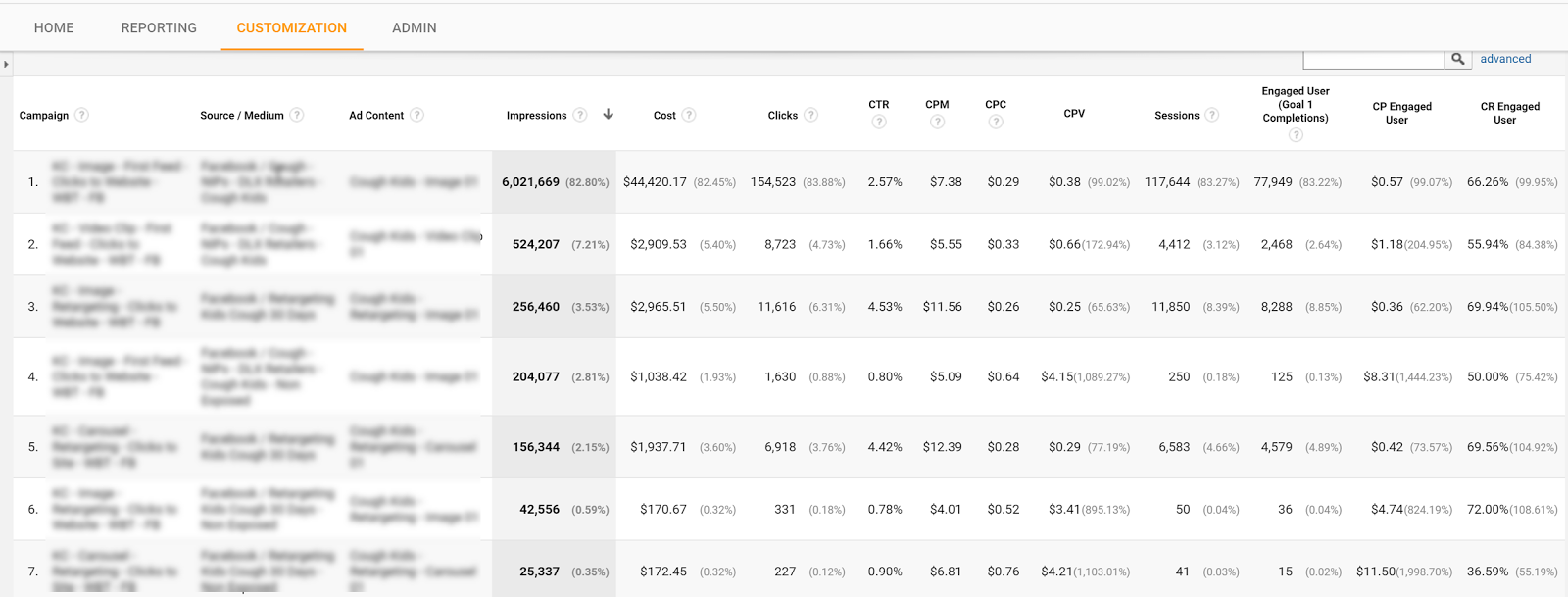
Tell us in the comments what you have done to make tracking Facebook ads in Google Analytics a seamless process?
Content retrieved from: https://easyautotagging.com/tracking-facebook-ads-google-analytics/.
How You Can Use Facebook Ads to Promote Your Blog
Posted on August 13th, 2018
We’ve all heard about the wonders of Facebook ads for our blogs. You’ll find at least one mention of them on any marketing blog you come across.
But what you may not have found is a guide on how to correctly promote your blog with Facebook ads.
You see, Facebook ads are a fantastic way to promote your blog and gain new readers. But most bloggers aren’t aware of the steps needed to convert cold traffic into valuable readers.
If you’re feeling lost, don’t worry. In this post, I’m going to try to cover as much as I possibly can about creating Facebook ads for your blog, and how you can do it correctly.
[video_page_section type=”youtube” position=”default” image=”http://track-n-test.com/wp-content/uploads/2018/08/youtube-banner1.jpg” btn=”light” heading=”” subheading=”” cta=”” video_width=”1080″ hide_related=”false” hide_logo=”false” hide_controls=”false” hide_title=”false” hide_fullscreen=”false”]https://www.youtube.com/watch?v=iR6ATUw0BIU&vl=en[/video_page_section]
But first, you’ll need a Facebook page:
1. Create a Facebook page.
Facebook pages can be an extremely helpful tool to promote your blog.
If you haven’t already, go ahead create your page. Regardless of whether you’ll use it as a social channel or not, you can’t create an ad without one!
Once you’ve created your page, it’s time to log into your Facebook Ad Manager and start creating your ad.
2. Choose an objective.
When you create a Facebook ad, it’s important you use proven formatting techniques to maximize your metrics. Before I go any deeper, let’s start from the beginning:
To create a Facebook ad, go to the Facebook Ad Manager and click on the “Create Ad” button. Once you click the button, you’ll be presented with a ton of different ad campaign goals. For this guide, I’m going to stick with the “Traffic” goal.
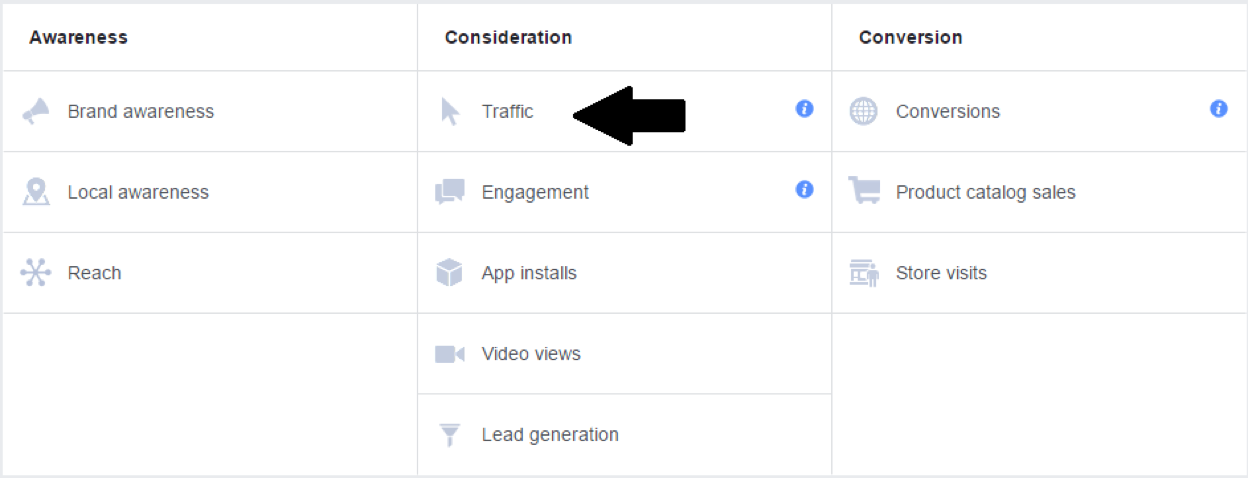
Now, some may argue that Facebook’s “Boost Post” option is better for promoting single blog posts.
Don’t get me wrong; boosted posts are a great way to promote your blog on the fly. However, the “Traffic” objective allows you to have much more control over your ad spend, targeting options, and copy.
Once you’ve set your goal, name your campaign and you’ll be ready to set your budget and targeting options.
3. Set your budget and targeting options.
Setting the budget for your Facebook ad will determine whether you come out broke or with a great ROI, so it’s important that you do it right.
When starting off with a brand new ad, it’s a good idea to set the budget of your advertisement for only $5 a day.
This way, you’ll be able to measure the strengths and weaknesses of your ad without spending a fortune on an under-performing campaign.
Later, it’s likely that you’ll start spending more money on well-performing ads, but I’ll touch on that later.
Now let’s get into the nitty gritty: targeting.
If you didn’t know already, one of the main reasons that Facebook ads are so popular in the marketing world is because if their over-the-top targeting options. Facebook ads allow you to target anyone from Android phone users to church-going reptile owners.
When setting your targeting, it’s important that you aren’t shooting for too broad of an audience. It’s easy to get trapped in the illusion of, “Wider Audience = More Engagement”, but this simply isn’t true.
Think of your audience as a single person. What qualities do they have? What are their interests? Who might they follow on Facebook?
If your ad is being seen by too wide of an audience, chances are you’re not going to be receiving a ton of clicks. And when you aren’t getting enough clicks, you’ll start to pay more for the ones you do get!
As you can see from this chart by AdEspresso, studies show that the lower the relevance of a Facebook ad, the higher the amount of money paid per click:
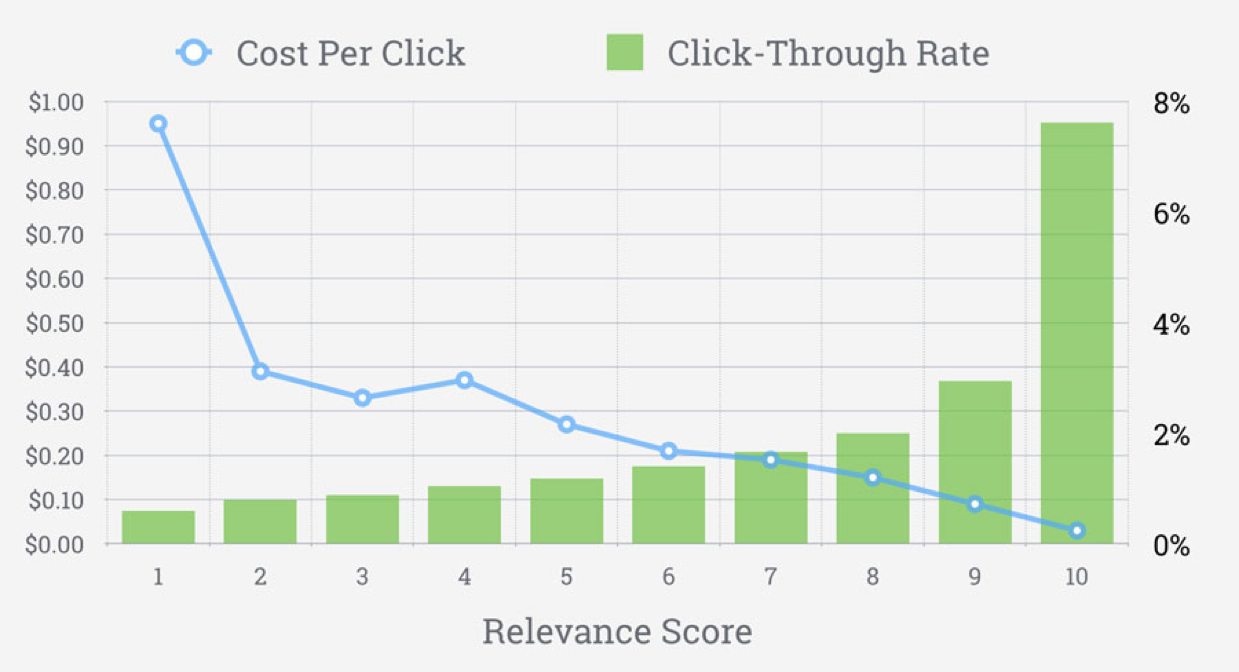
Facebook ads relevance score. Source: Adspresso.com
And I don’t know of anyone who wants to pay more for the same results.
4. Write the ad copy.
Believe it or not, writing the ad text is half the battle.
According to Joanna Wiebe of Copyhackers,
“Everything about the success of your body copy hinges on a single thing: your hook. To find your hook, you need to know exactly for whom you’re writing the ad… and what they care about. Because the goal of the hook is this: make me care.” – From The Beginners Guide to Writing Facebook Ads
When you’re trying to drive cold traffic to your blog, telling your potential readers, “Check out my new blog post! It’s about [topic]… I think you’ll like it!”, will almost never work.
If readers have no idea who you are, there’s little chance they’ll click your links unless they have a good reason to.
So instead of taking the easy route, write a brief and enticing summary of your post that and place it inside the “Text” field of your ad. Here’s an example of what I mean:
Giving readers a glimpse into the problems you’re solving in your post will prove to them that you’re not out there to just take their money.
After you’re finished writing your post summary, come up with an engaging question to ask your target audience at the beginning of your ad.
For instance, if you wrote a blog post called, “5 Easy Methods to Earn New Clients for Your Business”, you could write a question like, “Struggling to find clients for your online business despite putting in hours of backbreaking promotion?” at the beginning of your post.
Asking an engaging question will entice readers to finish reading the rest of your summary. So if you included a call to action at the end of your text, that reader will most likely click to read the rest of your post!
Once you’ve written a killer summary, you’re ready to find a featured image.
5. Choose a featured image.
When creating your ad, it’s important that you’re using images that capture your audience’s attention. This means that using dark colors and bland images is generally not a good idea.
If you look at some metrics from a separate advertisement I ran, you can see that when I used a graphically designed image with light and dark blue colors compared to a stock image with bright warm colors, the stock image received almost 50 more clicks compared to the other post.
Not only did the brighter image receive 40 more clicks, it also had 100 fewer shares!
Furthermore, Facebook strongly prefers that no more than 20% of an image to be filled with text, so most Facebook marketers choose to use simple stock photos as their featured images.
If you choose to use stock images, be sure that they’re relevant to the topic of your post. Also, be sure that the images you’re using aren’t copyrighted.
To avoid any copyright problems, I use sites like Pixabay and Unsplash to find relevant images for my ads. You can also use Facebook’s built-in stock image library to find safe and pre-formatted images.
Once you’ve got some nice visual content, it’s time to write a killer headline.
6. Write a headline.
As Neil Patel puts it, “The primary purpose of the headline is to get the first sentence read.” And he’s right; without a gripping headline, there’s no real incentive for readers to continue reading your post at all.
The headline of your ad is the very next thing that potential readers are going to see after your featured image. This makes it the perfect place to draw in users and earn their click.

Writing a headline for your Facebook ad is exactly like writing a title for your blog post. It should be short, catchy, and include some relevant keywords from your blog post. If you don’t already have a nice catchy headline, here are some things to keep in mind when writing it:
- Use “How To’s” and “How You’s” in your Facebook headline, followed by a common barrier that most people face when encountering a problem. (ex. “How You Can Promote Your Blog with Facebook Ads Without Having to Spend Money on A/B Testing”).
- Use numbers (ex. “5 Simple Ways…”)
- Keep it short.
- Make it as specific as possible. For instance, let’s say that you wrote about how your target audience can increase their search presence in Google. Instead of saying, “Learn How You Can Rank Higher on Google”, say something like, “Learn How You Can Increase Your Organic Traffic by 50% In Only 2 Months”.
- Try to convey a sense of urgency. You can do this by asking a question (ex. “Are you making these crucial mistakes when trying to promote your blog?”)
If you’re still stuck creating a catchy headline, feel free to use one of the many headline generators on the web. Just be sure that you refinie your results!
Lastly, include a nice call to action in the News Feed Link Description (NFLD) of your ad.
Your NFLD should be a combination of the main idea from your headline and a call to action. For instance, in the ad I created above, my NFLD read, “Click here to learn about how you can promote your blog…”.
Finish your ad off with a proper button that users can click to read your blog post, and that’s it! You’re ready to publish your post.
Yay!
After your post is published, be sure to keep a watchful eye over your metrics. Try your best to analyze what’s working with the advertisement and what’s not.
If you don’t have the budget right now to conduct A/B testing, don’t worry about it. Just focus on bettering your Facebook ad skills and learning, and you’ll be creating great ads in no time.
How have you used Facebook ads to promote your blog? Do you have any useful tips for other bloggers trying to use this platform? Let me know in the comments!
Content retrieved from: https://blog.getresponse.com/facebook-ads-to-promote-your-blog.html.