

Open Source Deep Learning Frameworks and Visual Analytics
Posted on September 29th, 2018
Deep Learning gets more and more traction. It basically focuses on one section of Machine Learning: Artificial Neural Networks. This article explains why Deep Learning is a game changer in analytics, when to use it, and how Visual Analytics allows business analysts to leverage the analytic models built by a (citizen) data scientist.
What is Deep Learning and Artificial Neural Networks?
Deep Learning is the modern buzzword for artificial neural networks, one of many concepts and algorithms in machine learning to build analytics models. A neural network works similar to what we know from a human brain: You get non-linear interactions as input and transfer them to output. Neural networks leverage continuous learning and increasing knowledge in computational nodes between input and output. A neural network is a supervised algorithm in most cases, which uses historical data sets to learn correlations to predict outputs of future events, e.g. for cross selling or fraud detection. Unsupervised neural networks can be used to find new patterns and anomalies. In some cases, it makes sense to combine supervised and unsupervised algorithms.
Neural Networks are used in research for many decades and includes various sophisticated concepts like Recurrent Neural Network (RNN), Convolutional Neural Network (CNN) or Autoencoder. However, today’s powerful and elastic computing infrastructure in combination with other technologies like graphical processing units (GPU) with thousands of cores allows to do much more powerful computations with a much deeper number of layers. Hence the term “Deep Learning”.
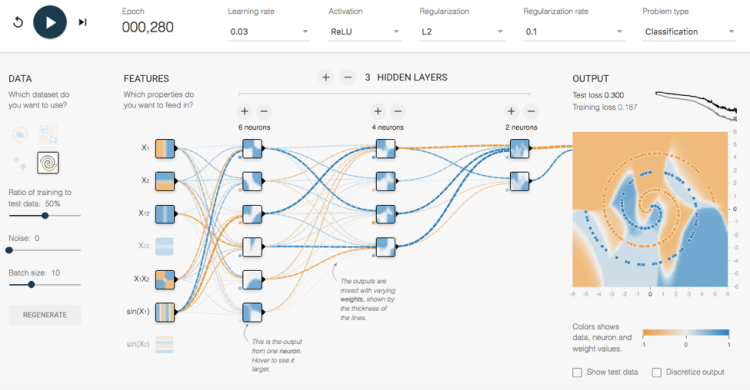
The following picture from TensorFlow Playground shows an easy-to-use environment which includes various test data sets, configuration options and visualizations to learn and understand deep learning and neural networks:
If you want to learn more about the details of Deep Learning and Neural Networks, I recommend the following sources:
- “The Anatomy of Deep Learning Frameworks”– an article about the basic concepts and components of neural networks
- TensorFlow Playground to play around with neural networks by yourself hands-on without any coding, also available on Github to build your own customized offline playground
- “Deep Learning Simplified” video series on Youtube with several short, simple explanations of basic concepts, alternative algorithms and some frameworks like H2O.ai or Tensorflow
While Deep Learning is getting more and more traction, it is not the silver bullet for every scenario.
When (not) to use Deep Learning?
Deep Learning enables many new possibilities which were not possible in “mass production” a few years ago, e.g. image classification, object recognition, speech translation or natural language processing (NLP) in much more sophisticated ways than without Deep Learning. A key benefit is the automated feature engineering, which costs a lot of time and efforts with most other machine learning alternatives.
You can also leverage Deep Learning to make better decisions, increase revenue or reduce risk for existing (“already solved”) problems instead of using other machine learning algorithms. Examples include risk calculation, fraud detection, cross selling and predictive maintenance.
However, note that Deep Learning has a few important drawbacks:
- Very expensive, i.e. slow and compute-intensive; training a deep learning model often takes days or weeks, execution also takes more time than most other algorithms.
- Hard to interpret: lack of understandability of the result of the analytic model; often a key requirement for legal or compliance regularities
- Tends to overfitting, and therefore needs regularization
Deep Learning is ideal for complex problems. It can also outperform other algorithms in moderate problems. Deep Learning should not be used for simple problems. Other algorithms like logistic regression or decision trees can solve these problems easier and faster.
Open Source Deep Learning Frameworks
Neural networks are mostly adopted using one of various open source implementations. Various mature deep learning frameworks are available for different programming languages.
The following picture shows an overview of open source deep learning frameworks and evaluates several characteristics:

These frameworks have in common that they are built for data scientists, i.e. personas with experience in programming, statistics, mathematics and machine learning. Note that writing the source code is not a big task. Typically, only a few lines of codes are needed to build an analytic model. This is completely different from other development tasks like building a web application, where you write hundreds or thousands of lines of code. In Deep Learning – and Data Science in general – it is most important to understand the concepts behind the code to build a good analytic model.
Some nice open source tools like KNIME or RapidMinerallow visual coding to speed up development and also encourage citizen data scientists (i.e. people with less experience) to learn the concepts and build deep networks. These tools use own deep learning implementations or other open source libraries like H2O.ai or DeepLearning4j as embedded framework under the hood.
If you do not want to build your own model or leverage existing pre-trained models for common deep learning tasks, you might also take a look at the offerings from the big cloud providers, e.g. AWS Polly for Text-to-Speech translation, Google Vision API for Image Content Analysis, or Microsoft’s Bot Framework to build chat bots. The tech giants have years of experience with analysing text, speech, pictures and videos and offer their experience in sophisticated analytic models as a cloud service; pay-as-you-go. You can also improve these existing models with your own data, e.g. train and improve a generic picture recognition model with pictures of your specific industry or scenario.
Deep Learning in Conjunction with Visual Analytics
No matter if you want to use “just” a framework in your favourite programming language or a visual coding tool: You need to be able to make decisions based on the built neural network. This is where visual analytics comes into play. In short, visual analytics allows any persona to make data-driven decisions instead of listening to gut feeling when analysing complex data sets. See “Using Visual Analytics for Better Decisions – An Online Guide” to understand the key benefits in more detail.
A business analyst does not understand anything about deep learning, but just leverages the integrated analytic model to answer its business questions. The analytic model is applied under the hood when the business analyst changes some parameters, features or data sets. Though, visual analytics should also be used by the (citizen) data scientist to build the neural network. See “How to Avoid the Anti-Pattern in Analytics: Three Keys for Machine …” to understand in more details how technical and non-technical people should work together using visual analytics to build neural networks, which help solving business problems. Even some parts of data preparation are best done within visual analytics tooling.
From a technical perspective, Deep Learning frameworks (and in a similar way any other Machine Learning frameworks, of course) can be integrated into visual analytics tooling in different ways. The following list includes a TIBCO Spotfire example for each alternative:
- Embedded Analytics: Implemented directly within the analytics tool (self-implementation or “OEM”); can be used by the business analyst without any knowledge about machine learning (Spotfire: Clustering via some basic, simple configuration of a input and output data plus cluster size)
- Native Integration: Connectors to directly access external deep learning clusters. (Spotfire: TERR to use R’s machine learning libraries, KNIME connector to directly integrate with external tooling)
- Framework API: Access via a Wrapper API in different programming languages. For example, you could integrate MXNet via R or TensorFlow via Python into your visual analytics tooling. This option can always be used and is appropriate if no native integration or connector is available. (Spotfire: MXNet’s R interface via Spotfire’s TERR Integration for using any R library)
- Integrated as Service via an Analytics Server: Connect external deep learning clusters indirectly via a server-side component of the analytics tool; different frameworks can be accessed by the analytics tool in a similar fashion (Spotfire: Statistics Server for external analytics tools like SAS or Matlab)
- Cloud Service: Access pre-trained models for common deep learning specific tasks like image recognition, voice recognition or text processing. Not appropriate for very specific, individual business problems of an enterprise. (Spotfire: Call public deep learning services like image recognition, speech translation, or Chat Bot from AWS, Azure, IBM, Google via REST service through Spotfire’s TERR / R interface)
All options have in common that you need to add configuration of some hyper-parameters, i.e. “high level” parameters like problem type, feature selection or regularization level. Depending on the integration option, this can be very technical and low level, or simplified and less flexible using terms which the business analyst understands.
Deep Learning Example: Autoencoder Template for TIBCO Spotfire
Let’s take one specific category of neural networks as example: Autoencoders to find anomalies. Autoencoder is an unsupervised neural network used to replicate the input dataset by restricting the number of hidden layers in a neural network. A reconstruction error is generated upon prediction. The higher the reconstruction error, the higher is the possibility of that data point being an anomaly.
Use Cases for Autoencoders include fighting financial crime, monitoring equipment sensors, healthcare claims fraud, or detecting manufacturing defects. A generic TIBCO Spotfire template is available in the TIBCO Community for free. You can simply add your data set and leverage the template to find anomalies using Autoencoders – without any complex configuration or even coding. Under the hood, the template uses H2O.ai’s deep learning implementation and its R API. It runs in a local instance on the machine where to run Spotfire. You can also take a look at the R code, but this is not needed to use the template at all and therefore optional.
Real World Example: Anomaly Detection for Predictive Maintenance
Let’s use the Autoencoder for a real-world example. In telco, you have to analyse the infrastructure continuously to find problems and issues within the network. Best before the failure happens so that you can fix it before the customer even notices the problem. Take a look at the following picture, which shows historical data of a telco network:
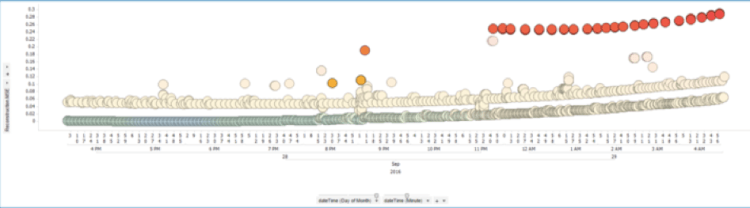
The orange dots are spikes which occur as first indication of a technical problem in the infrastructure. The red dots show a constant failure where mechanics have to replace parts of the network because it does not work anymore.
Autoencoders can be used to detect network issues before they actually happen. TIBCO Spotfire is uses H2O’s autoencoder in the background to find the anomalies. As discussed before, the source code is relative scarce. Here is the snipped of building the analytic model with H2O’s Deep Learning R API and detecting the anomalies (by finding out the reconstruction error of the Autoencoder):
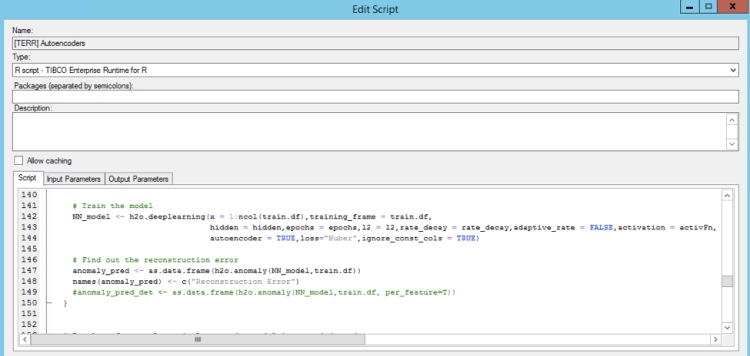
This analytic model – built by the data scientist – is integrated into TIBCO Spotfire. The business analyst is able to visually analyse the historical data and the insights of the Autoencoder. This combination allows data scientists and business analysts to work together fluently. It was never easier to implement predictive maintenance and create huge business value by reducing risk and costs.
Apply Analytic Models to Real Time Processing with Streaming Analytics
This article focuses on building deep learning models with Data Science Frameworks and Visual Analytics. Key for success in projects is to apply the build analytic model to new events in real time to add business value like increasing revenue, reducing cost or reducing risk.
“How to Apply Machine Learning to Event Processing” describes in more detail how to apply analytic models to real time processing. Or watch the corresponding video recording leveraging TIBCO StreamBase to apply some H2O models in real time. Finally, I can recommend to learn about various streaming analytics frameworks to apply analytic models.
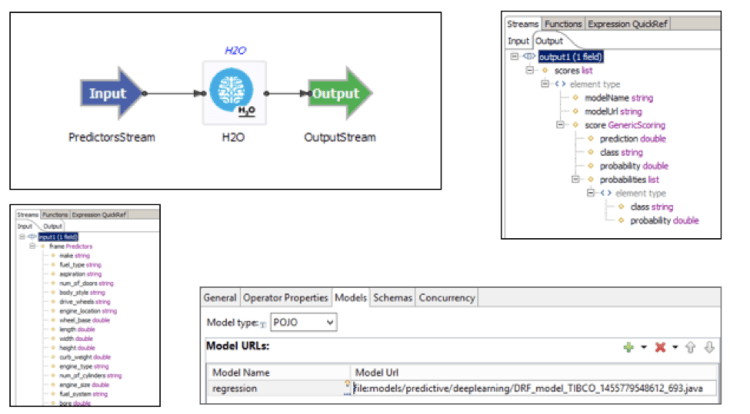
Let’s come back to the Autoencoder use case to realize predictive maintenance in telcos. In TIBCO StreamBase, you can easily apply the built H2O Autoencoder model without any redevelopment via StreamBase’ H2O connector. You just attach the Java code generated by H2O framework, which contains the analytic model and compiles to very performant JVM bytecode:
The most important lesson learned: Think about the execution requirements before building the analytic model. What performance do you need regarding latency? How many events do you need to process per minute, second or millisecond? Do you need to distribute the analytic model to a clusters with many nodes? How often do you have to improve and redeploy the analytic model? You need to answer these questions at the beginning of your project to avoid double efforts and redevelopment of analytic models!
Another important fact is that analytic models do not always need “real time processing” in terms of very fast and / or frequent model execution. In the above telco example, these spikes and failures might happen in subsequent days or even weeks. Thus, in many use cases, it is fine to apply an analytic model once a day or week instead of just every second to every new event, therefore.
Deep Learning + Visual Analytics + Streaming Analytics = Next Generation Big Data Success Stories
Deep Learning allows to solve many well understood problems like cross selling, fraud detection or predictive maintenance in a more efficient way. In addition, you can solve additional scenarios, which were not possible to solve before, like accurate and efficient object detection or speech-to-text translation.
Visual Analytics is a key component in Deep Learning projects to be successful. It eases the development of deep neural networks by (citizen) data scientists and allows business analysts to leverage these analytic models to find new insights and patterns.
Today, (citizen) data scientists use programming languages like R or Python, deep learning frameworks like Theano, TensorFlow, MXNet or H2O’s Deep Water and a visual analytics tool like TIBCO Spotfire to build deep neural networks. The analytic model is embedded into a view for the business analyst to leverage it without knowing the technology details.
In the future, visual analytics tools might embed neural network features like they already embed other machine learning features like clustering or logistic regression today. This will allow business analysts to leverage Deep Learning without the help of a data scientist and be appropriate for simpler use cases.
However, do not forget that building an analytic model to find insights is just the first part of a project. Deploying it to real time afterwards is as important as second step. Good integration between tooling for finding insights and applying insights to new events can improve time-to-market and model quality in data science projects significantly. The development lifecycle is a continuous closed loop. The analytic model needs to be validated and rebuild in certain sequences.
Content retrieved from: https://www.datavizualization.datasciencecentral.com/blog/open-source-deep-learning-frameworks-and-visual-analytics.
An Executive Primer to Deep Learning
Posted on September 23rd, 2018
 Posted by Pradeep Menon on February 20, 2018 at 4:30pm
Circa 1997, the reigning world chess champion Garry Kasparov was against an unknown opponent. The opponent was formidable. Garry was not playing a human. He was playing the game with IBM’s behemoth supercomputer, Deep Blue.
Garry had beaten the opponent in the last few games. However, the game played on 11th May 1997 game was different. Garry lost the game. Deep Blue made history:
The First computer program to defeat a world champion in a match under tournament regulations.
This game was significant for many reasons. It caught the world imagination. It laid the foundation for many possibilities that will shape the world of AI. Like explorers, data scientists and software engineers embarked on the relatively unchartered territory of Deep Learning.
Fast forward 2018, Deep Learning is a buzz word. According to Gartner, Deep Learning has already crossed the innovation trigger stage. It has reached the stage of the peak of inflated expectation.
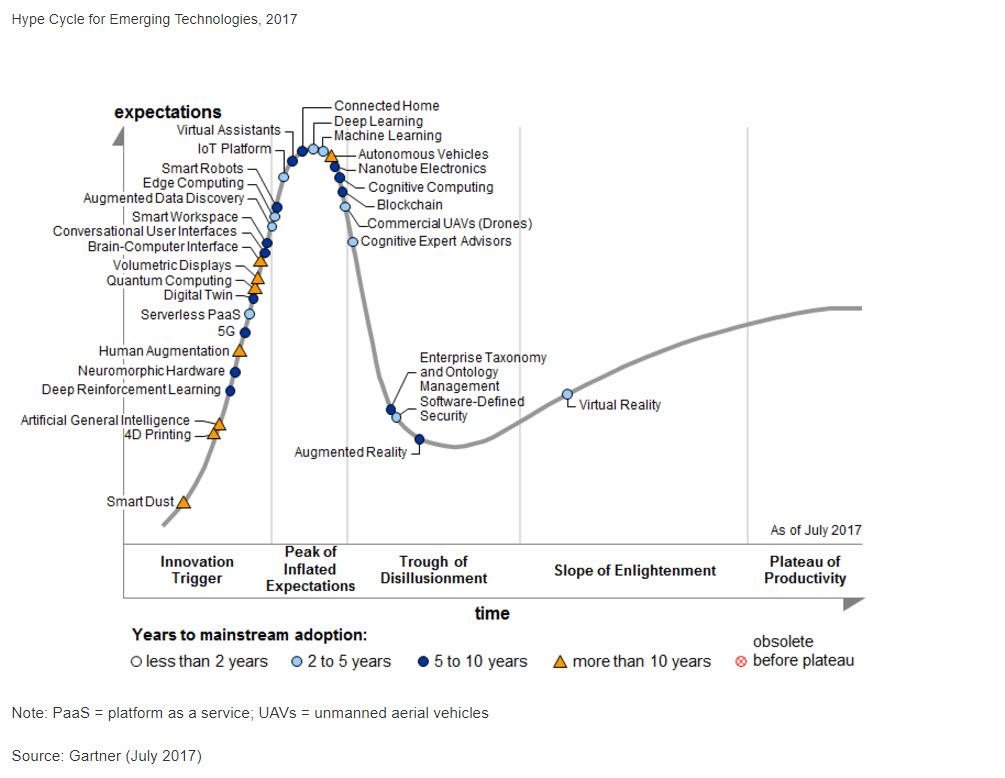
It will be another few years before this technology goes mainstream. However, the applications of deep learning have already permeated in our lives.
This article is a primer for deep learning. It attempts to provide a simple explanation of the fundamental concepts. It discusses the reason for its rise and touches upon few applications of Deep Learning.
The Concept
Let us first classify deep learning in the world of Artificial Intelligence.
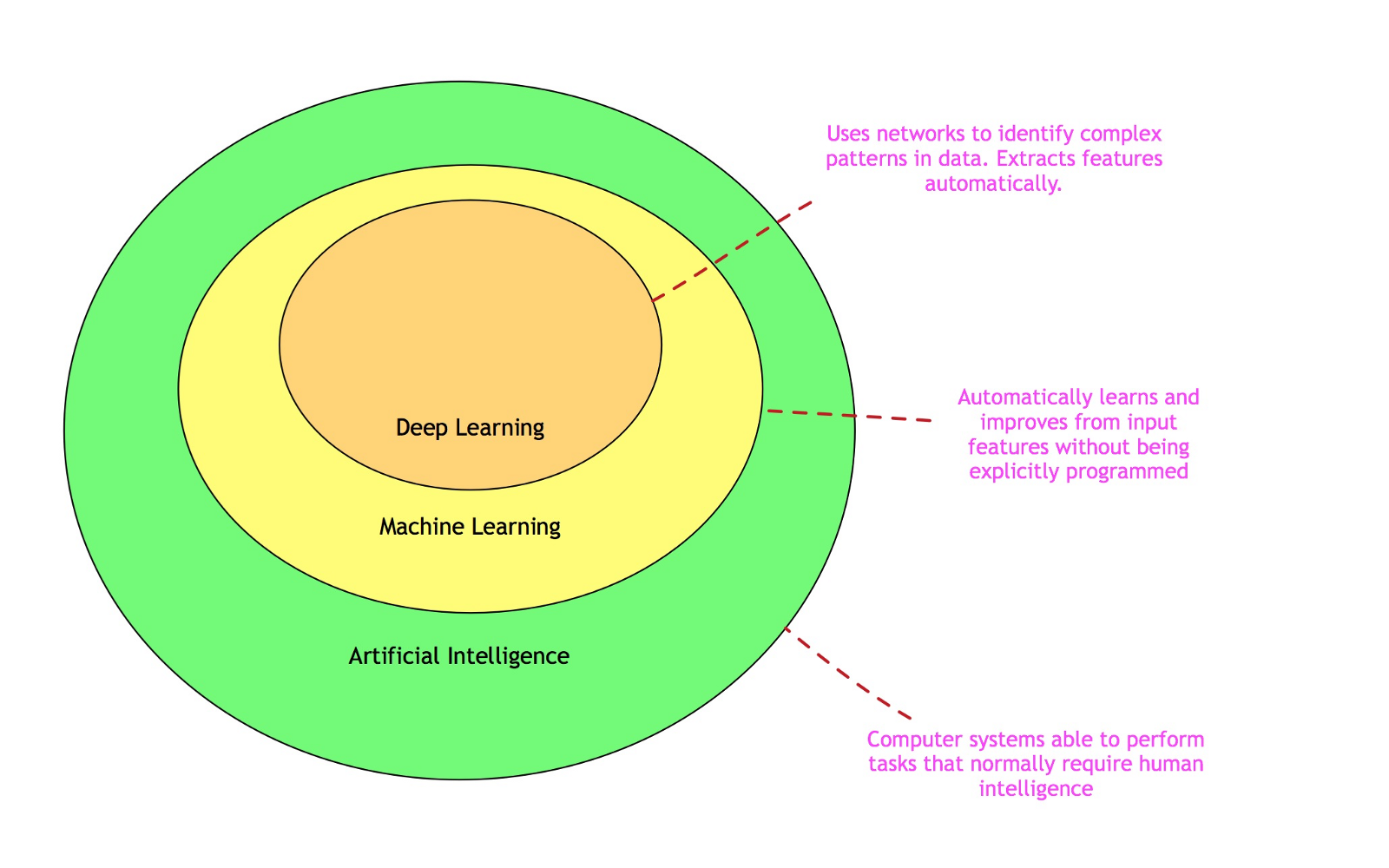
As depicted in the figure above, deep learning is a sub-set of Machine Learning. Machine Learning is in itself a subset of Artificial Intelligence (AI)AI is a field that enables machines to become intelligent progressively.
That intelligence can manifest in many ways. Let us understand how deep learning systems manifests itself.
A Rule-Based System
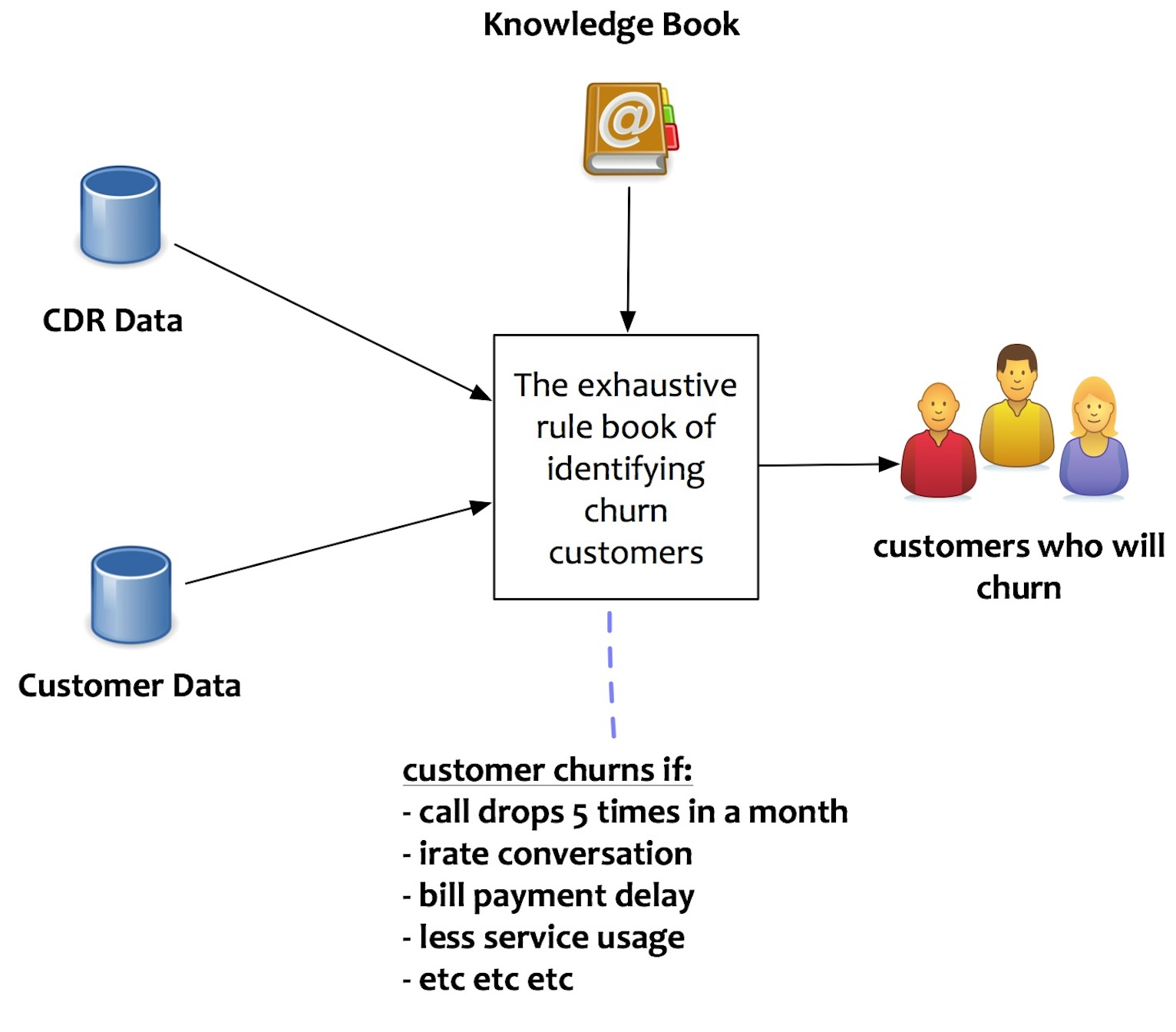
Imagine a system that enables to identify customer churn for a telco organization. One way to design this system is to craft rules about how to determine who will churn. A series of business rules are hand-crafted for a specific purpose, i.e., identify customers who will churn. Creating lot of rules is an arduous task. There are a lot of factors and their permutations. Rules are also prone to frequent changes. As the customer profile changes or the business model changes, these rules need to be altered.
This is a rudimentary form of AI. A rule-based system.
A Machine Learning System
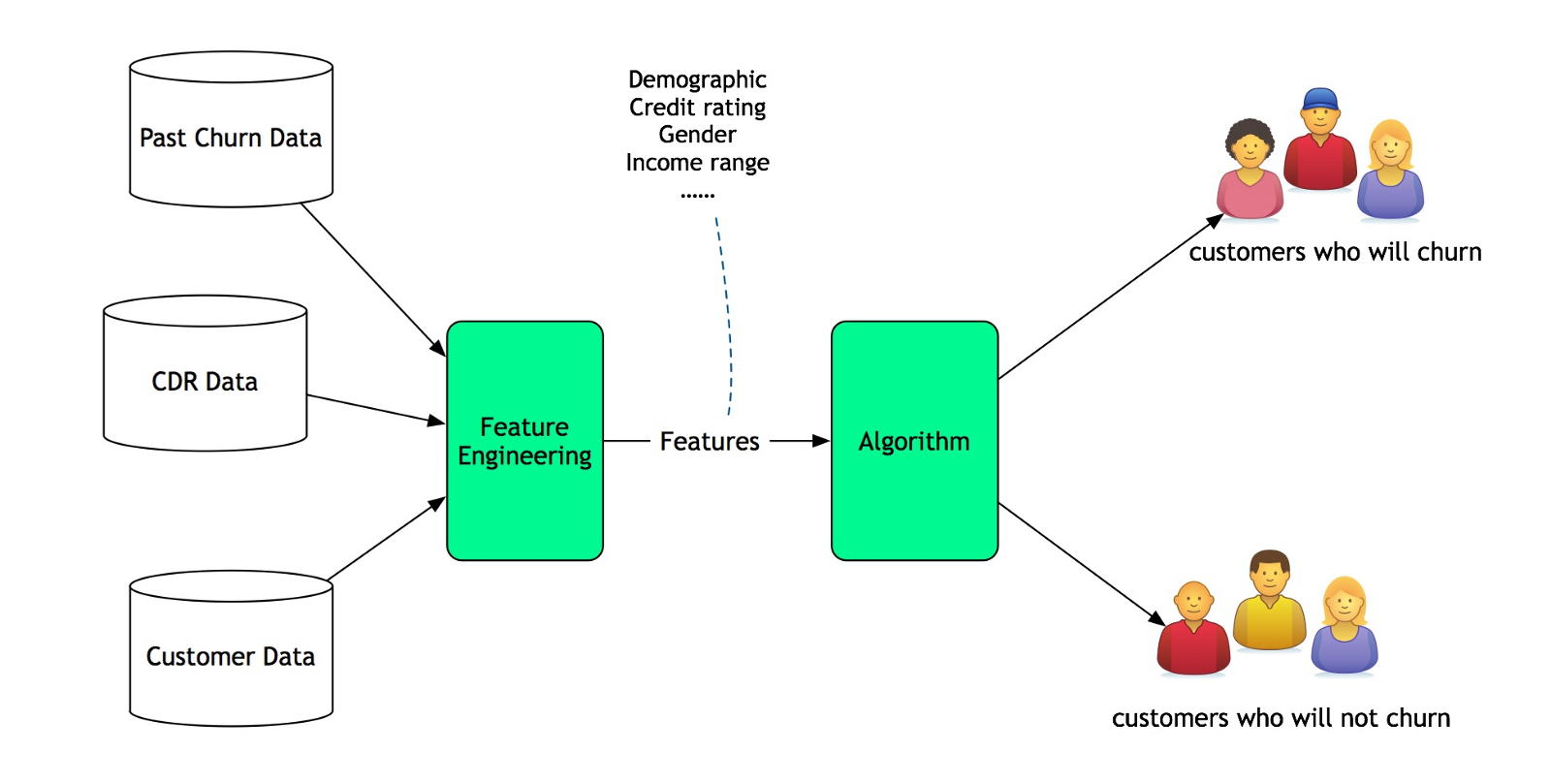
Another way to identify customer churn would create statistical learning models. They learn it from past churn information. These models take some inputs a.k.a features. These features impact customer churn. They predict if customer churns or not.
These models are Machine Learning models. They learn from the past data and input features. They adapt to the characteristics of input data changes.
Note that these machine learning models rely on humans to provide the input features. For the model to be effective, the input feature needs to be useful. They rely on the intuition and domain knowledge of the modeler. The modeler will have to feed the machine learning model with the correct features. It asks for the right representation of the data.
This is a Machine Learning based AI systems.
A Deep Learning System
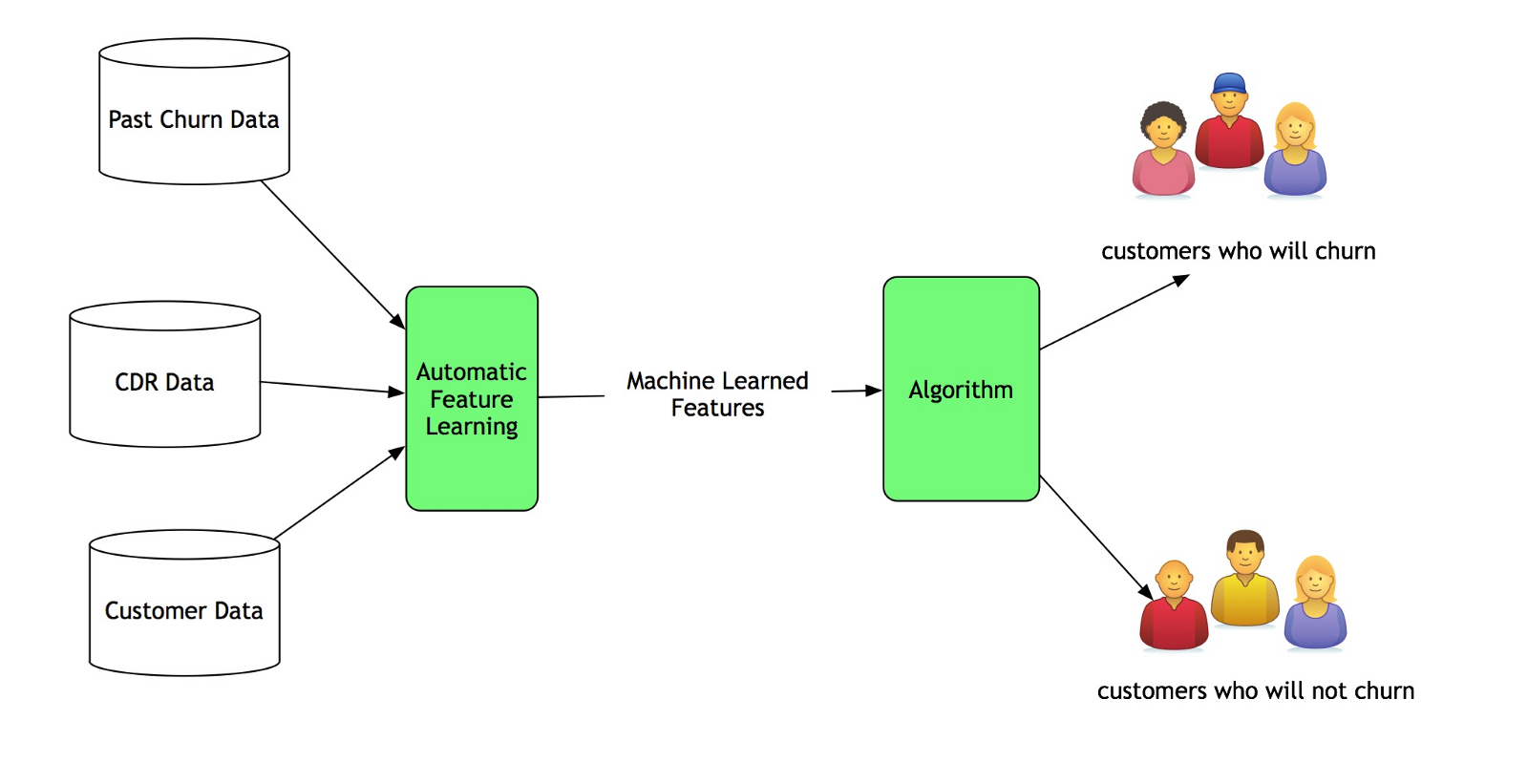
A traditional machine learning model works fine as long as the representation of the data is congruous to the expected output. However, when the number of potential features grows, identifying right input features becomes a challenge. Machine Learning practitioner also call this challenge the curse of dimensionality. In a traditional machine learning model development, a lot of time is spent on feature engineering.
In the example of customer churn, a lot more features impact customer churn. Some of these features are unknown. Some of them are derived.
What if these features can be learned automatically?
Such scenarios, where there are a lot of unknown features is where a deep learning based system shines. A deep learning based system automatically learns the relevant characteristics that cause the churn. It acquires the right representation of data.
The process of “learning the features automatically” is called as Representational Learning.
Neural Networks: The Building Block of a Deep Learning System
A deep learning based system automatically learns the relevant features to solve a machine learning task. That’s great! But how does it do it?
The building block of a deep learning network is a machine learning algorithm called neural networks.
Deep neural networks are the cornerstone algorithms that make deep learning happen. A neural net consists of a lot of simple processing interconnected nodes.
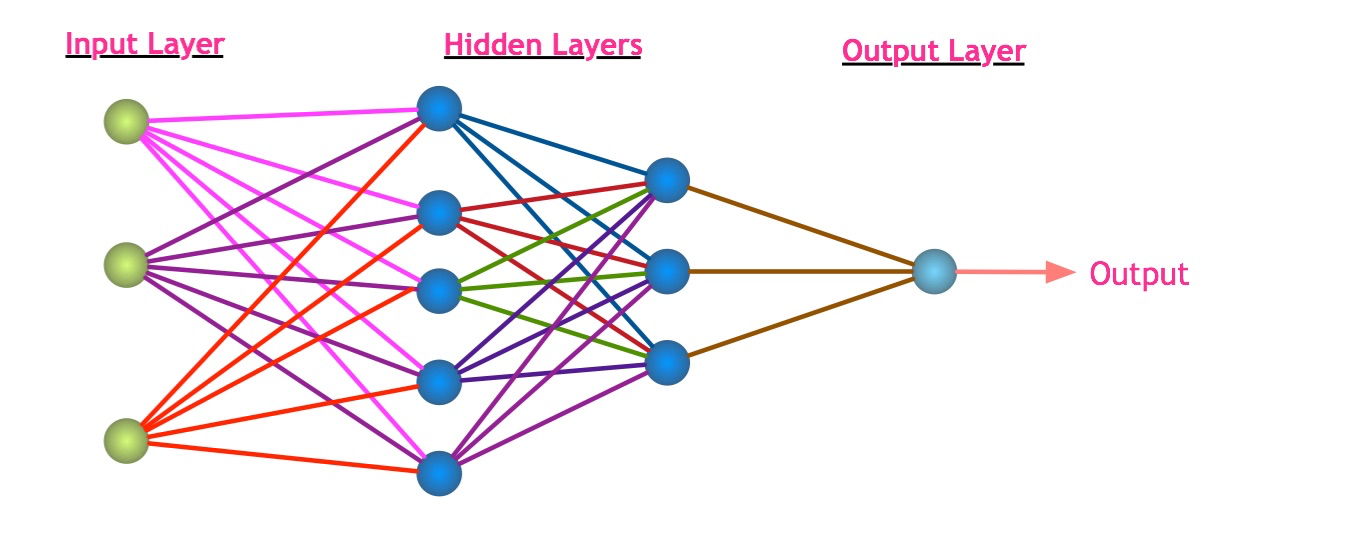
A deep neural network has three types of layers:
- – An input layer: A input or stream of data points.
- – Hidden layers: Processing nodes that are interconnected with the input. A deep neural network has more than two hidden layers.
- – An output layer: A node that transforms the processed information into usable output.
Neural networks work on a simple to complex pattern recognition. They learn simple features in the first layers of the net. Some nodes are activated based on defined thresholds. These activated nodes input into the subsequent layers of the network. In the following layers, it combines those features to derive other sophisticated features. The process goes on until it computes the final output in the output layer.
Deep Learning has been around for quite some time.
Why is deep learning becoming popular now?
The Rise of Deep Learning
In 1943, Warren McCulloch wrote a paper on neurons might work. However, in the earlier years, the progress and adoption of the neural network were impeded by two significant limitations:
- Lack of volume of data availability to train deep neural networks.
- The sheer computing power required to train deep neural networks.
With the advent of Big Data and cloud computing, these limitations were no longer an impediment.
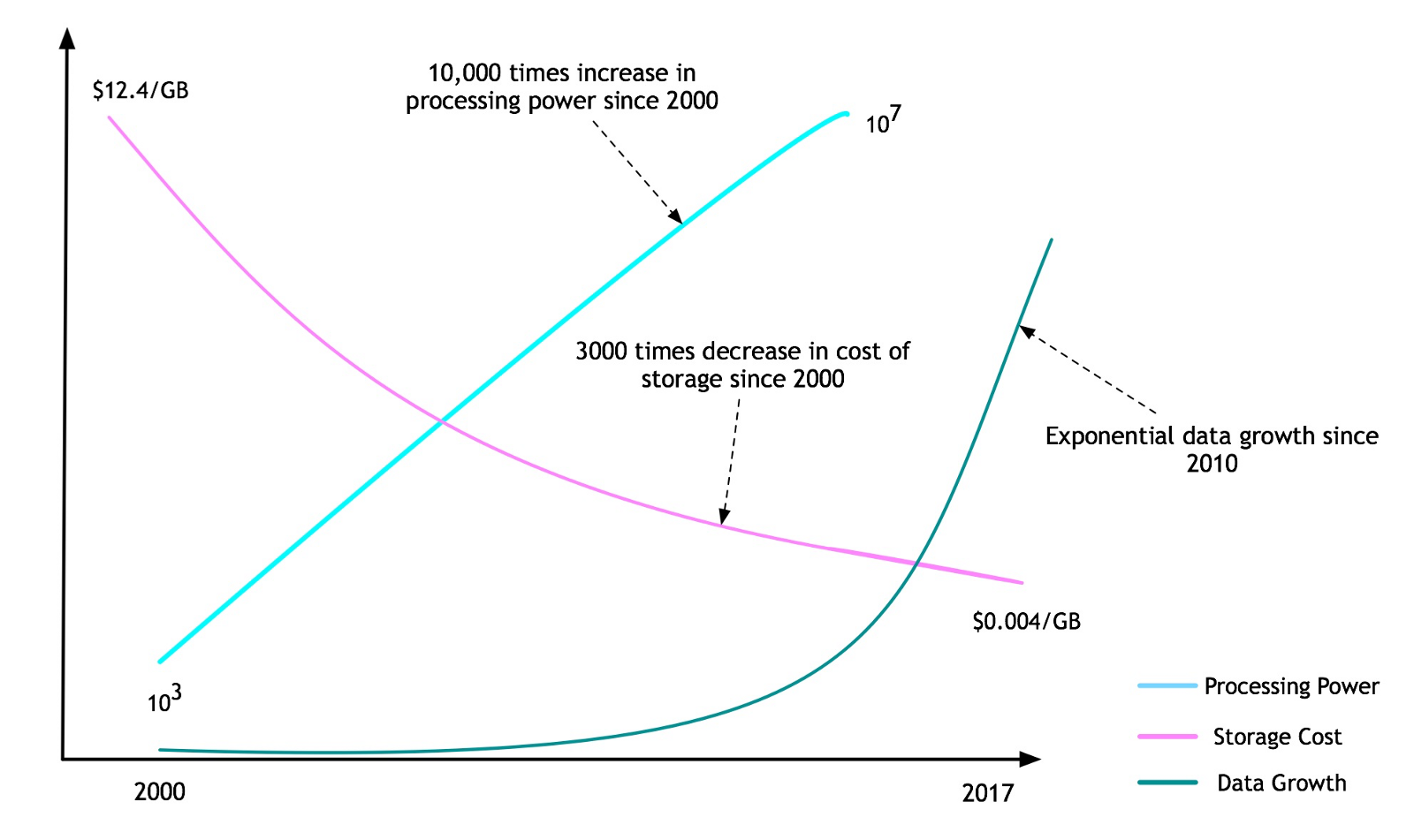
As shown in the figure above, the computing power increased by 10,000 times since the year 2000. The cost of storing the data has also gone down by around 3000 times since the year 2000. There has been an exponential growth of data created due to the rise of the internet, the smartphone revolution and the social media. Data is ubiquitously available now. These three ingredients created a milieu for a perfect storm for deep learning. Deep Learning saw a rekindled interest in research and a resurgence in adoption.
Key Applications
It turns out that deep learning frameworks are efficient to carry out tasks that humans excel at. Humans excel in tasks like image recognition, speech translation, and recognition. Humans are good at recognizing patterns in images and identify specific objects. Humans are good at processing languages, understanding them and classifying them into intents and entities. Deep Learning networks excel in these kinds of tasks too. Major domains in which deep learning is used extensively are:
Computer Vision
Computer vision is an interdisciplinary field that deals with how computers can be used for gaining understanding of images.
A few applications that use computer vision are:
– Object recognition: identifying or classifying objects in images or video streams.
– Face recognition: recognition faces in an image or video streams.
Natural Language Processing
Natural Language Processing is the application of computational techniques to the analysis and synthesis of natural language and speech
Deep Learning frameworks have managed to beat humans in speech recognition. In Jan 2018, Microsoft’s and Alibaba’s speech recognition models were able to score more than humans. It was a challenge known as SQuAD, for Stanford Question Answering Dataset.
A few applications that use speech recognition are:
- – Speech recognition: recognition of human speech.
- – Entity-Intent recognition: recognition of intents and entities in a conversation or text.
- – Speech to text/Text to speech conversion: converting a speech to text and vice versa.
Conclusion
In this article, we touched upon the core components of deep learning. We discussed why it is on the rise and what are its important applications.
Deep Learning framework is at the center of the rise of Artificial Intelligence. It is an evolving field. It will continue to see growing adoption in coming years. Deep Learning applications will continue to transform the world we live.
References:
- deeplearning.ai — Neural Networks and Deep Learning
- Explained Neural Networks
- Goodfellow, Bengio and Courville, 2016
- MGI-Artificial Intelligence: The Next Digital Frontier
- Wired: AI BEAT HUMANS AT READING! MAYBE NOT
This article was first published at www.datascientia.blog.
Content retrieved from: https://www.datasciencecentral.com/profiles/blogs/an-executive-primer-to-deep-learning.
Difference between Machine Learning, Data Science, AI, Deep Learning, and Statistics
Posted on August 6th, 2018

- Posted by Vincent Granville on January 2, 2017 at 8:30pm
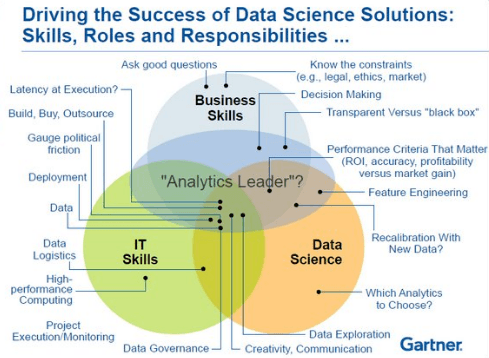
In this article, I clarify the various roles of the data scientist, and how data science compares and overlaps with related fields such as machine learning, deep learning, AI, statistics, IoT, operations research, and applied mathematics. As data science is a broad discipline, I start by describing the different types of data scientists that one may encounter in any business setting: you might even discover that you are a data scientist yourself, without knowing it. As in any scientific discipline, data scientists may borrow techniques from related disciplines, though we have developed our own arsenal, especially techniques and algorithms to handle very large unstructured data sets in automated ways, even without human interactions, to perform transactions in real-time or to make predictions.
1. Different Types of Data Scientists
Recently (August 2016) Ajit Jaokar discussed Type A (Analytics) versus Type B (Builder) data scientist:
- The Type A Data Scientist can code well enough to work with data but is not necessarily an expert. The Type A data scientist may be an expert in experimental design, forecasting, modelling, statistical inference, or other things typically taught in statistics departments. Generally speaking though, the work product of a data scientist is not “p-values and confidence intervals” as academic statistics sometimes seems to suggest (and as it sometimes is for traditional statisticians working in the pharmaceutical industry, for example). At Google, Type A Data Scientists are known variously as Statistician, Quantitative Analyst, Decision Support Engineering Analyst, or Data Scientist, and probably a few more.
- Type B Data Scientist: The B is for Building. Type B Data Scientists share some statistical background with Type A, but they are also very strong coders and may be trained software engineers. The Type B Data Scientist is mainly interested in using data “in production.” They build models which interact with users, often serving recommendations (products, people you may know, ads, movies, search results).
I also wrote about the ABCD’s of business processes optimization where D stands for data science, C for computer science, B for business science, and A for analytics science. Data science may or may not involve coding or mathematical practice, as you can read in my article on low-level versus high-level data science. In a startup, data scientists generally wear several hats, such as executive, data miner, data engineer or architect, researcher, statistician, modeler (as in predictive modeling) or developer.
While the data scientist is generally portrayed as a coder experienced in R, Python, SQL, Hadoop and statistics, this is just the tip of the iceberg, made popular by data camps focusing on teaching some elements of data science. But just like a lab technician can call herself a physicist, the real physicist is much more than that, and her domains of expertise are varied: astronomy, mathematical physics, nuclear physics (which is borderline chemistry), mechanics, electrical engineering, signal processing (also a sub-field of data science) and many more. The same can be said about data scientists: fields are as varied as bioinformatics, information technology, simulations and quality control, computational finance, epidemiology, industrial engineering, and even number theory.
In my case, over the last 10 years, I specialized in machine-to-machine and device-to-device communications, developing systems to automatically process large data sets, to perform automated transactions: for instance, purchasing Internet traffic or automatically generating content. It implies developing algorithms that work with unstructured data, and it is at the intersection of AI (artificial intelligence,) IoT (Internet of things,) and data science. This is referred to as deep data science. It is relatively math-free, and it involves relatively little coding (mostly API’s), but it is quite data-intensive (including building data systems) and based on brand new statistical technology designed specifically for this context.
Prior to that, I worked on credit card fraud detection in real time. Earlier in my career (circa 1990) I worked on image remote sensing technology, among other things to identify patterns (or shapes or features, for instance lakes) in satellite images and to perform image segmentation: at that time my research was labeled as computational statistics, but the people doing the exact same thing in the computer science department next door in my home university, called their research artificial intelligence. Today, it would be called data science or artificial intelligence, the sub-domains being signal processing, computer vision or IoT.
Also, data scientists can be found anywhere in the lifecycle of data science projects, at the data gathering stage, or the data exploratory stage, all the way up to statistical modeling and maintaining existing systems.
2. Machine Learning versus Deep Learning
Before digging deeper into the link between data science and machine learning, let’s briefly discuss machine learning and deep learning. Machine learning is a set of algorithms that train on a data set to make predictions or take actions in order to optimize some systems. For instance, supervised classification algorithms are used to classify potential clients into good or bad prospects, for loan purposes, based on historical data. The techniques involved, for a given task (e.g. supervised clustering), are varied: naive Bayes, SVM, neural nets, ensembles, association rules, decision trees, logistic regression, or a combination of many. For a detailed list of algorithms, click here. For a list of machine learning problems, click here.
All of this is a subset of data science. When these algorithms are automated, as in automated piloting or driver-less cars, it is called AI, and more specifically, deep learning. Click here for another article comparing machine learning with deep learning. If the data collected comes from sensors and if it is transmitted via the Internet, then it is machine learning or data science or deep learning applied to IoT.
Some people have a different definition for deep learning. They consider deep learning as neural networks (a machine learning technique) with a deeper layer. The question was asked on Quora recently, and below is a more detailed explanation (source: Quora)
- AI (Artificial intelligence) is a subfield of computer science, that was created in the 1960s, and it was (is) concerned with solving tasks that are easy for humans, but hard for computers. In particular, a so-called Strong AI would be a system that can do anything a human can (perhaps without purely physical things). This is fairly generic, and includes all kinds of tasks, such as planning, moving around in the world, recognizing objects and sounds, speaking, translating, performing social or business transactions, creative work (making art or poetry), etc.
- NLP (Natural language processing) is simply the part of AI that has to do with language (usually written).
- Machine learning is concerned with one aspect of this: given some AI problem that can be described in discrete terms (e.g. out of a particular set of actions, which one is the right one), and given a lot of information about the world, figure out what is the “correct” action, without having the programmer program it in. Typically some outside process is needed to judge whether the action was correct or not. In mathematical terms, it’s a function: you feed in some input, and you want it to to produce the right output, so the whole problem is simply to build a model of this mathematical function in some automatic way. To draw a distinction with AI, if I can write a very clever program that has human-like behavior, it can be AI, but unless its parameters are automatically learned from data, it’s not machine learning.
- Deep learning is one kind of machine learning that’s very popular now. It involves a particular kind of mathematical model that can be thought of as a composition of simple blocks (function composition) of a certain type, and where some of these blocks can be adjusted to better predict the final outcome.
What is the difference between machine learning and statistics?
This article tries to answer the question. The author writes that statistics is machine learning with confidence intervals for the quantities being predicted or estimated. I tend to disagree, as I have built engineer-friendly confidence intervals that don’t require any mathematical or statistical knowledge.
3. Data Science versus Machine Learning
Machine learning and statistics are part of data science. The word learning in machine learning means that the algorithms depend on some data, used as a training set, to fine-tune some model or algorithm parameters. This encompasses many techniques such as regression, naive Bayes or supervised clustering. But not all techniques fit in this category. For instance, unsupervised clustering – a statistical and data science technique – aims at detecting clusters and cluster structures without any a-priori knowledge or training set to help the classification algorithm. A human being is needed to label the clusters found. Some techniques are hybrid, such as semi-supervised classification. Some pattern detection or density estimation techniques fit in this category.
Data science is much more than machine learning though. Data, in data science, may or may not come from a machine or mechanical process (survey data could be manually collected, clinical trials involve a specific type of small data) and it might have nothing to do with learning as I have just discussed. But the main difference is the fact that data science covers the whole spectrum of data processing, not just the algorithmic or statistical aspects. In particular, data science also covers
- data integration
- distributed architecture
- automating machine learning
- data visualization
- dashboards and BI
- data engineering
- deployment in production mode
- automated, data-driven decisions
Of course, in many organisations, data scientists focus on only one part of this process.
Content retrieved from: https://www.datasciencecentral.com/profiles/blogs/difference-between-machine-learning-data-science-ai-deep-learning.